Developing scientific concepts of ecosystems and genetics for grade 9 students through the 5E instructional model combined with infographics
Article Sidebar
Main Article Content
Abstract
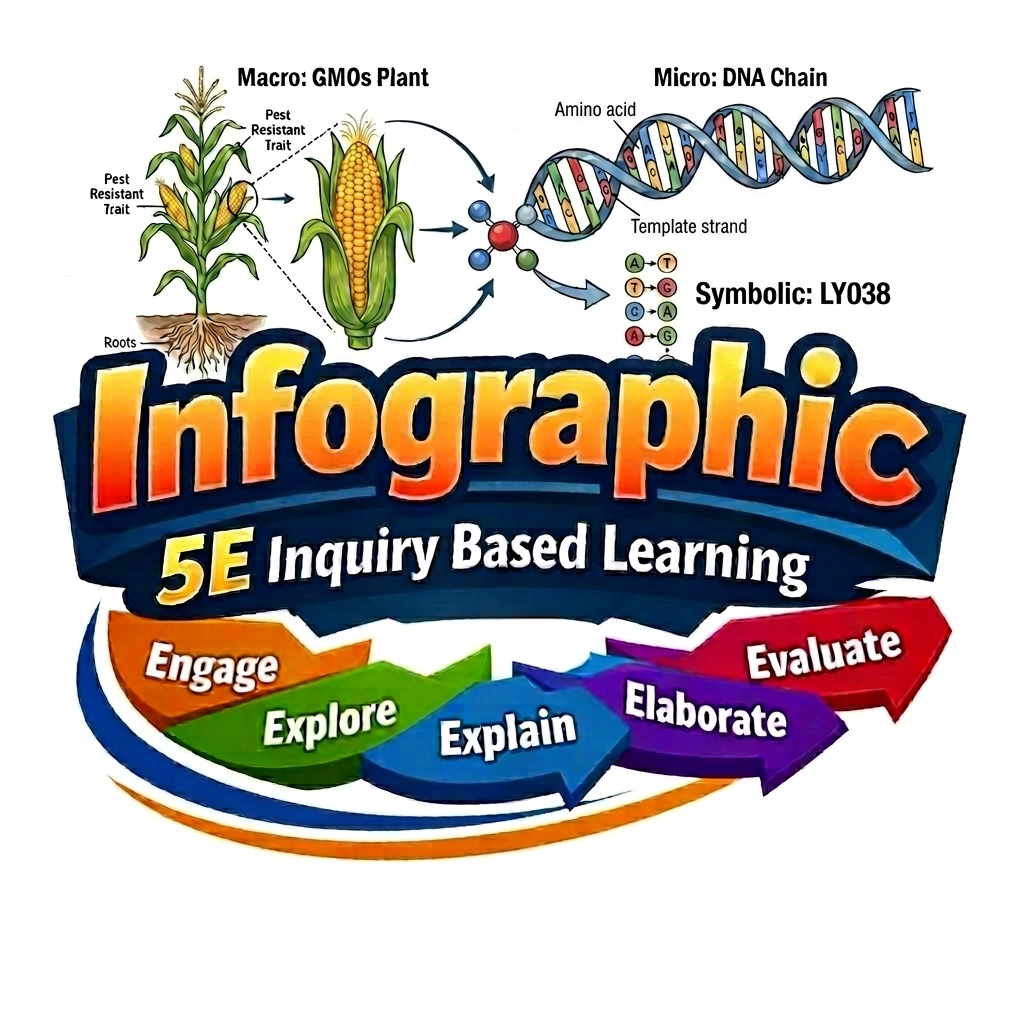
The objectives of this research were as follows: 1) to study the use of the 5E instructional model combined with infographic media and 2) to develop scientific concepts regarding ecosystem relationships, food webs, and genetically modified organisms for grade 9 students. Learning progress was compared using pre- and post-test scores. The research sample consisted of 38 grade 9 students from a school in Nakhon Ratchasima province during the first semester of the 2025 academic year using a purposive sampling method. A pre-experimental design featuring a one-group pretest-posttest was used. The research tools included: 1) three 5E inquiry-based learning plans, 2) infographic worksheets, 3) Infographic assessment form and 4) pre- and post-test questionnaires. Statistical analysis included mean, standard deviation, percentage, effectiveness index, and t-test. The results showed that the effectiveness index for learning about ecosystem relationships, food webs, and genetically modified organisms was 0.7609, 0.8898, and 0.9500, respectively. Post-test scores were 8.84 + 1.08, 9.29 + 0.80, and 9.63 + 0.75 (mean + SD, n=38), respectively. This indicates that students showed more than 75% progress in learning all three topics, and their post-test scores were significantly higher than 75% of the total score at the .05 significance level. Therefore, the 5-step inquiry-based learning approach combined with infographics can develop scientific concepts on these topics.
Article Details

This work is licensed under a Creative Commons Attribution-NonCommercial-NoDerivatives 4.0 International License.
The Journal of Science and Science Education (JSSE) retain the right of all articles published in JSSE. The coresponding author or the authorized person on behalf of the authors must send the complete Copyright Transfer Form to JSSE before any article get published in JSSE.
Copyright Transfer Form
The JSSE request the coresponding author or the authorized person on behalf of the authors upload the manuscript under the together with the Copyright Transfer Form under the supplementary data. The guidline for uploading both manuscript and Copyright Transfer Form is shown below:
1. Upload the manuscript in the sub-menu, Article Component > Article Text.
2. Upload the the Copyright Transfer Form in the sub-menu, Article Component > Other.
Download Copyright Transfer Form
References
Atsaphai, W. and Choomponla, C. (2024). The effects of 4MAT learning supplemented with learning logs on understanding food nutrients and digestive system concept of grade 6 students (in Thai). Academic Journal of Mahamakut Buddhist University Roi Et Campus, 13(2), 242-254.
Bybee, R., Taylor, J., Gardner, A., Scotter, P., Carlson, J., Westbrook, A. and Landes, N. (2006). The BSCS 5E Instructional Model: Origins, Effectiveness, and Applications. Colorado Springs, Co: BSCS, 5 (88-98).
Chairam, S., Jarujamrus, P. and Amatatongchai, M. (2019). Exploring students’ understanding of solution (in Thai). Journal of Science and Science Education (JSSE), 1(2), 152-161.
Chaluthong, A. and Plangsorn, B. (2024). Infographic teaching material design (in Thai). Journal of Education Khon Kaen University, 43(3), 1-6.
Clark, J. M. and Paivio, A. (1991). Dual coding theory and education. Educational Psychology Review, 3(3), 149-210.
Daengrayub, W. and Nillapun, M. (2025). Development of creative thinking skills with inquiry-based learning and infographic for the eighth grade students (in Thai). Journal of Education, Silpakorn University, 23(1), 299-312.
Kasonsuk, N. (2023). The results of organizing learning using a 7–step inquiry–based learning activity (7E) set using digital technology media that has an effect on analytical thinking skills and academic achievement on the subject, force in daily life; science and technology department of grade 5 (in Thai). Journal of Rajanagarindra, 20(2), 36-52.
Muenchang, S., Sirisawat, C. and Chauvatcharin, N. (2020). The effect of using game – based learning on scientific understanding on genetic inheritance for grade 10 students (in Thai). Journal of Inclusive and Innovative Education, 3(3), 1-13.
Munman, P., Malasri, O., Insumran, Y., Keawmad, P., Charoensopharat, K. and Ratanacherdchai, K. (2025). The study of learning achievement of inquiry-based learning approach combined with the team word-webbing in biology subject on chromosomes and genetic material for mathayomsuksa 4 students (in Thai). Journal of Education Rajabhat Maha Sarakham University, 22(3), 323-329.
Nachanthong, J. (2021). Active learning for heredity using Socio-scientific issues and ICT to promote critical thinking in biology for mathayomsuksa 6 students (in Thai). Journal of Roi Kaensarn Academi, 7(3), 235-251.
Namwong, P. (2022). Developing instructional development of learning management in the biology course on ecosystems and population based on the constructivism theory for the 12th grade students (in Thai). Pitchayatat Journal, 17(2), 143-153.
Nantawong, S., Udom, P. and Vanichanon, A. (2021). Development of conceptual understanding on reproductive system and development using constructivist approach for 11th grade students (in Thai). Journal of Education, Prince of Songkla University, Pattani Campus, 32(1), 137-151.
National Research Council, NRC. (2000). Inquiry and the National Science Education Standards. Washington, DC: National Academy Press.
Nirutmeteekul, N. and Thongdaengjua, A. (2023). Development of scientific concepts using the 5Es inquiry-based instructional model combined with the interactive PhET simulation of grade 10th students (in Thai). Journal of Education Studies Valaya Alongkorn Rajabhat University, 1(1), 39-53.
Rattanakorn, P. and Kaewkhongkha, P. (2021). A study of creativity from inquiry based learning with infographic of Mathayom 4 students (in Thai). Silpakorn Educational Research Journal, 13(2), 67-83.
Sakonthawat, P. and Pabchanda, S. (2021). The development of punctuality for eleventh grade students in chemistry with blended learning based on inquiry, social media, exit ticket and scorecard through lesson design by using professional learning community activity (in Thai). Journal of Science and Science Education, 4(2), 204-216.
Sakonthawat, P. and Pabchanda, S. (2025). Development of data management and scientific interpretation skills of tenth grade students in chemistry subject through 5D active learning management by professional learning community (in Thai). Journal of Science and Science Education, 8(2), 262-274.
Sakunkitphokhanon, N. and Phornphisutthimas, S. (2025). Conceptual development on photosynthesis using Hewson and Hewson’s teaching strategy and Kolb’s experiential learning for upper secondary students (in Thai). STOU Education Journal, 18(1), 59-80.
Suknarusaithagul, N., Faikhamta, C. and Suwanruji, P. (2021). The development of grade 12 students’ representational competence in electrochemical cell through model-based learning (in Thai). Journal of Education Khon Kaen University, 44(2), 84-99.
Tasao, N. and Chamrat, S. (2021). Effect of inquiry learning in-cooperated with the use of infographics on the scientific explanation ability of ethnic group students (in Thai). Journal of Science and Science Education (JSSE), 4(2), 190-203.
Thammabut, T. and Wonganu, P. (2024). The design of learning media to reduce cognitive load using the Split-Attention principle (in Thai). Journal of Information and Learning, 35(2), 170-178.
Thepprasit, R. (2022). The results of using ready-made lessons on title of “Creating media infographic for students in Matthayomsuksa 2”, Science and Technology Department, Sa School, Wiang Sa District, Nan Province (in Thai). Wishing Journal Review, 1(3), 15-26.
Trinnagesgosol, P. and Watchana, U. (2024). A study of grade 11 students' Biology learning achievement on the inheritance of genetic characteristics using science activity sets combined with board games (in Thai). SSRU Academic Journal of Education, 8(2), 35-43.
Vanichvasin, P. (2015). Potentials of using infographics in enhancing the quality of learning (in Thai). Panyapiwat Journal, 7(2), 227-240.
Wichaiyo, B. and Cojorn, K. (2023). The development of scientific concepts and learning achievement in Chemistry on the topic of gas for mathayomsuksa 5 students using model based learning (in Thai). Rajabhat Maha Sarakham University Journal, 17(2), 71-81.
Windschitl, M., Thompson, J. and Braaten, M. (2008). Beyond the scientific method: Model-based inquiry as a new paradigm of preference for school science investigations. Science Education - SCI EDUC, 92, 941-967.