
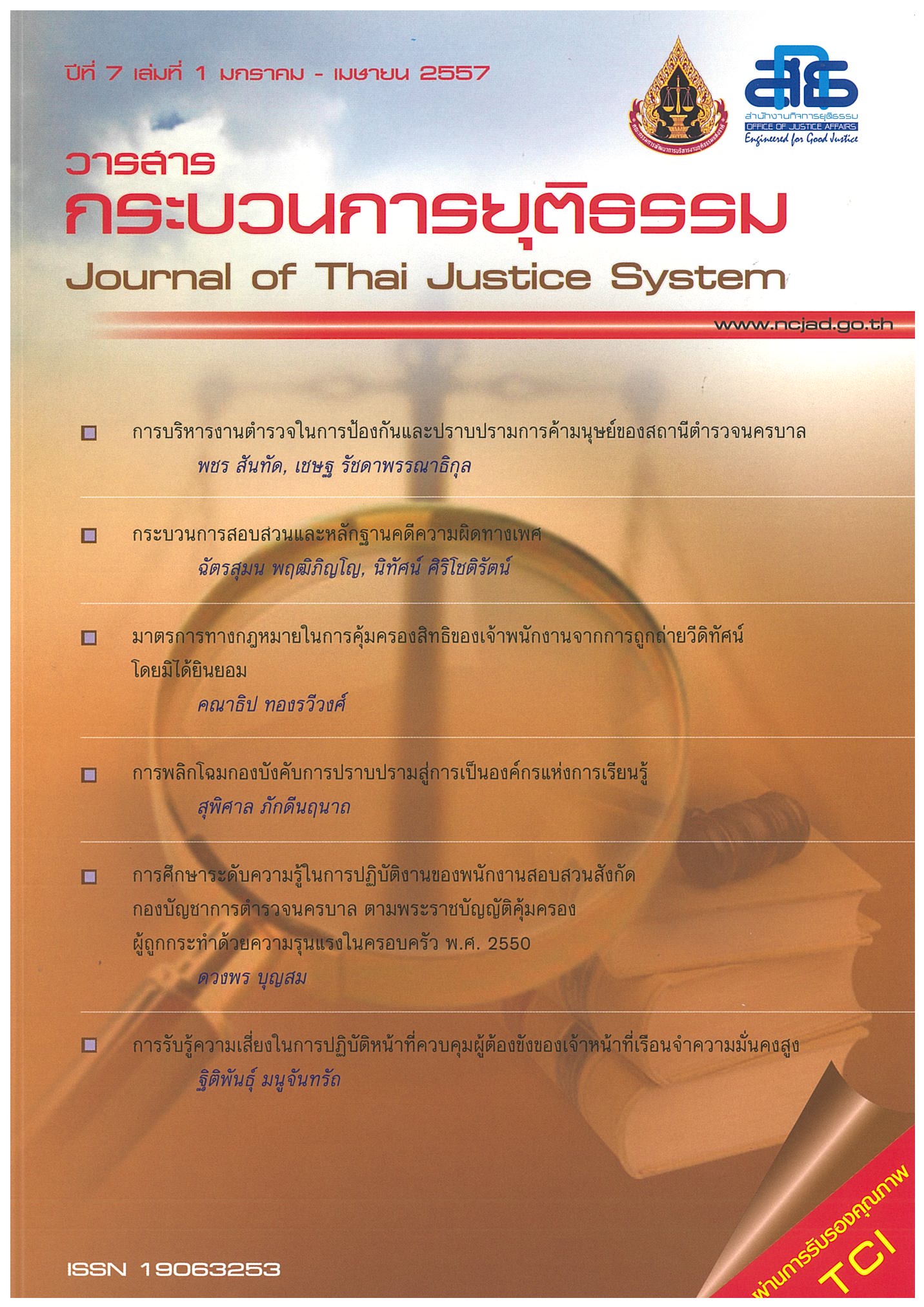
มาตรการทางกฎหมายในการคุ้มครองสิทธิของเจ้าพนักงานจากการถูกถ่ายวีดิทัศน์โดยมิได้ยินยอม
Article Sidebar
เผยแพร่แล้ว:
เม.ย. 30, 2014
Main Article Content
บทคัดย่อ
-
Article Details
รูปแบบการอ้างอิง
ทองรวีวงศ์ ค. (2014). มาตรการทางกฎหมายในการคุ้มครองสิทธิของเจ้าพนักงานจากการถูกถ่ายวีดิทัศน์โดยมิได้ยินยอม. วารสารกระบวนการยุติธรรม, 7(1), 35–53. สืบค้น จาก https://so04.tci-thaijo.org/index.php/JTJS/article/view/246207
ประเภทบทความ
บทความวิชาการ
ต้นฉบับที่ได้รับการตีพิมพ์ในวารสาร เป็นลิขสิทธิ์ของวารสารกระบวนการยุติธรรม แต่ความคิดเห็นที่ปรากฏในเนื้อหาของบทความในวารสารกระบวนการยุติธรรม ถือเป็นความรับผิดชอบของผู้เขียนแต่เพียงผู้เดียว
เอกสารอ้างอิง
คณาธิป ทองรวีวงศ์. (2555, มกราคม - เมษายน). มาตรการทางกฎหมายในการคุ้มครองสิทธิในความ เป็นอยู่ส่วนตัวของผู้ถูกดักฟังการ สื่อสารข้อมูล. วารสารกระบวนการยุติธรรม, 6(1), 77-81
Cohen,A.(2010,August) Should Videotaping the Police Really Be a Crime?, Time. 4, 2010. Patton., A. L. (1993) The Endless Cycle of Abuse: Why 42 U.S.C. 1983 Is Ineffective in Deterring Police Brutality, 44 Hastings Law Journal.
W,j8i[v'8Nxitdv[;kilkiAmanda Covarrubias & Silverstein, S. (2006 Nox). A Third Incident A New Video: Cellphone Camera Captures UCLA Police Using a Taser on a Student who Allegedly Refused to Leave the Library Tuesday Night, L.A. Times., 16, 2006.
Shin, A. (2010). Taffic Stop Video on Youtube Sparks Debate on Police Use of Md. Wiretap Laws, Wash. Post.
Westley, B. (2010). States Applying Wiretap Statutes to Personal Videos, News Media & Law.
Stevens, G., & Cong, C.D. (200(). Research Serv., Privacy: An Overview of Federal Statutes Governing Wiretapping and Electronic Eavesdropping.
Lanier, K. (2011). WalmartTasing Caught on Video; Couple Arrested After Altercation with Foley Officer, Press-Register.
Kristin M. Finklea, Cong. (2010). Research Serv., R40525, Organized Crime in the united States: Trends and Issues for Congress.
Skehil, L. A. (2009). Cloaking Police Misconduct in Privacy: Why the Massachusetts Anti-Wiretapping Statute Should Allow for the Surreptitious Recording of Police Officers, 42 Suffolk university Law Review.
Miller, M. (2007). Wiretap Charge Dropped in Police Video Case. The Patriot News.
Valencia, M. J. (2010). Video of Roxbury Arrest Reviewed, Boston Globe.
Koppel, N. (2011). First Circuit Upholds Right to Videotape Arresting Officers. Wall Street Journal. 3, 7-9.
Kreimer, S. F. (2011). Pervasive Image Capture and the First Amendment: Memory, Discourse, and The Right to Record, 159 University of Pennsylvania Law Review 355.
Jacobs, S. (2010). LAwyer Hopes Video Will Exonerate Chinatown Teen Accused of Murder,
DNAinfo.com (Dec. 7, 2010), from http://ww.dnainfo.com/new-york/20101207/lower-east-side-east-village/lawyer-hopes-video-will-exonerate-chinatown-teen-on-trial-for-hester-street-muder
Intille, S. S., & Intille, A. M. (2003). New Challenges for Privacy Law: Wearable Computers that Create Electronic Digital Diaries, MIT House Technical .15, 11-13.
Diffie, W., & Susan L. (1998). Privacy on the Line: The Politics of Wiretapping and Encryption. Cambridge:MIT Press.
Cohen,A.(2010,August) Should Videotaping the Police Really Be a Crime?, Time. 4, 2010. Patton., A. L. (1993) The Endless Cycle of Abuse: Why 42 U.S.C. 1983 Is Ineffective in Deterring Police Brutality, 44 Hastings Law Journal.
W,j8i[v'8Nxitdv[;kilkiAmanda Covarrubias & Silverstein, S. (2006 Nox). A Third Incident A New Video: Cellphone Camera Captures UCLA Police Using a Taser on a Student who Allegedly Refused to Leave the Library Tuesday Night, L.A. Times., 16, 2006.
Shin, A. (2010). Taffic Stop Video on Youtube Sparks Debate on Police Use of Md. Wiretap Laws, Wash. Post.
Westley, B. (2010). States Applying Wiretap Statutes to Personal Videos, News Media & Law.
Stevens, G., & Cong, C.D. (200(). Research Serv., Privacy: An Overview of Federal Statutes Governing Wiretapping and Electronic Eavesdropping.
Lanier, K. (2011). WalmartTasing Caught on Video; Couple Arrested After Altercation with Foley Officer, Press-Register.
Kristin M. Finklea, Cong. (2010). Research Serv., R40525, Organized Crime in the united States: Trends and Issues for Congress.
Skehil, L. A. (2009). Cloaking Police Misconduct in Privacy: Why the Massachusetts Anti-Wiretapping Statute Should Allow for the Surreptitious Recording of Police Officers, 42 Suffolk university Law Review.
Miller, M. (2007). Wiretap Charge Dropped in Police Video Case. The Patriot News.
Valencia, M. J. (2010). Video of Roxbury Arrest Reviewed, Boston Globe.
Koppel, N. (2011). First Circuit Upholds Right to Videotape Arresting Officers. Wall Street Journal. 3, 7-9.
Kreimer, S. F. (2011). Pervasive Image Capture and the First Amendment: Memory, Discourse, and The Right to Record, 159 University of Pennsylvania Law Review 355.
Jacobs, S. (2010). LAwyer Hopes Video Will Exonerate Chinatown Teen Accused of Murder,
DNAinfo.com (Dec. 7, 2010), from http://ww.dnainfo.com/new-york/20101207/lower-east-side-east-village/lawyer-hopes-video-will-exonerate-chinatown-teen-on-trial-for-hester-street-muder
Intille, S. S., & Intille, A. M. (2003). New Challenges for Privacy Law: Wearable Computers that Create Electronic Digital Diaries, MIT House Technical .15, 11-13.
Diffie, W., & Susan L. (1998). Privacy on the Line: The Politics of Wiretapping and Encryption. Cambridge:MIT Press.
