
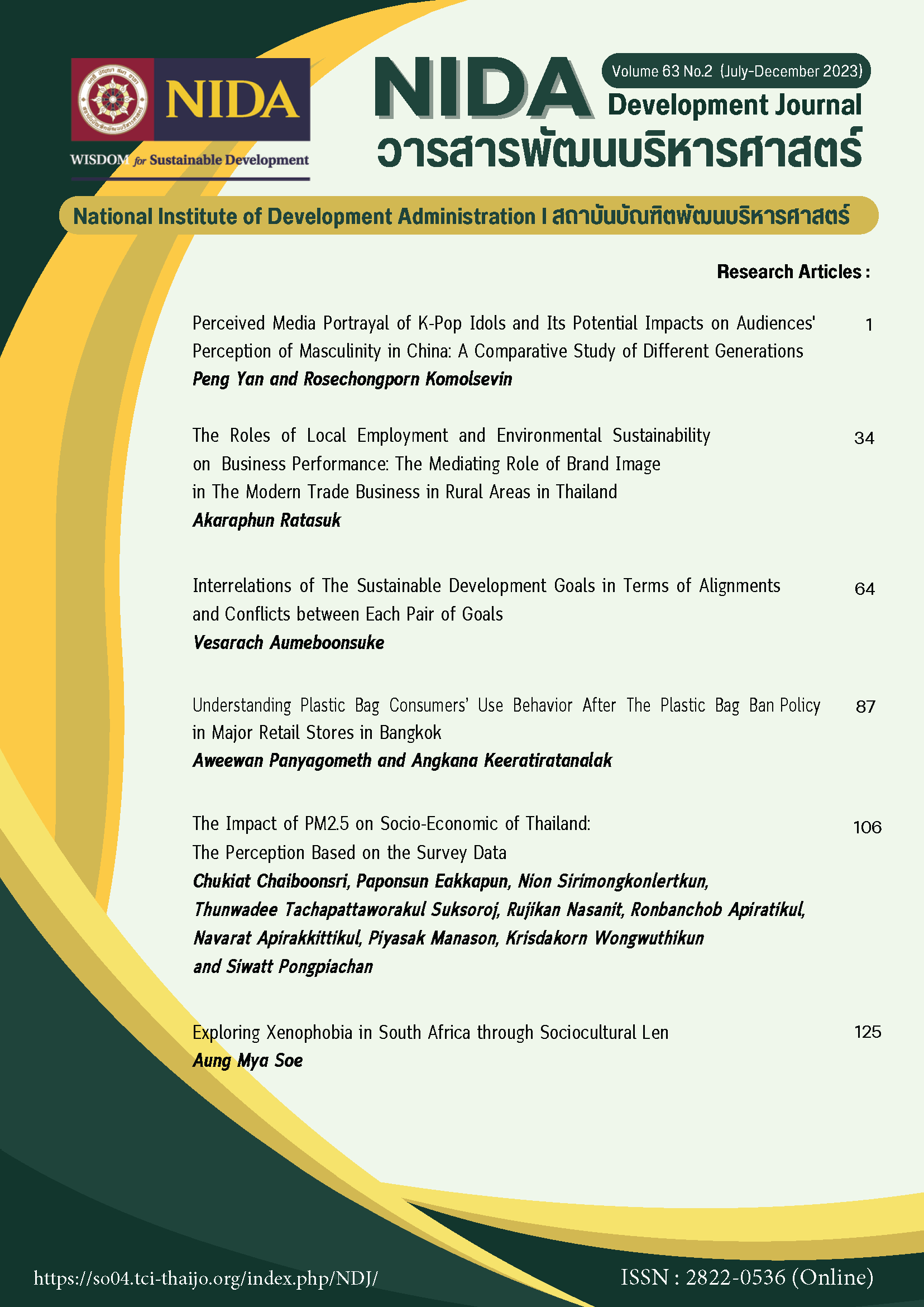
สำรวจภาวะเกลียดชังชาวต่างชาติผ่านเลนส์สังคมวัฒนธรรมแอฟริกาใต้
DOI:
https://doi.org/10.14456/ndj.2023.6คำสำคัญ:
อัตลักษณ์ทางสังคม, มาเควียรี่เควียรี่, ภาวะเกลียดชังชาวต่างชาติ, แพะรับบาป, สมมุติฐานการเปลี่ยนแปลงโครงสร้างบทคัดย่อ
บทความนี้กล่าวถึงประเด็นปัญหาเรื่องภาวะเกลียดชังชาวต่างชาติในประเทศแอฟริกาใต้ วัตถุประสงค์ของบทความคือ เพื่อหาปัจจัยที่ก่อให้เกิดภาวะเกลียดชังชาวต่างชาติ ความท้าทายและแนวทางการแก้ปัญหาเพื่อฟื้นฟูความเชื่อมแน่นทางสังคมและลดความเหลื่อมล้ำในประเทศแอฟริกาใต้ โดยใช้แนวคิดวิจัยเรื่อง อัตลักษณ์ทางสังคมของเฮนรี ทาจเฟลและจอห์น เทอร์เนอร์ ประกอบกับความขาดแคลนเชิงสัมพันธ์ของรันซิแมน สามเหลี่ยมความรุนแรงและความขัดแย้งของกัลตุง และสมมุติฐานเรื่องแพะรับบาปของดังแคน ทั้งนี้เป็นการวิจัยเอกสารร่วมกับการวิเคราะห์วรรณกรรม รายงานและเอกสาร โดยผลการวิจัยหลักที่พบคือ ปัญหาสังคม เช่น การว่างงาน การขาดที่อยู่อาศัย อคติต่อผู้ย้ายถิ่นที่เป็นคู่แข่งทางธุรกิจ อีกทั้งปัจจัยทางวัฒนธรรม ได้แก่ ภาษา การแต่งตัว ดนตรีและประเพณีของผู้ย้ายถิ่นผิวดำ ล้วนแต่เป็นปัจจัยผลักดันให้เกิดภาวะเกลียดชังชาวต่างชาติ โดยสรุปคือ ความพยายามจากภาครัฐในการพัฒนาทักษะเพื่อการทำงาน บริหาร การจัดที่อยู่อาศัยราคาประหยัด และส่งเสริมความหลายหลายทางวัฒนธรรม ด้วยการเปลี่ยนแปลงโครงสร้าง จะสามารถลดภาวะเกลียดชังชาวต่างชาติ บรรเทาการเลือกปฏิบัติและส่งเสริมความเท่าเทียมกันจากการแบ่งแยกภายในประเทศแอฟริกาได้
เอกสารอ้างอิง
Bakken, I.V & Rustad, S.A, (2018). Conflict Trends in Africa. Peace Research Institute, Oslo
Belvedere, F., et al. 2003. National Refugee Baseline Survey: Final Report. Johannesburg: Community Agency for Social Enquiry (CASE), Japan International Cooperation, and United Nations High Commissioner for Refugees.
Bond, P. et al., (2009) Xenophobia and Civil Society: Why did it happen? The Atlantic Philanthropies.
Duncan, N. (2012). Reaping the whirlwind: Xenophobic violence in South Africa. Global Journal of Community Psychology Practice.
Galtung, J. (1996). Peace by Peaceful Means (1st ed.). SAGE Publications.
Isike, C & Isike, F, (2013). A Socio-cultural Analysis of African Immigration to South Africa. University of Pretoria.
Matsinhe, D. M. (2011). Africa’s Fear of Itself: the ideology of “Makwerekwere” in South Africa. Third World Quarterly,
Misago, J.P. et al., (2015) Protection from Xenophobia: An Evaluation of UNHCR’s Regional Office for Southern Africa’s Xenophobia Related Programmes. The African Centre for Migration and Society, University of Witwatersrand.
Masikane, C.M.et al. (2020) Dynamics informing xenophobia and leadership response in South Africa. Acta Commercii
Sadie, W. and Borger, S. (2004) . “Accessing Accommodation in Inner-City Johannesburg” in L. B. Landau (ed.) Forced Migrants in the New Johannesburg: Towards a Local Government Response. Johannesburg: University of the Witwatersrand.
Sindane, A.P. (2019) Perceptions of intercultural marriage: the lived experiences of South Africans and African foreigners in intercultural marriage. University of Kwazulu-Natal
Tafira, C. K. (2014). The South African Woman and the Immigrant Lover: Myths and Dynamics of Cross-Border Love Relationships in a Post-Apartheid South African Community. Ufahamu: A Journal of African Studies, 38(1)
ดาวน์โหลด
เผยแพร่แล้ว
รูปแบบการอ้างอิง
ฉบับ
ประเภทบทความ
สัญญาอนุญาต
ลิขสิทธิ์ (c) 2023 วารสารพัฒนบริหารศาสตร์

อนุญาตภายใต้เงื่อนไข Creative Commons Attribution-NonCommercial-NoDerivatives 4.0 International License.