
ความเป็นอนิจจังของพุทธไทย: จากสิ่งตกทอดผูกพันจากอดีต ถึงความทันสมัย และการแตกตัวออกเป็นเศษเสี่ยง
Article Sidebar
Main Article Content
บทคัดย่อ
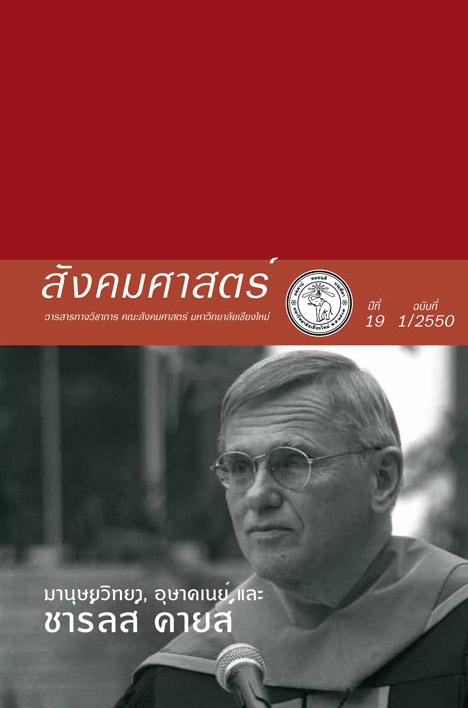
บทความชิ้นนี้เป็นผลผลิตของการอ่านเชิงสังเคราะห์ข้อเขียนทางมานุษยวิทยาว่าด้วยพุทธศาสนานิกายเถรวาทตลอดวิชาชีพของศาสตราจารย์ชาร์ลส์ เอฟ.คายส์ ผมพยายามทำความเข้าใจว่า อะไรคือแก่นสำคัญในการวิเคราะห์ตีความหมายพุทธศาสนานิกายเถรวาทในประเทศไทยและประเทศอื่นในภูมิภาคเอเชียอาคเนย์ อะไรคือข้อเสนอหลักหรือมุมมองสำคัญของอาจารย์คายส์เกี่ยวกับพุทธศาสนาในฐานะที่เป็นรากฐานของระบบเศรษฐกิจการเมือง และสังคมวัฒนธรรม และบริบทความคิดวิชาการของท่านคืออะไรและผลงานของท่านได้สร้างผลกระทบทางปัญญาความคิดอะไรบ้างข้อเขียนทางมานุษยวิทยาว่าด้วยพุทธศาสนาของอาจารย์คายส์เป็นผลผลิตของความเพียรพยายามและตั้งใจแน่วแน่ทางวิชาการที่จะชี้ให้เห็นว่า พุทธศาสนานิกายเถรวาท โดยเฉพาะวิถีพุทธแบบชาวบ้านเป็นกุญแจดอกสำคัญที่สุดที่จะนำไปสู่การวิเคราะห์สังคมไทยได้อย่างมีประสิทธิภาพ พุทธศาสนาต่างหากที่สร้างชาติหลอมรวมเอาความแตกต่างหลากหลายทางชาติพันธุ์ วัฒนธรรมและท้องถิ่นให้เป็น “พุทธอาณาจักร-รัฐประชาติสมัยใหม่” “ชาติไทย” อาจมีศูนย์กลางและพัฒนาการที่แนบแน่นอยู่กับสถาบันกษัตริย์ แต่พุทธศาสนาต่างหากที่เป็นอุดมการณ์ความเชื่อและพิธีกรรมหลักในการสร้างชาติและสร้างความชอบธรรมให้กับชนชั้นนำ ในข้อเขียนเกี่ยวกับพุทธศาสนาของท่าน อาจารย์คายส์ได้นำเสนอประเด็นวิเคราะห์เชิงมานุษยวิทยาครอบคลุมความเป็นอนิจจังของพุทธไทยทั้ง3 ลักษณะสำคัญ ได้แก่ สิ่งตกทอดผูกพันมาจากอดีต พุทธศาสนาในท่ามกลางกระบวนการสร้างชาติและกระบวนการเปลี่ยนแปลงไปสู่ภาวะความทันสมัย และพุทธศาสนาในภาวะที่แตกตัวออกเป็นเศษเสี่ยง ซึ่งเป็นผลผลิตโลกยุคหลังสมัยใหม่ วิธีวิทยาของอาจารย์คายส์ในการวิเคราะห์ตีความหมายพุทธศาสนาในฐานะตัวบทสำคัญในกระบวนการทำงานของวัฒนธรรม ซึ่งได้มอบทั้งโลกทัศน์และวิถีปฏิบัติให้กับผู้คนและสังคมนั้น มีรากฐานสำคัญมาจากกระบวนการที่แม็กซ์ เวเบอร์เรียกว่า “กระบวนการใช้เหตุผล” (rationalization) และ “กระบวนการทางพุทธิปัญญา” (intellectualization) รวมทั้งแนวการวิเคราะห์ตีความหมายมานุษย-วิทยาว่าด้วยศาสนาของคลิฟฟอร์ด เกียร์ตซ์
Article Details
ข้อเขียนทั้งหมดทีปรากฏในวารสารสังคมศาสตร์ เป็นความคิดเห็นของผู้เขียนโดยเฉพาะ มิใช่ทัศนคติของคณะสังคมศาสตร์ มหาวิทยาลัยเชียงใหม่ หรือกองบรรณาธิการวารสารสังคมศาสตร์
เอกสารอ้างอิง
ชยันต์ วรรธนะภูต (2524) “แนวการศึกษาและความเป็นจริงในสังคม: การศึกษาสังคมไทยเชิงมานุษยวิทยา”, ใน ปรีชา เปี่ยมพงษ์สานต์และคณะ,(บรรณาธิการ) วิธีวิทยาศึกษาสังคมไทย, กรุงเทพมหานคร: สถาบันวิจัยสังคม, จุฬาลงกรณ์มหาวิทยาลัย, หน้า 113-164.
นิธิ เอียวศรีวงศ์ (2527) ปากไก่และใบเรือ, กรุงเทพมหานคร: โรงพิมพ์อมรินทร์การพิมพ์.
ไพศาล วิสาโล, พระ (2546) พุทธศาสนาไทยในอนาคต: แนวโน้มและทางออกจากวิกฤติ, กรุงเทพมหานคร: มูลนิธิสดศรี-สฤษดิ์วงษ์.
สายชล สัตยานุรักษ์ (2546) พุทธศาสนากับแนวคิดทางการเมืองในรัชสมัยพระบาทสมเด็จพระพุทธยอดฟ้าจุฬาโลก (พ.ศ. 2325-2352),กรุงเทพมหานคร: สำนักพิมพ์มติชน.
อภิญญา เฟื่องฟูสกุล (2550) “ความเห็นต่อบทความ ความเป็นอนิจจังของพุทธไทย โดย ดร. พัฒนา กิติอาษา”, การติดต่อสื่อสารส่วนตัว, 2 กรกฎาคม.
อรรถจักร์ สัตยานุรักษ์ (2538) การเปลี่ยนแปลงโลกทัศน์ของชนชั้นผู้นำไทยตั้งแต่รัชกาลที่ 4-พ.ศ. 2475, กรุงเทพมหานคร: สำานักพิมพ์จุฬาลงกรณ์มหาวิทยาลัย.
Anderson, Benedict (1991) Imagined Community: Reflections on the Origin and Spread of Nationalism, Revised Edition, London: Verso.
Anuman Rajadhon, Phya (1986) Popular Buddhism in Siam and Other Essays on Thai Studies, Bangkok: Sathirakoses Nagapradipa Foundation.
Anusaranasasanakiarti, Phra Khru, and Charles F. Keyes (1980) “Funerary Rites and the Buddhist Meaning of Death: An Interpretative Text from Northern Thailand”, Journal of the Siam Society. 68, 1: 1-28.
Bhikkhu Visalo (1999) “Buddhism for the Next Century: Toward Renewing a Moral Thai Society”, In Socially Engaged Buddhism for the New Millennium: Essays in Honor of the Ven. Phra Dhammapitaka (Bhikkhu P.A. Payutto) on His 60th Birthday Anniversary, Bangkok: Sathirakoses-Nagapradipa Foundation and Foundation for Children. Pp. 235-252.
Durkheim, Emile [1915] (1957) Elementary Forms of the Religious Life, Joseph Ward Swain, trans. London: George Allen and Unwin.
Geertz, Clifford (1963) “Primordial Sentiments and Civil Politics in the New States”, In Clifford Geertz, (ed.) Old Societies and New States. New York: The Free Press. Pp. 105-157.
_____. (2005) “Shifting Aims, Moving Targets: On the Anthropology of Religion”, Journal of Royal Anthropological Institute, 11: 1-15.
Hanks, Lucien M. (1962) “Merit and Power in the Thai Social Order”, American Anthropologist, 64, 6(December): 1247-1461.
Hayashi, Yukio (2003) Practical Buddhism among the Thai-Lao: Religion in the Making of the Region, Kyoto: Kyoto University Press and Trans Pacific Press.
Ishii, Yoneo (1986) Sangha, State, and Society: Thai Buddhism in History, Peter Hawks (trans.), Honolulu: The University of Hawaii Press.
Jackson, Peter A. (1989) Buddhism, Legitimation, and Conflict: The Political Functions of Urban Thai Buddhism, Singapore: Institute of Southeast Asian Studies.
_____. (1997) “Withering Centre, Flourishing Margins: Buddhism’s Changing Political Roles”. In Kevin Hewison, (ed.) Political Change in Thailand: Democracy and Participation, London: Routledge, pp. 75-93.
_____. (1999a.) “The Enchanting Spirit of Thai Capitalism: The Cult of Luang Phor Khoon and the Post-Modernization of Thai Buddhism”, South East Asia Research, 7, 1 (March): 5-60.
_____. (1999b) “Royal Spirits, Chinese Gods, and Magic Monks: Thailand’s Boom-Time Religions of Prosperity”, South East Asia Research, 7, 3 (November): 245-320.
_____. (1971) “Buddhism and National Integration in Thailand”. The Journal of Asian Studies, 30, 3 (May): 551-567. Keyes, Charles F. (1973) “The Power of Merit”, In Visakha Buja B.E. 2518, Bangkok: The Buddhist Association of Thailand under Royal Patronage, Annual Publication. Pp. 95-102.
_____. (1975a) “Buddhism in a Secular City: A View from Chiang Mai”, In Visakha Buja B.E. 2518, Bangkok: The Buddhist Association of Thailand under Royal Patronage, Annual Publication. Pp. 62-71.
_____. (1975b) “Buddhist Pilgrimage Centers and the Twelve-Year Cycle: Northern Thai Moral Orders in Space and Time”, History of Religions, 15, 1(August): 71-89.
_____. (1975c) “Tug-of-War for Merit: Cremation of a Senior Monk”, Journal of the Siam Society, 63, 1: 44-62.
_____. (1976) “In Search of Land: Village Formation in the Central Chi River Valley, Northeastern Thailand”, Contributions to Asian Studies, 9: 45-63.
_____. (1977a) The Golden Peninsula: Culture and Adaptation in Mainland Southeast Asia, New York: Macmillan Publishing.
_____. (1977b) “Millennialism, Theravada Buddhism, and Thai Society”, The Journal of Asian Studies, 36, 2(February): 283-302.
_____. (1978a) “Structure and History in the Study of the Relationship between Theravara Buddhism and Political Order”, Numen, 25, 2 (August): 156- 170.
_____. (1978b) “Political Crisis and Militant Buddhism in Contemporary Thailand”, In Bardwell L. Smith, (ed.) Religion and Legitimation of Power in Thailand, Laos, and Burma, Chambersburg, PA: ANIMA Books. Pp. 147-164.
_____. (1983a) “Economic Action and Buddhist Morality in a Thai Village”, The Journal of Asian Studies, 42, 4(August): 851-868.
_____. (1983b) “Introduction: The Study of Popular Ideas of Karma”, In Charles F. Keyes and E. Valentine Daniel, (eds.) Karma: An Anthropological Inquiry, Berkeley: University of California Press. Pp. 1-24.
_____. (1983c) “Merit-Transference in the Karmic Theory of Popular Theravada Buddhism”, In Charles F. Keyes and E. Valentine Daniel, (eds.) Karma: An Anthropological Inquiry, Berkeley: University of California Press. Pp. 261-286.
_____. (1984) “Mother or Mistress but Never a Monk: Buddhist Notions of Female Gender in Rural Thailand”, American Ethnologist, 11,2(May): 223- 241.
_____. (1986) “Ambiguous Gender: Male Initiation in a Buddhist Society”, In Caroline Bynum, Stavan Harrell, and Paula Richman, (eds.) Religion and Gender: Essays on the Complexity of Symbols, Boston: Beacon Press. Pp. 66-96.
_____. (1987a) Thailand: Buddhist Kingdom as Modern Nation-State, Boulder, Colorado: Westview Press.
_____. (1987b) “Thai Religion”, In Mircea Eliade, (ed.) The Encyclopedia of Religion, Vol. 14, New York: Mamillan. Pp. 416-421.
_____. (1989) “Buddhist Politics and Their Revolutionary Origins in Thailand”, International Political Science Review, 10, 2: 121-142.
_____. (1990) “Buddhist Practical Morality in a Changing Agrarian World: A Case from Northeastern Thailand.” In Donald K. Swearer and Russell Sizemore, (eds.) Attitudes toward Wealth and Poverty in Theravada Buddhism, Columbia, South Carolina: University of South Carolina Press. Pp. 170-189.
_____. (1990a) “Buddhist Detachment and Worldly Gain: The Economic Ethic of Northeastern Thai Villagers”. In Chaiwat Satha-Anand, (ed.) Yu Muang Thai: Ruam Botkhwam Thang Sangkhom Phua Pen Kiat Dae Sastrachan Saneh Chamarik [In Thailand: Collected Essays in Honor of Professor Saneh Chammarik], วารสารรัฐศาสตร์ มหาวิทยาลัยธรรมศาสตร์ ฉบับ พิเศษ, 16, 1-2: 271-298.
_____. (1991) “The Proposed World of the School: Thai Villagers’ Entry into a Bureaucratic State System”, In Charles F. Keyes, (ed.) Reshaping Local Worlds: Formal Education and Cultural Change in Rural Southeast Asia. Monograph No. 36. New Haven: Yale University Southeast Asia Studies. Pp. 89-130.
_____. (1993) “Buddhist Economics and Buddhist Fundamentalism in Burma and Thailand”, In Martin Marty and Scott Appleby, (eds.) Remaking the World: Fundamentalist Impact, Chicago: University of Chicago Press. Pp. 367-409.
_____. (1994) “Communist Revolution and the Buddhist Past in Cambodia”. In Charles F. Keyes, Helen Hardacre, and Laurel Kendall, (eds.) Asian Visions of Authority: Religion and the Modern States of East and Southeast Asia. Honolulu: University of Hawaii Press. Pp. 43-73.
_____. (1995a) “Hegemony and Resistance in Northeastern Thailand”, In Volker Grabowski, (ed.) Regions and National Integration in Thailand 1892-1992, Wiesbaden, Germany: Harrassowitz Verlag. Pp.154-182.
_____. (1995b) “Sectarian Dissent, Sexual Scandal, and Political Resistance: Does the Buddhist Sangha Have a Future in Modern Thailand?”, Unpublished Paper Presented at a Conference on “Buddhism, Modernity and Politics in Southeast Asia”, Sponsored by Program for Southeast Asian Studies, Arizona State University, December 8.
_____. (1999a) “Buddhism Fragmented: Thai Buddhism and Political Order Since the 1970s”, Keynote address presented in the 7th International Conference on Thai Studies, Amsterdam, Netherlands, July 4-8.
_____. (1999b) “Moral Authority of the Sangha and Modernity in Thailand: Sexual Scandals, Sectarian Dissent, and Political Resistance”, In Socially Engaged Buddhism for the New Millennium: Essays in Honor of the Ven. Phra Dhammapitaka (Bhikkhu P.A. Payutto) on His 60th Birthday Anniversary, Bangkok: Sathirakoses-Nagapradipa Foundation and Foundation for Children. Pp. 121-147.
_____. (2000) “Fieldwork as History: Letters between Two Researchers in Northeastern Thailand in 1963”, In Friends in the Field: Four Decades of Anthropological and Sociological Studies in Thailand: A Symposium in Honor of A. Thomas Kirsch, Chiang Mai: Privately Published. Pp. 7-24.
_____. (2006) “The Destruction of a Shrine to Brahma in Bangkok and the Fall of Thaksin Shinawatra: The Occult and the Thai Coup in Thailand of September 2006”, Asia Research Institute Working Paper Series No. 80, December 2006,
_____. (2007) “Monks, Guns and Peace: Theravada Buddhism and Political Violence”, In James Wellman, (ed.) Belief and Bloodshed, Lanham, Maryland: Rowman & Littlefield Publishers, pp. 147-165.
_____. (in press) “Communism, Peasants and Buddhism: The Failure of ‘Peasant Revolutions’ in Thailand in Comparison to Cambodia”. Keyes, Charles F., Helen Hardacre, and Laurel Kendall (1994) “Introduction: Contested Visions of Community in East and Southeast Asia”, In Charles F. Keyes, Helen Hardacre, and Laurel Kendall, (eds.) Asian Visions of Authority: Religion and the Modern States of East and Southeast Asia. Honolulu: University of Hawaii Press. Pp. 1-16.
Khin Thitsa (1980) Providence and Prostitution: Image and Reality for Women in Buddhist Thailand, London: Change International Reports (Women and Society).
Kirsch, A. Thomas (1967) “Phu Thai Religious Syncretism: A Case Study of Thai Religion and Society”, Ph.D. dissertation, Anthropology, Harvard University.
_____. (1975) “Economy, Polity, and Religion in Thailand”. In G. William Skinner and Thomas Kirsch, (eds.) Change and Persistence in Thai Society: Essays in Honor of Lauriston Sharp, Ithaca, New York: Cornell University Press. Pp. 172-196.
_____. (1977) “Complexity in the Thai Religious System: An Interpretation”, Journal of Asian Studies, 36, 2 (February): 241-266.
_____. (1978) “Modernizing Implications of Nineteenth Century Reforms in the Thai Sangha”, In Bardwell L. Smith, (ed.) Religion and Legitimation of Power in Thailand, Laos, and Burma, Chambersburg, PA: ANIMA Books. Pp. 52-65.
_____. (1982) “Buddhism, Sex-Roles and Thai Society”, In Penny van Esterik, (ed.) Women of Southeast Asia, Occasional Paper No. 9, DeKalb: Northern Illinois, Center for Southeast Asian Studies. Pp. 16-41.
_____. (1985) “Text and Context: Buddhist Sex Roles/Culture of Gender Revisited”, American Ethnologist, 12: 302-320.
McCargo, Duncan (2004) “Buddhism, Democracy and Identity in Thailand”, Democratization, 11, 4(August): 155-170.
McDaniel, Justin (2007) Personal Communication, June 29.
Pattana Kitiarsa (2002) “You May Not Believe, But Never Offend Spirits: Spiritmedium Cults and Popular Media in Modern Thailand”, In Timothy J. Craig and Richard King, (eds.) Global Goes Local: Popular Culture in Asia, British Columbia, Canada: University of British Columbia Press. Pp. 160-176.
_____. (2005a) “Beyond Syncretism: Hybridization of Popular Religion in Contemporary Thailand”, Journal of Southeast Asian Studies, 36, 3 (October):461-478.
_____. (2005b) “Magic Monks and Spirit Mediums in the Politics of Thai Popular Religion”, Inter-Asia Cultural Studies, 6, 2: 209-225. Pattana Kitiarsa (ed.) (forthcoming) Religious Commodifications in Asia: Marketing Gods, London: Routledge.
Popkins, Samual L. (1979) The Rational Peasant: The Political Economy of Rural Society in Vietnam, Berkeley: University of California Press.
Reynolds, Craig J. (1976) “Buddhist Cosmography in Thai History, with Special Reference to Nineteenth-Century Culture Change”, The Journal of Asian Studies, 35, 3 (February): 203-220.
Spiro, Melford E. (1982) Buddhism and Society: A Great Tradition and Its Burmese Vicissitudes, Berkeley: University of California Press.
Sanitsuda Ekachai (2001) Keeping the Faith: Thai Buddhism at the Crossroads, Bangkok: Post Books.
Swearer, Donald K. (1981) Buddhism and Society in Southeast Asia, Chambersburg, Pennsylvania: ANIMA Books.
_____. (1995) The Buddhist World of Southeast Asia, Albany, New York: State University of New York Press.
Tambiah, Stanley J. (1970) Buddhism and the Spirit Cults in North-east Thailand, Cambridge: Cambridge University Press.
_____. (1976) World Conqueror and World Renouncer: A Study of Buddhism and Polity in Thailand against a Historical Background, Cambridge: Cambridge University Press.
_____. (1978) “Sangha and Polity in Modern Thailand: An Overview”, In Bardwell L. Smith, (ed.) Religion and Legitimation of Power in Thailand, Laos, and Burma, Chambersburg, PA: ANIMA Books. Pp. 111-133.
Tanabe, Shigeharu and Charles F. Keyes (2002) “Introduction”, In Shigeharu Tanabe and Charles F. Keyes (eds.) Cultural Crisis and Social Memory: Crises of Modernity in Thailand Laos, London: RouteldgeCurzon. Pp. 1-39.
Terwiel, B.J. (1976) “A Model for the Study of Thai Buddhism”, The Journal of Asian Studies, 35, 3(May): 391-403.
_____. (1979) Monks and Magic: An Analysis of Religious Ceremonies in Central Thailand, Second Edition, London: Curzon Press.
Thongchai Winichakul (2000) “The Quest for ‘Siwilai’: A Geographical Discourse in Civilizational Thinking in the Late 19th Century and Early 20th Century Siam”, The Journal of Asian Studies, 59, 3: 528-549.
Wyatt, David K. (1994) “The ‘Subtle’ Revolution of King Rama I of Siam.” In Studies in Thai History: Collected Articles, Chiang Mai, Thailand: Silkworm Books. Pp.131-173.
