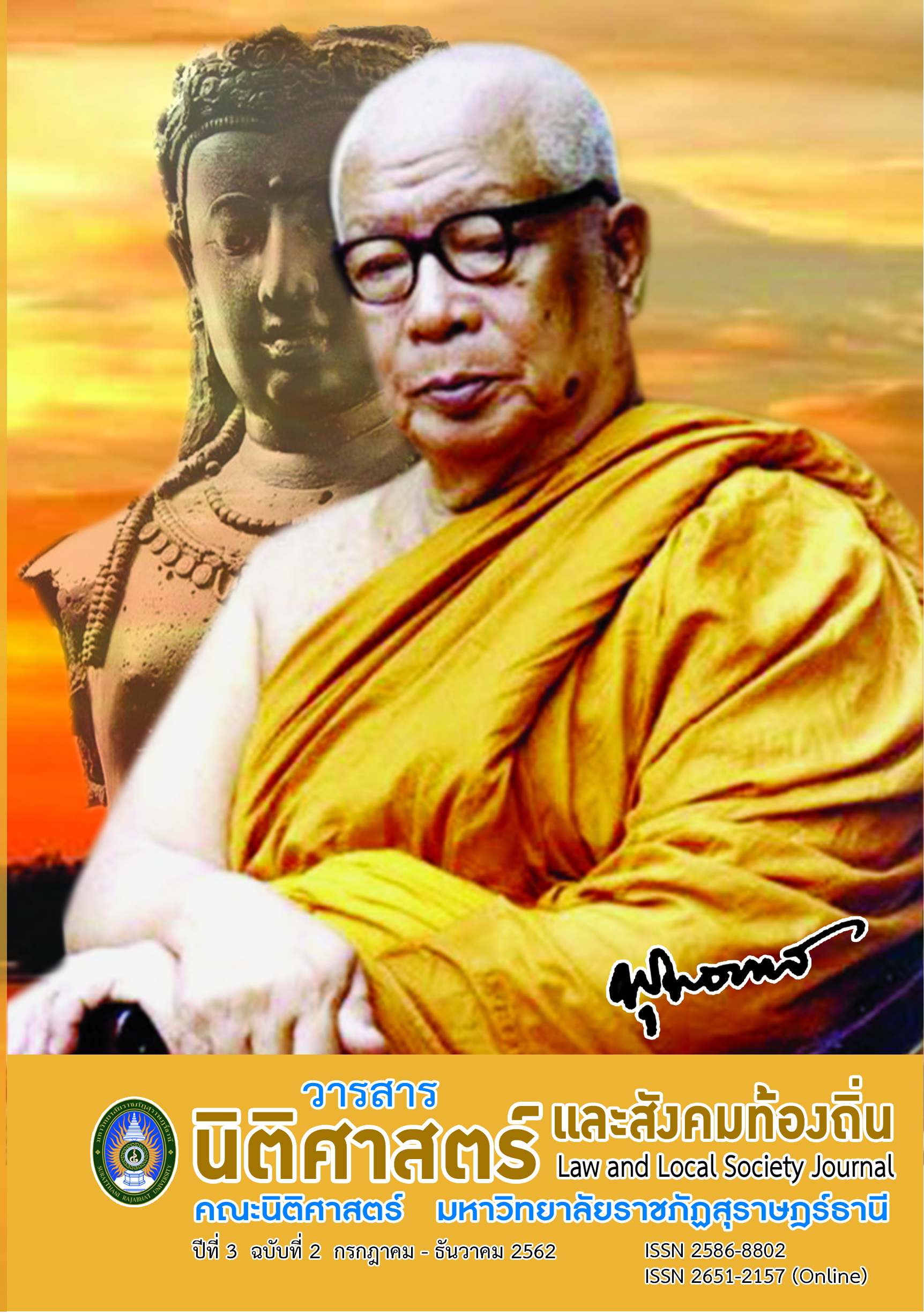
Buddhadasa Bhikkhu’s Concept of Freedom from Materialism
Keywords:
Concept, Buddhadasa Bhikkhu, Freedom from MaterialismAbstract
This academic paper aims to explain the Buddhadasa Bhikkhu’s concept of freedom from materialism by the method of analysis and synthesis of his Thammakot Literature series.
The study found that the freedom from materialism required the principle of Dhamma including Samma Ditthi (right view), Samma Sankappa (right intention), Samma Vaca (right speech), Samma Kammanta (right action), Samma Achiva (right livelihood), Samma Vayama (right effort), Samma Sati (right mindfulness) and Samma Samadhi (right concentration) The Samma Ditthi principle was the factor leading to the life with freedom from materialism. This required the great of determination and the truth based on Yathaphuttasammappanya (knowledge based on the absolute truth). This principle enlightened humanity that everything was just natural element. In other words, as the Samma Ditthi was applied, their feeling came with the right view controlling the consciousness that made them understood that everything was just natural element. As they understood, self and clinging to self would disappear, it resulted in the freedom from materialism.
References
พุทธทาสภิกขุ. ธรรมสัจจสงเคราะห์. พิมพ์ครั้งที่ 2. สุราษฎร์ธานี: ธรรมทานมูลนิธิ, 2547.
พุทธทาสภิกขุ. บรมธรรมภาคต้น. พิมพ์ครั้งที่ 5. สุราษฎร์ธานี: ธรรมทานมูลนิธิ, 2541.
พุทธทาสภิกขุ. ปณิธาน 3 ประการ. พิมพ์ครั้งที่ 2. กรุงเทพฯ: สุขภาพใจ, 2549.
พุทธทาสภิกขุ. เมื่อธรรมครองโลก. สุราษฎร์ธานี: ธรรมทานมูลนิธิ, 2523.
พุทธทาสภิกขุ. ตุลาการิกธรรม เล่ม 3. สุราษฎร์ธานี: ธรรมทานมูลนิธิ, 2544.
วัชระ งามจิตรเจริญ. พุทธศาสนาเถรวาท. พิมพ์ครั้งที่ 3. กรุงเทพฯ: มหาวิทยาลัยธรรมศาสตร์, 2556.
Buddhadasa Bhikkhu. Early stage of Dhamma. 5th edition, Surat Thani: Thamma tan Foundation, 1998.
Buddhadasa Bhikkhu. Humanitarian. 3th. ed. Surat Thani: Thammatan Founda tion, 2003.
Buddhadasa Bhikkhu. True Dhamma. Bangkok: Ausom Garden Foundation, 1975.
Buddhadasa Bhikkhu. Secularism. 3th. Ed. Surat Thani: Thammatan Foundation, 1982.
Buddhadasa Bhikkhu. Early stage of Dhamma. 5th. ed. Surat Thani: Thammatan Foundation, 1998.
Buddhadhasa Bhikkhu. Missionary Training. In the 100th anniversary of the Bud dhadhasa Bhikkhu, Surat Thani: Tammatan Sang Tham Sapa Foundation, 2001.
Buddhadasa Bhikkhu. Faithfulness. 2nd. ed. Surat Thani: Tham matan Founda tion, 2004.
Buddhadasa Bhikkhu. True Dhamma. Bangkok: Ausom Garden Foundation, 1975.
Buddhadasa Bhikkhu. Secularism. 3th. ed. Surat Thani: Thammatan Foundation, 1982.
Buddhadasa Bhikkhu. Crowd Mock Age. (Book 1). Surat Thani: Thammatan Founda tion, 1982.
Buddhadasa Bhikkhu. Tulagariktham. (Book 1). 2nd ed. Surat Thani: Thammatan Foundation, 2002.
Buddhadasa Bhikkhu. Three Resolutions. 2nd ed Bangkok: Sukkapabjai, 2006.
Buddhadasa Bhikkhu. Tulagariktham. (Book 2), 2nd. ed. Surat Thani: Tham matan Foundation, 2000.
Buddhadasa Bhikkhu. Dharma is a matter of nature. Surat Thani: Thammatan Foundation, 2003.
Buddhadasa Bhikkhu. When the World Dominates. Surat Thani: Thammatan Foundation, 1980.
Buddhadasa Bhikkhu. Tulagariktham. (Book 3). Surat Thani: Thammatan Foundation, 2001.
Buddhadasa Bhikkhu. Apply Bodhipakkhiya-dhamma. Surat Thani: Thammatan Foundation, 2001.
Buddhadasa Bhikkhu. Mahidol Morals. 2nd. ed, Surat Thani: Thammatan Foun dation, 2002.
Downloads
Published
How to Cite
Issue
Section
License
Articles published are copyright of local law and society journals. Faculty of Law Surat Thani Rajabhat University
Content and information in articles published in local law and society journals It is the opinion and responsibility of the author of the article directly. which the journal editor It is not necessary to agree or share any responsibility for articles, information, content, images, etc. published in local law and society journals. It is the copyright of the local jurisprudence journal. If any person or entity wants to distribute all or part of it or to take any action must have prior written permission from the local jurisprudence journal only.


