
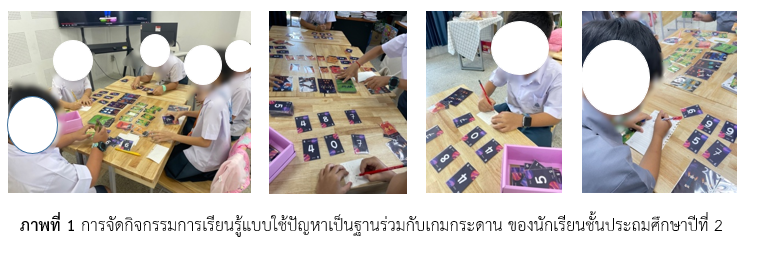
การพัฒนาความสามารถในการแก้ปัญหาทางคณิตศาสตร์ เรื่อง การบวก การลบ การคูณ และการหาร โดยใช้การจัดการเรียนรู้แบบใช้ปัญหาเป็นฐาน (PBL) ร่วมกับเกมกระดาน สำหรับนักเรียนชั้นประถมศึกษาปีที่ 2
Article Sidebar
Main Article Content
บทคัดย่อ
เพื่อศึกษาดัชนีประสิทธิผล (E.I.) ของแผนการจัดกิจกรรมการเรียนรู้แบบแก้ปัญหาเป็นฐาน (PBL) ร่วมกับเกมกระดาน (3) เพื่อเปรียบเทียบผลสัมฤทธิ์ทางการเรียนที่ได้รับการจัดการเรียนรู้แบบใช้ปัญหาเป็นฐาน (PBL) ร่วมกับเกมกระดาน เทียบกับเกณฑ์ร้อยละ 70 (4) เพื่อเปรียบเทียบความสามารถในการแก้ปัญหาทางคณิตศาสตร์ที่ได้รับและการจัดการเรียนรู้แบบใช้ปัญหาเป็นฐาน (PBL) ร่วมกับเกมกระดาน เทียบกับเกณฑ์ร้อยละ 70 (5) เพื่อศึกษาความพึงพอใจของนักเรียนที่ได้รับการจัดกิจกรรมการเรียนรู้คณิตศาสตร์โดยใช้ปัญหาเป็นฐานร่วมกับเกมกระดาน กลุ่มตัวอย่างที่ใช้ในการวิจัยครั้งนี้ ได้แก่ นักเรียนชั้นประถมศึกษาปีที่ 2 โรงเรียนสาธิตมหาวิทยาลัยขอนแก่น ฝ่ายนานาชาติ ภาคเรียนที่ 2 ปีการศึกษา 2565 จำนวน 19 คน ที่ได้มาโดยวิธีการสุ่มแบบกลุ่ม (Cluster Random Sampling) เครื่องมือที่ใช้ในการวิจัยได้แก่ (1) แผนการจัดกิจกรรมการเรียนรู้โดยการจัดการเรียนรู้แบบใช้ปัญหาเป็นฐาน (PBL) ร่วมกับเกมกระดาน จำนวน 15 แผน (2) แบบทดสอบวัดผลสัมฤทธิ์การเรียนรู้ แบบปรนัยเลือกตอบ จำนวน 20 ข้อ (3) แบบทดสอบความสามารถในการแก้ปัญหาทาง แบบอัตนัยจำนวน 3 ข้อ (4) แบบวัดความพึงพอใจในการจัดกิจกรรมการเรียนรู้แบบใช้ปัญหาเป็นฐาน (PBL) ร่วมกับเกมกระดาน สถิติที่ใช้วิเคราะห์ข้อมูล ได้แก่ ร้อยละ ค่าเฉลี่ย ส่วนเบี่ยงเบนมาตรฐาน และทดสอบสมมติฐาน โดยใช้ t-test for One Sampleผลการวิจัยปรากฏ ดังนี้ (1) แผนการจัดการเรียนรู้แบบใช้ปัญหาเป็นฐาน (PBL) ร่วมกับเกมกระดาน มีประสิทธิภาพ (E1/E2 ) ตามเกณฑ์ 88.63/78.93 (2) ดัชนีประสิทธิผล (E.I.) ของแผนการจัดกิจกรรมการเรียนรู้แบบปัญหาเป็นฐาน (PBL) ร่วมกับเกมกระดาน มีค่าเท่ากับ 0.4061 แสดงว่านักเรียนมีความก้าวหน้าคิดเป็นร้อยละ 40.61 (3) ผลสัมฤทธิ์ทางการเรียนของนักเรียนที่ได้รับการจัดกิจกรรมการเรียนรู้แบบใช้ปัญหาเป็นฐาน (PBL) ร่วมกับเกมกระดาน คิดเป็นร้อยละ 78.93 ซึ่งสูงกว่าเกณฑ์ร้อยละ 70 ที่ระดับนัยสำคัญ .05 (4) ความสามารถในการแก้ปัญหาของนักเรียนที่ได้รับการจัดกิจกรรมการเรียนรู้แบบใช้ปัญหาเป็นฐาน (PBL) ร่วมกับเกมกระดาน คิดเป็นร้อยละ 81.73 ซึ่งสูงกว่าเกณฑ์ร้อยละ 70 ที่ระดับนัยสำคัญ .05 (5) นักเรียนที่เรียนด้วยการจัดการเรียนรู้แบบใช้ปัญหาเป็นฐาน (PBL) ร่วมกับเกมกระดาน มีความพึงพอใจต่อกิจกรรมการเรียนรู้ผลสรุปโดยรวมมีค่าเฉลี่ยเท่ากับ 4.69 อยู่ในระดับความพึงพอใจมากที่สุด
Article Details

อนุญาตภายใต้เงื่อนไข Creative Commons Attribution-NonCommercial-NoDerivatives 4.0 International License.
วารสารวิทยาศาสตร์และวิทยาศาสตร์ศึกษา (JSSE) เป็นผู้ถือลิสิทธิ์บทความทุกบทความที่เผยแพร่ใน JSSE นี้ ทั้งนี้ ผู้เขียนจะต้องส่งแบบโอนลิขสิทธิ์บทความฉบับที่มีรายมือชื่อของผู้เขียนหลักหรือผู้ที่ได้รับมอบอำนาจแทนผู้เขียนทุกนให้กับ JSSE ก่อนที่บทความจะมีการเผยแพร่ผ่านเว็บไซต์ของวารสาร
แบบโอนลิขสิทธิ์บทความ (Copyright Transfer Form)
ทางวารสาร JSSE ได้กำหนดให้มีการกรอกแบบโอนลิขสิทธิ์บทความให้ครบถ้วนและส่งมายังกองบรรณาธิการในข้อมูลเสริม (supplementary data) พร้อมกับนิพนธ์ต้นฉบับ (manuscript) ที่ส่งมาขอรับการตีพิมพ์ ทั้งนี้ ผู้เขียนหลัก (corresponding authors) หรือผู้รับมอบอำนาจ (ในฐานะตัวแทนของผู้เขียนทุกคน) สามารถดำเนินการโอนลิขสิทธิ์บทความแทนผู้เขียนทั้งหมดได้ ซึ่งสามารถอัพโหลดไฟล์บทความต้นฉบับ (Manuscript) และไฟล์แบบโอนลิขสิทธิ์บทความ (Copyright Transfer Form) ในเมนู “Upload Submission” ดังนี้
1. อัพโหลดไฟล์บทความต้นฉบับ (Manuscript) ในเมนูย่อย Article Component > Article Text
2. อัพโหลดไฟล์แบบโอนลิขสิทธิ์บทความ (Copyright Transfer Form) ในเมนูย่อย Article Component > Other
ดาวน์โหลด ไฟล์แบบโอนลิขสิทธิ์บทความ (Copyright Transfer Form)
เอกสารอ้างอิง
Aiemthong, N. (2018). A Comparison of Mathematics Learning Achievement and Analytical Ability in Matthayomsuksa 5 Using Problem-based Learning and Conventional teaching method (in Thai). Ratchaphruek Journal, 16(2), 53-60.
Angganapattarakajorn, V. (2012). All about for Mathematic Teacher. Curriculum Teaching and Research (in Thai). Bangkok: Jarunsanitvongkanpim Co.,Ltd.
Auysin, S. (2016). Development the Ability to Solve Mathematical Problems and the Ability of Math Reasoning with problem-based learning management (PBL) on information, news and statistics of Mathayomsuksa 3 students at Tha Duang Pittayakom School (in Thai). Report from the Academic Symposium (Proceedings of 17th) National research presentations Graduate Studies Network (pp. 161-173). July 21, 2017. Phitsanulok: Pibulsongkram Rajabhat University.
Chaikad, N. and Chai-ngam, R. (2021). The 5 E Inquiry-Based Learning with Board Game to achievement on Topic Energy Our on Earth of Students in Grade 3. Master's Thisis. The Faculty of Education Mahasarakham University .
Chaisirithawonkun, P. and Thongmoon, M. (2023). The Effects of Organizing Mathematics Learning Activities Based on Heuristics and Higher Order Questions on Mathematics Problem Solving Ability of Matthayomsuksa 5 Students (in Thai). Journal of Science and Science Education, 6(1), 50-62.
Department of Curriculum and Instruction Development. (2002). Research for Learning Development According to School Curriculum at the Basic Level. Bangkok: Kurusapa Ladprao Press.
Institution for the Promotion of Science and Technology. (2018). Professional Mathematics Skills/Processes (2nd ed.). Bangkok: S. Charoen Kamphai Press.
Janponto, P. (2020). The Development of Mathematical Problem-Solving Abilityof Matthayomsuksa I Students by Using Problem-based Learning (in Thai). Journal of Education Prince os Songkla University, Pattani Campus, 31(2), 38-51.
Jathaisong,K., Boonchoo, K. and Tangwangsakun, W. (2017). A study Mathematics achievement by using problem-based learning For Grade 7 students (in Thai). Retrieved 21 August 2022, form Faculty of Education, Kamphaeng Phet Rajabhat University: https://edu.kpru.ac.th/math//contents/research/17.pdf
Kaemanee, T. (2017). Teaching Science : The knowledge for the Effective Learning Process (in Thai). Bangkok: Chulalongkorn University Press.
Marosalee, M., Danthaweelap, S., Kaway, H., Waemong, I. and Duemong, F. (2021). Game-based learning development on Adventure with a Fun Map to promote algorithmic skills for grade 7 students. In Proceedings of the 6th National Network Science and Technology Conference (pp. 598-606). Surat Thani: Suratthani Rajabhat University.
Ministry of Education. (2008). Organizing learning activities in the mathematics learning group Basic Education Core Curriculum (in Thai). Bangkok: The Printing House of the Teachers' Council (Wat Sangwet Witsayaram Printing School).
Office of the Education Council. (2007). Problem–based Learning: PBL (in Thai). Retrieved 21 August 2022, form Srinakharinwirot University: http://thesis.swu.ac.th/swuebook/h234917v3.pdf
Preedakorn, A. (2014). Design A Boardgame to study ColourCircle for Students in Grade 6. Master's Thesis, M.Ed.(Art Education). Bangkok: Graduate School, Srinakharinwirot University.
Songsai, N. and Sitiwong, T. (2020). The study of the result in using board games as the teaching materials in science subject; "ecosystem" for encouraging the critical thinking skills of 3rd-grade students in Risamrongchanupatham School. Innovative Education and Creative Communication e-Journal, 3(2), 4.
Tholaeng, S. (2016). Comparisons of Leaning Achievement, Problems Solving Skills and Mathematicla Connection Ability, Entitled Content Application of Prathomsuksa 6 Students Between Using Problem-Based Learning Approach and 4MAT Learning Model (in Thai). Journal of Education, Mahasarakham University, 10,1148-1149.
