การพัฒนาความสามารถการแก้โจทย์ปัญหาคณิตศาสตร์ เรื่อง เศษส่วน ของนักเรียน ชั้นประถมศึกษาปีที่ 5 โดยใช้การเรียนรู้แบบร่วมมือเทคนิค TGT ร่วมกับ Bar Model
Article Sidebar
Main Article Content
บทคัดย่อ
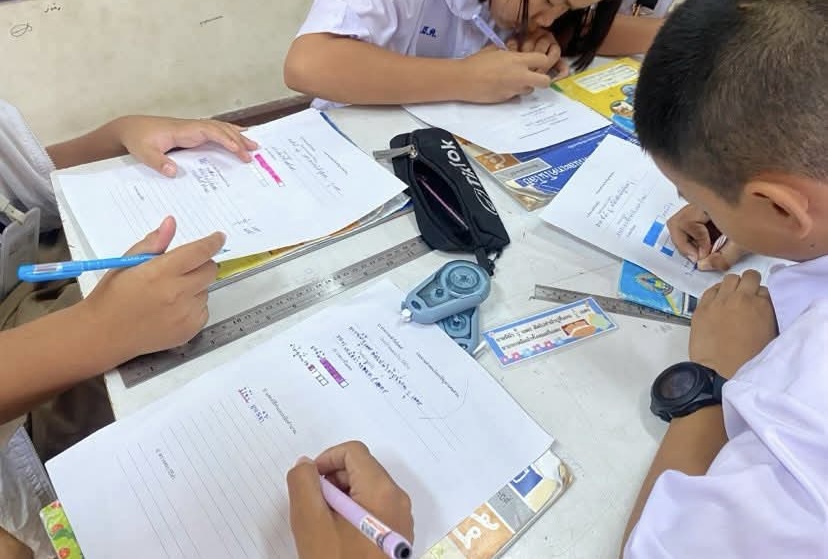
การวิจัยครั้งนี้มีวัตถุประสงค์เพื่อ 1) พัฒนาความสามารถการแก้โจทย์ปัญหาคณิตศาสตร์ เรื่องเศษส่วน ของนักเรียนชั้นประถมศึกษาปีที่ 5 โดยใช้การเรียนรู้แบบร่วมมือเทคนิค TGT ร่วมกับ Bar Model เทียบกับเกณฑ์ร้อยละ 70 และ 2) เปรียบเทียบผลสัมฤทธิ์การแก้โจทย์ปัญหาทางคณิตศาสตร์ก่อนเรียนและหลังเรียนด้วยการเรียนรู้แบบร่วมมือเทคนิค TGT ร่วมกับ Bar Model กลุ่มตัวอย่างที่ใช้ในการวิจัย ได้แก่ นักเรียนชั้นประถมศึกษาปีที่ 5 โรงเรียนบ้านสี่แยกสมเด็จ ภาคเรียนที่ 1 ปีการศึกษา 2567 จำนวน 30 คน ที่ได้จากการสุ่มแบบกลุ่ม เครื่องมือที่ใช้ในการวิจัย ได้แก่ แผนการจัดการเรียนรู้จำนวน 4 แผน แบบวัดความสามารถการแก้โจทย์ปัญหาแบบอัตนัยจำนวน 4 ข้อ มีค่าความเชื่อมั่นเท่ากับ 0.83 และแบบทดสอบวัดผลสัมฤทธิ์ทางการเรียนเป็นแบบทดสอบปรนัยจำนวน 20 ข้อ มีค่าความเชื่อมั่น เท่ากับ 0.74 การวิเคราะห์ข้อมูลใช้ค่าสถิติเชิงพรรณนา ได้แก่ ค่าเฉลี่ย ค่าร้อยละ และส่วนเบี่ยงเบนมาตรฐาน รวมถึงสถิติเชิงอนุมานโดยการทดสอบค่าที (t-test) ผลการวิจัยพบว่า 1) ความสามารถการแก้โจทย์ปัญหาคณิตศาสตร์ เรื่องเศษส่วน ของนักเรียนหลังเรียนโดยใช้การเรียนรู้แบบร่วมมือเทคนิค TGT ร่วมกับ Bar Model สูงกว่าเกณฑ์ร้อยละ 70 อย่างมีนัยสำคัญทางสถิติที่ระดับ .05 และ 2) ผลสัมฤทธิ์การแก้โจทย์ปัญหาคณิตศาสตร์ของนักเรียนหลังเรียนสูงกว่าก่อนเรียนอย่างมีนัยสำคัญทางสถิติที่ระดับ .05 จากผลการวิจัย สามารถสรุปได้ว่าการเรียนรู้แบบร่วมมือเทคนิค TGT ร่วมกับ Bar Model เป็นวิธีการเรียนรู้ที่มีประสิทธิภาพในการพัฒนาความสามารถในการแก้โจทย์ปัญหาและผลสัมฤทธิ์ทางการเรียนของนักเรียนโดยการใช้ Bar Model ช่วยให้นักเรียนเห็นภาพความสัมพันธ์ของข้อมูลในโจทย์ได้ชัดเจนยิ่งขึ้น ส่งผลให้นักเรียนสามารถวิเคราะห์ วางแผน และแก้ปัญหาโจทย์คณิตศาสตร์ได้อย่างถูกต้องและแม่นยำ เทคนิค TGT ยังส่งเสริมการทำงานร่วมกันในกลุ่ม และความสามัคคีในหมู่ผู้เรียน ซึ่งเป็นทักษะจำเป็นของผู้เรียน
Article Details

อนุญาตภายใต้เงื่อนไข Creative Commons Attribution-NonCommercial-NoDerivatives 4.0 International License.
วารสารวิทยาศาสตร์และวิทยาศาสตร์ศึกษา (JSSE) เป็นผู้ถือลิสิทธิ์บทความทุกบทความที่เผยแพร่ใน JSSE นี้ ทั้งนี้ ผู้เขียนจะต้องส่งแบบโอนลิขสิทธิ์บทความฉบับที่มีรายมือชื่อของผู้เขียนหลักหรือผู้ที่ได้รับมอบอำนาจแทนผู้เขียนทุกนให้กับ JSSE ก่อนที่บทความจะมีการเผยแพร่ผ่านเว็บไซต์ของวารสาร
แบบโอนลิขสิทธิ์บทความ (Copyright Transfer Form)
ทางวารสาร JSSE ได้กำหนดให้มีการกรอกแบบโอนลิขสิทธิ์บทความให้ครบถ้วนและส่งมายังกองบรรณาธิการในข้อมูลเสริม (supplementary data) พร้อมกับนิพนธ์ต้นฉบับ (manuscript) ที่ส่งมาขอรับการตีพิมพ์ ทั้งนี้ ผู้เขียนหลัก (corresponding authors) หรือผู้รับมอบอำนาจ (ในฐานะตัวแทนของผู้เขียนทุกคน) สามารถดำเนินการโอนลิขสิทธิ์บทความแทนผู้เขียนทั้งหมดได้ ซึ่งสามารถอัพโหลดไฟล์บทความต้นฉบับ (Manuscript) และไฟล์แบบโอนลิขสิทธิ์บทความ (Copyright Transfer Form) ในเมนู “Upload Submission” ดังนี้
1. อัพโหลดไฟล์บทความต้นฉบับ (Manuscript) ในเมนูย่อย Article Component > Article Text
2. อัพโหลดไฟล์แบบโอนลิขสิทธิ์บทความ (Copyright Transfer Form) ในเมนูย่อย Article Component > Other
ดาวน์โหลด ไฟล์แบบโอนลิขสิทธิ์บทความ (Copyright Transfer Form)
เอกสารอ้างอิง
Chaisongkram, S. and Vanichwatanavorachai, S. (2020). The Development of Mathematics Problem Solving of Fifth Grade Students Taught by TGT Technique with Bar Model Method (in Thai). Journal of Legal Entity Management and Local Innovation, 6(6), 245-258.
Chaisusuek, C., Khansila, P. and Nongharnpituk, P. (2023). Mathematical problem solving ability and learning achievement on the problems of addition, subtraction, multiplication, and division of grade 5 students using bar model techniques (in Thai). Education Journal of Nakhon Si Thammarat Rajabhat University, 2(1), 59-69.
Gillies, R. M. (2016). Cooperative Learning: Review of Research and Practice. Australian Journal of Teacher Education, 41(3), 39-54.
Kherasit, P., Wongkrai, S. and Yunprakon, S. (2023). The Development of Mathematics Problem Solving About Decimal Problems Taught by TGT Technique with Bar Model Method of Fifth Grade Students (in Thai). The 9th National Academic Conference of Rajabhat Loei Academic Year 2023 (pp. 376-384). Loei: Loei Rajabhat University.
Kilpatrick, J., Swafford, J. and Findell, B. (2001). Adding it up: Helping children learn mathematics. Washington. DC: National Academy Press.
Lamon, S. J. (2012). Teaching fractions and ratios for understanding: Essential content knowledge and instructional strategies for teachers. Routledge.
Lamon, S. J. (2020). Teaching fractions and ratios for understanding: Essential content knowledge and instructional strategies for teachers. Routledge.
National Council of Teachers of Mathematics. (2000). Principles and standards for school mathematics Reston. VA: NCTM.
National Institute of Educational Testing Service (Public Organization). (2024). Basic statistics of the results of the National Basic Education Test (O-NET) (in Thai). Retrieved 5 March 2024, from O-NET Announcement System: https://newonetresult.niets.or.th/AnnouncementWeb/Notice/FrBasicStat.aspx
Phonwong, K., Khansila, P. and Nongharnpituk, P. (2023). The Effects of Cooperative Learning with TGT Technique on Grade 8 Students’ Mathematics Achievement in Exponent Topic (in Thai). Kalasin University Journal of Humanities Social Sciences and Innovation, 2(1), 14-25.
Polya, G. (1957). How to solve it: A new aspect of mathematical method. Princeton University Press.
Silarak, S. and Wongsaphan, M. (2024). Developing the Ability to Solve Math Problems of Addition, Subtraction, Multiplication, Dividing of People in 3rd Grade using Cooperative Learning Management in Conjunction with Bar Models (in Thai). Rajabhat Maha Sarakham University Journal, 18(2), 309-319.
Slavin, R. E. (1995). Cooperative learning: Theory, research, and practice. Allyn and Bacon.
Thongyou, U. and Thongaem, A. (2019). Development of the Mathematical Word Problem-Solving Ability Using TGT Cooperative Learning Technique for Prathomsuksa 2 Students (in Thai). Bangkok: Dhurakij Pundit University.
Worakham, P. (2018). Educational Research (9th ed.) (in Thai). Mahasarakham: Taxila Printing.
