Generative AI policy
Generative AI policy for authors
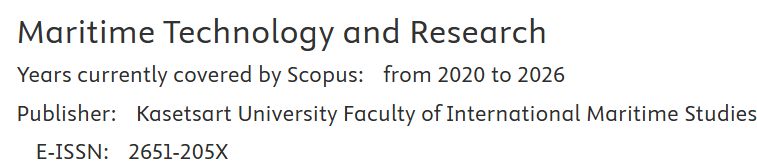
MTR has a clear Generative AI policy. AI offers both potential benefits and challenges in the realm of scientific writing and academic publishing. To enhance transparency, MTR follows Scopus’s suggestion that every submission must disclose any use of AI in the creation of content or at any stage of the peer review and publishing processes. MTR established its AI policy based on STM.
For manuscripts submitted after 1 April 2026, the authors must clearly state in their manuscript about the application of AI or AI-assisted technologies during the writing process. Such statements will appear in the published work.
For the AI Statement, the authors can write how they applied AI. Please refer to MTR's AI policy below. However, the last sentence of an AI statement must be “With or without AI applications, the authors are fully accountable for every process of the work and manuscript writing. All final edits, interpretations, and conclusions are the sole responsibility of the authors. The authors academically and ethically confirmed that the stated AI statements are true, and the authors are ultimately responsible and accountable for the contents of the published work, including the correctness of the references in the reference list”. Alternative statements may be acceptable if their meaning is similar.
An example of an AI Statement:
The authors used ChatGPT (OpenAI) and Grammarly for assistance in conceptualization and grammar refinement of the manuscript. Additionally, Canva was used in the development of Figures 3 and 4. With or without AI applications, the authors are fully accountable for every process of the work and manuscript writing. All final edits, interpretations, and conclusions are the sole responsibility of the authors. The authors academically and ethically confirmed that the stated AI statements are true, and the authors are ultimately responsible and accountable for the contents of the published work, including the correctness of the references in the reference list.
MTR allows the use of AI for these activities during the preparation of the submitted manuscript:
(1) Refining, correcting, editing, or formatting the manuscript to improve clarity of language
Description of the activity: Machine tools were used to suggest language improvements within the manuscript
Examples of the activity: Using spell checkers, grammar checkers, and similar tools (such as Microsoft 365’s built-in editing tools) to refine text written primarily by humans
(2) Translation of manuscript text for the purpose of publishing
Description of the activity: AI tools were used to assist in the translation of an author’s original work into a secondary language for inclusion in the manuscript
Examples of the activity: Using AI tools such as Google Translate or ChatGPT to assist with translating a manuscript draft
(3) Refining or formatting of data reported in the manuscript
Description of the activity: AI tools were used to assist with the refinement of the presentation of data reported in the manuscript
Examples of the activity: Using AI tools to improve clarity or readability (e.g., on the level of language) or format research data submitted as part of the manuscript or its associated materials (e.g., in supplementary materials or appropriate repositories)
(4) Generation, refinement, correction, editing, or formatting of images, diagrams or other figures for illustrative purposes only
Description of the activity: AI tools were used to generate images, diagrams, or other figures in the manuscript for illustrative or aesthetic purposes only
Examples of the activity: Using AI tools to create an image of, e.g., coastal communities participating in mangrove plantation (the sort of image that might otherwise be created by a human artist as an illustration)
(5) Generation, refinement, correction, editing, or formatting of visualizations of research data or results
Description of the activity: AI tools were used to visualize or refine visualizations of research data/results in the manuscript
Examples of the activity: Using AI tools to generate graphs, tables, or other visualizations of research datasets
(6) Refinement or formatting of code reported in the submitted manuscript
Description of the activity: AI tools were used to assist with the refinement of the presentation of code used in the research process, and reported in the manuscript
Examples of the activity: Using AI tools to improve the readability and clarity of code submitted as part of the manuscript, or any associated materials (e.g., in supplementary materials or appropriate repositories), without altering its functionality
(7) Assisting with gathering references
Description of the activity: AI tools were used to suggest references to include in the manuscript’s reference list
Examples of the activity: Using AI tools to find and identify articles that are likely to be related to the research reported in the manuscript
MTR does not allow the use of AI for these activities during the preparation of the submitted manuscript:
(1) Writing or drafting manuscript content
Description of the activity: AI tools were used to generate part or all of the manuscript text
Examples of the activity: Using AI tools to generate text from prompts, using AI tools to significantly expand on or rewrite text, using AI tools to generate machine summaries of text
(2) Presentation of any kind of content generated by AI tools as though it were original research data/results from non-machine sources
Description of the activity: AI tools were used to create data, text, images, graphs, spectra, or other content that is presented as though it were original research data/results collected or analyzed from other, non-machine sources
Examples of the activity: Any content generated wholesale by AI tools without any basis in original research data/outputs, presented as though it is based on original data/results
----------------------------------------------------------------------------------------------------------------------------------------
Generative AI policy for reviewers
Reviewers must not input a submitted manuscript or any of its components into a generative AI tool, as this could violate data privacy rights. This obligation of confidentiality also applies to the peer review report, which may hold confidential details about the manuscript or its authors. Reviewers ought to refrain from uploading their peer review reports to an AI tool, even solely for the purpose of enhancing language and readability. Engaging in the review of a scientific manuscript comes with responsibilities that can only be fulfilled by humans. Reviewers must not utilize generative AI or AI-assisted technologies when conducting a scientific review of a paper, as the nuanced reasoning and original evaluation necessary for peer review are beyond the capabilities of this technology, and there exists a risk that it may produce incorrect, incomplete, or biased assessments of the manuscript. The reviewer bears the responsibility and accountability for the content of the review report.
----------------------------------------------------------------------------------------------------------------------------------------
Generative AI policy for editors
The editor must not upload any submitted manuscript or its components into a generative AI tool, as doing so might breach the authors’ confidentiality, proprietary rights, or data privacy rights. Overseeing the editorial review of a scientific manuscript entails responsibilities that can only be assigned to human beings. Editors should not utilize generative AI or AI-assisted technologies to aid in the evaluation or decision-making process of a manuscript. The responsibility and accountability for the editorial process, the ultimate decision, and the communication of that decision to the authors lie with the editor.