PROBLEM SITUATIONS OF SOLID WASTE MANAGEMENT IN PHETCHABUN MUNICIPALITY
DOI:
https://doi.org/10.14456/nrru-rdi.2020.65Keywords:
Waste problem conditions, Solid waste management, Guidelines for solid waste management, Zero wasteAbstract
The purpose of this research was to study the problems of solid waste management, and guidelines for waste management in Phetchabun municipality, Phetchabun province. Mixed method research was conducted, the group of key informants were selected specifically the knowledgeable 5 people with expertise and experience in waste management using interview forms (IOC=0.80). Data were collected and analyzed for content by content analysis. For the sample, the sample size was determined by using the Taro Yamane formula 400 samples. Sampling simple random method Questionnaires with IOC values: 0.67-1.00 to collect data. Data were analyzed by using basic statistics such as percentage, average and standard deviation.
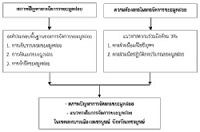
The result of the research shows that the significant content caused by management department, waste collection department, and waste disposal department. With the first level of waste disposal problems, following with data collection and waste separation for solid waste management in cooperation in solving problems reached at the highest level, followed by cooperation in reducing waste. The important guidelines are 1) Creating knowledge in accordance with academic principles in waste management, that may lead to the household standard, 2) Clear classification of general garbage and dangerous wasted vehicles, 3) Raising awareness for the impact of future increasing waste, and 4) Targeting future goals to “Zero Waste”.
References
Bilitewski, B. (2008). From traditional to modern fee systems. Waste management, 28(12), 2760-2766.
Bua-Lat, S. (2017). Factors affecting the solid waste management efficiency of people in the area of thasongkhon Sub-district Administrative Organization, Mueang District, Mahasarakham Province. The 2nd academic research presentation meeting, Rajabhat Maha Sarakham University, (pp. 1349-1360). (In Thai)
Chaiprapan, S., & Vanapruk, P. (2010). Integrated solid waste management, Basic practice and theory. Songkla : Department of Civil Engineering Faculty of Engineering Prince of Songkla University. (In Thai)
Office of the Council of State. (2006).The Act defines decentralization procedures for local administrative organizations B.E. 1999. Retrieved June 9, 2019, from www.dla.go.th/ work/planlocal (In Thai)
Phetchabun Municipality. (2018). Basic information. Retrieved June 10, 2018, from http://www.nakornban.net/home/home.php (In Thai)
Pollution Control Department, Ministry of Natural Resources and Environment. (2019). Summary of Thailand’ s pollution situation in 2018. Bangkok : Mongkol printing. (In Thai)
Srisathit, T. (2010). Community solid waste management engineering. Bangkok : Chulalongkorn University Publishing. (In Thai)
Vanapruk, P. (2012). Improvement of Municipal Solid Waste Management Policy in Thailand. Thesis, Doctor of Philosophy degree in Environmental Management, Prince of Songkla University, Songkla. (In Thai)
Watpanichakul, K. (2020). Household Solid Waste Management Behaviors in Samut Sakhon Municipality, Samut Sakhon Province. Faculty of Social Sciences and Humanties, Mahidol University, 19(2), 55-72. (In Thai)
Wongchummali, P., & Pampasit, R. (2017). ZERO WASTE: CONCEPTS AND PRINCIPLES OF THE ZERO WASTE SOCIETY. Document for academic conference (Proceeding) seminar network of graduate students 16th Program in Sociology and Anthropology, 915-929. (In Thai)
Woracchitsanupong, W. (2018). Community Solid Waste Management Model district-in Dongmada Sub, Maelao District, Chiangrai Province. 13th Naresuan National Research Conference : Research and Innovation Drive the economy and society, 1261-1271. (In Thai)
Yamane, T. (1973). Statistics anintroduction analysis. New York : Harper & Row.
Yasamut, C. (2012). Environmental health on waste management. Chiang Mai : Sangsin. (In Thai)