การศึกษาผลการใช้หลักสูตร Sandbox บนพื้นฐานของการจัดการเรียนรู้โดยใช้งานเป็นฐาน เพื่อส่งเสริมสมรรถนะการเรียนรู้ของนักเรียนระดับการศึกษาขั้นพื้นฐาน
DOI:
https://doi.org/10.14456/nrru-rdi.2023.41คำสำคัญ:
รูปแบบการจัดการเรียนรู้ฐานสมรรถนะ, การจัดการเรียนรู้โดยใช้งานเป็นฐาน, สมรรถนะการเรียนรู้บทคัดย่อ
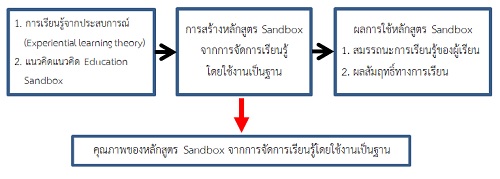
ผู้เรียนในปัจจุบันควรมีสมรรถนะที่สอดคล้องกับคุณลักษณะของผู้เรียนในศตวรรษที่ 21 ซึ่งหลักสูตรฐานสมรรถนะที่มุ่งพัฒนาผู้เรียนให้มีคุณลักษณะที่จำเป็นต่อการดำรงชีวิตจึงมีความสำคัญเป็นอย่างมาก ดังนั้นวัตถุประสงค์ของการวิจัย คือ เพื่อศึกษาผลการใช้หลักสูตร Sandbox บนพื้นฐานของการจัดการเรียนรู้โดยใช้งานเป็นฐานสำหรับการพัฒนาสมรรถนะการเรียนรู้ของนักเรียนในประเด็น เปรียบเทียบสมรรถนะการเรียนรู้ก่อนและหลังเรียน และเปรียบเทียบผลสัมฤทธิ์ทางการเรียนก่อนและหลังเรียน และหลังเรียนกับเกณฑ์ร้อยละ 70 จากการจัดการเรียนรู้โดยใช้งานเป็นฐาน กลุ่มตัวอย่าง คือ สถานศึกษา จำนวน 7 แห่ง ครูผู้สอน จำนวน 48 คน และนักเรียน จำนวน 425 คน ได้มาโดยวิธีการคัดเลือกแบบอาสาสมัคร เครื่องมือที่ใช้ คือ แบบประเมินหลักสูตร Sandbox ค่าความเหมาะสม 4.16-4.58 และแบบประเมินสมรรถนะ ค่าความเหมาะสม 5.00 ดำเนินการสอนตามแผนการจัดการเรียนรู้ วัดผลสัมฤทธิ์และสมรรถนะการเรียนรู้ สถิติที่ใช้วิเคราะห์ข้อมูล คือ ค่าเฉลี่ย ส่วนเบี่ยงเบนมาตรฐาน t-test for dependent และ t-test for one sample ผลการวิจัยพบว่า 1) นักเรียนมีสมรรถนะการเรียนรู้หลังเรียนสูงกว่าก่อนเรียน 2) นักเรียนมีผลสัมฤทธิ์ทางการเรียนหลังเรียนสูงกว่าก่อนเรียน อย่างมีนัยสำคัญทางสถิติที่ระดับ 0.05 และ 3) นักเรียนมีผลสัมฤทธิ์ทางการเรียนหลังเรียนสูงกว่าเกณฑ์ร้อยละ 70 อย่างมีนัยสำคัญทางสถิติที่ระดับ 0.05 จึงส่งผลให้นักเรียนมีผลสัมฤทธิ์ทางการเรียนและมีสมรรถนะการเรียนรู้ที่สูงขึ้น
เอกสารอ้างอิง
Ambiyar, A., Ganefri, G., Suryadimal, S., Jalinus, N., Efendi, R., & Jeprimansyah, J. (2020). Development of Work Based Learning (WBL) learning Model in Heat Transfer Courses. The 2nd International Conference on Research and Learning of Physics. In Journal of Physics: Conference Series 1481(2020) 012113. doi: 10.1088/1742-6596/1481/1/012113
Chantanasuksilpa, K., & Sankanueng, M. (2023). Guidelines for Developing Undergraduate Students through Work-Based Education Management to Meet the Needs of Enterprises in the Service Industry under the New Normal Circumstances. Panyapiwat Journal, 15(1), 237-251. (In Thai)
Doramarn, N., Malakul Na Ayudhaya, P., & Kirdpitak, P. (2020). An Experiential Learning and Critical Reflection. Journal of Psychology Kasem Bundit University, 10(2), 21-28. (In Thai)
Kabita, N., & Ji, L. (2017). The why, what and how of competency-based curriculum reforms: The Kenyan experience. Geneva, Switzerland: IBE-UNESCO.
Keeratichamroen, W., & Phonnong, I. (2023). A Development of Curriculum Development Model in Education Sandbox for Enhancing Essential Competencies for Students in Basic Education Level. Ratchaphruek Journal, 21(3), 16-30. (In Thai)
Kitikhun, P. (2019). Bureaucratic reform: development and innovation in new ways (Sandbox). Bangkok : The Secretariat of the House of Representatives. (In Thai)
Kolb, D. A. (2005). The Kolb Learning Style Inventory – Version 3.1. Boston: Hay Resources Direct.
Ministry of Education. (2021). Competency-Based Education Thailand. Retrieved May 2, 2023, form https://cbethailand.com/ (In Thai)
Nakhon Ratchasima Primary Educational Service Area Office 1. (2022). School Management System Program. Retrieved June 23, 2022, form https://schoolmis.obec.expert/misreport (In Thai)
Panit, W. (2012). How to Create Learning for Students in the 21st Century. Bangkok : Sodsri-Saritwong Foundation. (In Thai)
Sinthaphanon, S. (2015). Learning management of Teacher for student in the 21st Century. Bangkok : 9119 Technique printing. (In Thai)
Srisa-ard, B. (2017). Preliminary research (10th ed.). Bangkok : Suviriyasan. (In Thai)
Sudjimat, D. A., & Permadi, L. C. (2019). Effect of Work-Based Learning Model on Students’ Achievement Motivation. Journal Pendidikan Teknologi dan Kejuruan, 25(2), 204-212.
The Secretariat of the House of Representatives. (2019). Education Sandbox. Bangkok : The Secretariat of the House of Representatives. (In Thai)
UNESCO. (2009). 2009 UNESCO Framework for Cultural Statistics (FCS). Montreal: UNESCO Institute of Statistics.
Warakitkasemsakul, S. (2011). Research Methods in Behavioral and Social Sciences. Udon Thani : Faculty of Education, Udon Thani Rajabhat University. (In Thai)
Worakham, P. (2012). Educational research (9th ed.). Mahasarakham : Taksila printing. (In Thai)
ดาวน์โหลด
เผยแพร่แล้ว
รูปแบบการอ้างอิง
ฉบับ
ประเภทบทความ
สัญญาอนุญาต

อนุญาตภายใต้เงื่อนไข Creative Commons Attribution-NonCommercial-NoDerivatives 4.0 International License.