
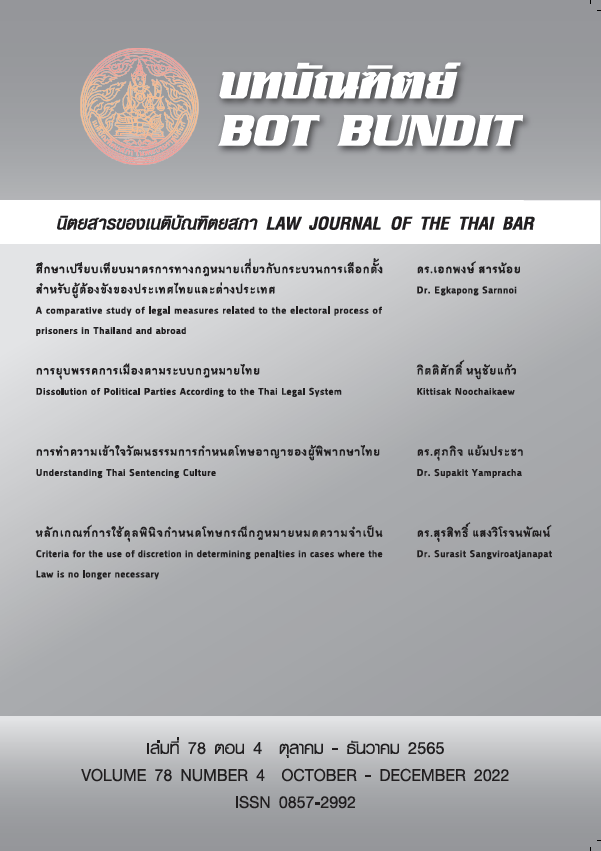
การยุบพรรคการเมืองตามระบบกฎหมายไทย
Article Sidebar
Main Article Content
บทคัดย่อ
บทความวิจัยนี้มีวัตถุประสงค์เพื่อวิเคราะห์เปรียบเทียบหลักเกณฑ์ วิธีการของการยุบพรรคการเมืองของประเทศไทยและต่างประเทศ เพื่อนำไปสู่ข้อเสนอแนะให้ได้รูปแบบที่เหมาะสมกับประเทศไทย
ผลการวิจัยพบว่า รัฐธรรมนูญแห่งราชอาณาจักรไทย (พุทธศักราช 2560) ประกอบพระราชบัญญัติประกอบรัฐธรรมนูญว่าด้วยพรรคการเมือง พ.ศ. 2560 และพระราชบัญญัติประกอบรัฐธรรมนูญว่าด้วยการเลือกตั้งสมาชิกสภาผู้แทนราษฎร พ.ศ. 2560 บัญญัติเหตุที่จะนำไปสู่การยุบพรรคการเมืองได้ถึง 23 กรณี ซึ่งถือเป็นปัญหาที่กำหนดให้เหตุแห่งการยุบพรรคการเมืองของไทย เป็นเกณฑ์อย่างกว้าง และการวางขอบเขตอย่างกว้างเช่นนี้นำไปสู่การวินิจฉัยของศาลรัฐธรรมนูญที่มีขอบเขตอย่างกว้างเช่นเดียวกัน อันส่งผลกระทบกระเทือนต่อสารัตถะของการปกครองในระบอบประชาธิปไตยและกระทบต่อการใช้เสรีภาพในการรวมตัวกันเป็นพรรคการเมืองซึ่งถือว่าเป็นเสรีภาพขั้นพื้นฐานของประชาชนในระบอบประชาธิปไตย จากการศึกษาเปรียบเทียบกับประเทศเยอรมนี ประเทศฝรั่งเศส ประเทศตุรกี และประเทศชิลี ผู้ศึกษามีความเห็นว่าเหตุแห่งการยุบพรรคการเมืองของไทยควรเป็นเกณฑ์อย่างแคบและศาลรัฐธรรมนูญยังคงเป็นองค์กรที่มีความเหมาะสมในการวินิจฉัยคดีการยุบพรรคการเมืองแต่ควรวินิจฉัยโดยจำกัดอำนาจของตนเองอย่างยิ่ง
ข้อเสนอแนะการวิจัย การยุบพรรคการเมืองควรมีได้เฉพาะเหตุร้ายแรงและควรบัญญัติให้มีความชัดเจนไว้ในบทบัญญัติรัฐธรรมนูญที่กระทบต่อหลักการพื้นฐานในเหตุสองลักษณะ คือ พรรคการเมืองกระทำการล้มล้างหรือเป็นปฏิปักษ์ต่อการปกครองระบอบประชาธิปไตยอันมีพระมหากษัตริย์ทรงเป็นประมุข และควรนำมาตรการ “สั่งให้เลิกการกระทำ” มาใช้แทนการยุบพรรคการเมืองในกรณีที่มีความร้ายแรงระดับกลาง ส่วนกรณีที่พรรคการเมืองต้องสิ้นสภาพความเป็นพรรคการเมืองต้องเป็นกรณีที่เลิกพรรคเองตามข้อบังคับ ส่วนกรณีอื่น ๆ เห็นควรยกเลิก เพื่อมีเป้าประสงค์ในการมุ่งคุ้มครองเสรีภาพในการรวมตัวกันเป็นพรรคการเมืองของประชาชนเป็นสำคัญ
Article Details

อนุญาตภายใต้เงื่อนไข Creative Commons Attribution-NonCommercial-NoDerivatives 4.0 International License.
เอกสารอ้างอิง
ภาษาไทย
กิตติศักดิ์ หนูชัยแก้ว, ‘พลวัตรสังคมวิทยาการเมืองกับการยุบพรรคการเมืองของไทย:ปฐมบทจากรัฐธรรมนูญ ปี 2540 ถึง รัฐธรรมนูญ ปี 2560’ ใน คณะกรรมการจัดการประชุมวิชาการระดับชาตินิติพัฒน์-ธรรมศาสตร์ ครั้งที่ 5 (บรรณาธิการ) หนังสือประมวลบทความ (Proceedings) การประชุมวิชาการระดับชาตินิติพัฒน์-ธรรมศาสตร์ ครั้งที่ 5 ประจำปี 2563 (สถาบันบัณฑิตพัฒนบริหารศาสตร์ 2563).
ณัฎฐพล สกุลเมฆา, ‘สิทธิพิทักษ์รัฐธรรมนูญ ศึกษาเปรียบเทียบกลไกป้องกันตนเองของรัฐธรรมนูญจากการที่บุคคลหรือกลุ่มบุคคลใช้สิทธิ หรือเสรีภาพตามรัฐธรรมนูญในทางมาสุจริตเพื่อล้มล้างรัฐธรรมนูญในระบบกฎหมายไทยและเยอรมัน’ (เอกสารไม่ตีพิมพ์).
ต่อพงศ์ กิตติยานุพงศ์, ‘ศาลรัฐธรรมนูญเยอรมันกับหลักการจำกัดอำนาจตนเองของฝ่ายตุลาการ’ (2557) 1 วารสารนิติศาสตร์มหาวิทยาลัยธรรมศาสตร์ 100.
บรรเจิด สิงคะเนติ, ความรู้ทั่วไปเกี่ยวกับศาลรัฐธรรมนูญ (พิมพ์ครั้งที่ 2, วิญญูชน 2560).
บรรเจิด สิงคะเนติ และคณะ, ‘รายงานวิจัยฉบับสมบูรณ์ เรื่อง ศาลรัฐธรรมนูญกับแนวคิดประชาธิปไตยที่ปกป้องตนเองได้ (Sustainable Democracy)’ (รายงานผลการวิจัยเสนอต่อสำนักงานศาลรัฐธรรมนูญ 2563).
บุญศรี มีวงศ์อุโฆษ, แนวทางการปฏิรูประบบการเลือกตั้งและพรรคการเมือง (สำนักวิจัยและพัฒนา สถาบันพระปกเกล้า 2555).
ปริญญา เทวานฤมิตรกุล, ‘รายงานวิจัย เรื่อง การยุบพรรคการเมืองโดยองค์กรวินิจฉัยความชอบด้วยรัฐธรรมนูญ’, (รายงานผลการวิจัยเสนอต่อสำนักงานศาลรัฐธรรมนูญ 2558).
ปิยบุตร แสงกนกกุล, ในพระปรมาภิไธยประชาธิปไตยและตุลาการ (โอเพ่นบุ๊คส์ 2552).
วรพจน์ วิศรุตพิชญ์, สิทธิเสรีภาพตามรัฐธรรมนูญแห่งราชอาณาจักรไทย พุทธศักราช 2540 (วิญญูชน 2543).
สมคิด เลิศไพฑูรย์, กฎหมายรัฐธรรมนูญ หลักการใหม่ตามรัฐธรรมนูญแห่งราชอาณาจักรไทย พุทธศักราช 2540 (สำนักพิมพ์มหาวิทยาลัยธรรมศาสตร์ 2548).
สำนักงานศาลรัฐธรรมนูญ, กฎหมายพื้นฐานสหพันธ์สาธารณรัฐเยอรมนี (พี.เพรส 2555).
อานนท์ มาเม้า, ศาลรัฐธรรมนูญและวิธีพิจารณาคดีรัฐธรรมนูญ (โครงการตำราและเอกสารประกอบการสอน คณะนิติศาสตร์ มหาวิทยาลัยธรรมศาสตร์ 2558).
ภาษาต่างประเทศ
Algan, Bülent. ‘Dissolution of political parties by the constitutional court in Turkey: an everlasting conflict between the court and the parliament?’ (2011) 4 Ankara Üniversitesi Hukuk Fakültesi Dergisi 809.
Andras Sajo, ‘From Militant Democracy to the Preventive State?’ (2006) 5 Cardozo Law Review 2255.
Andreas Schedler, ‘What is Democratic Consolidation?’ (1998) 2 Journal of Democracy 91.
Chile’s Constitution of 1980 with Amendments through 2021 <https://www.constituteproject.org/http://constitution/Chile_2021.pdf?lang=en> สืบค้นเมื่อ 1 กันยายน 2564.
Constitution of The Republic of Turkey (1982).
European Commission for Democracy through law (Venice Commission) Guidelines on Prohibition and Dissolution of Political Parties and Analogous Measures 1999 <https://www.venice.coe.int/webforms/documents/default.aspx?pdf¬file=CDL-INF(2000)001-e> สืบค้นเมื่อวันที่ 15 พฤศจิกายน 2565.
