
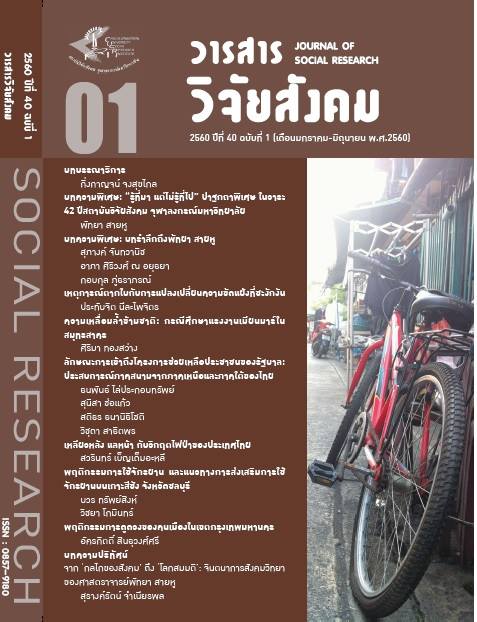
ความเหลื่อมล้ำข้ามชาติ: กรณีศึกษาแรงงานเมียนมาร์ในสมุทรสาคร
Article Sidebar
Main Article Content
บทคัดย่อ
สภาพเศรษฐกิจที่ถดถอยในเมียนมาร์เป็นสาเหตุที่ก่อให้เกิดการย้ายถิ่นของคนในประเทศเมียนมาร์สู่ประเทศอื่น กว่า 1.5 ล้านคนได้แบกรับความเสี่ยงรูปแบบต่างๆ เพื่อมาตั้งรกรากและทำงานในประเทศไทย ประชาชนจากประเทศเมียนมาร์ราว 379,800 คน อาศัยและทำงานอยู่ในจังหวัดสมุทรสาคร ความไม่เท่าเทียมด้านการพัฒนาเป็นรากฐานแห่งความเหลื่อมล้ำในระดับโลกซึ่งความเหลื่อมล้ำทางเศรษฐกิจเป็นสาเหตุที่ก่อให้เกิดการย้ายถิ่น การย้ายถิ่นเกี่ยวพันกับภาวะการข้ามชาติเนื่องจากเป็นกระบวนการซึ่งผู้อพยพคงความเชื่อมโยงและมีกิจกรรมต่างๆ กับประเทศแม่ของตนโดยผ่านทางกลุ่มต่างๆ ภาวะการข้ามชาติมีอิทธิพลต่อผู้อพยพและการเมืองนานาชาติ แรงงานข้ามชาติมีความจำเป็นต้องพึ่งพิงรัฐชาติและในขณะเดียวกันต้องต่อรองกับชุมชนท้องถิ่น สิ่งที่สำคัญอย่างหนึ่งคือแรงงานข้ามชาตินั้นมีความจำเป็นที่จะต้องปรับในเรื่องการใช้ชีวิตส่วนตัวให้สอดคล้องกับวิถีชีวิตในประเทศใหม่ บทความชิ้นนี้มุ่งที่จะแสดงผลกระทบของการย้ายถิ่นในเรื่องของการเพิ่มขึ้นและการลดลงของความเหลื่อมล้ำในระดับต่างๆ ประกอบไปด้วยความเหลื่อมล้ำใน 4 ระดับ คือ ระดับนานาชาติ ระดับชาติ ระดับท้องถิ่นและระดับปัจเจกบุคคล ทั้งนี้บทความได้วิเคราะห์บทบาทต่างๆ ของทุน สาเหตุที่ความเหลื่อมล้ำถูกสร้างและผลิตซ้ำ บทความนี้นำเสนอว่ามีปัจจัยที่อยู่ในสี่ระดับข้างต้นมีส่วนในการสร้างและผลิตซ้ำความเหลื่อมล้ำต่อแรงงานข้ามชาติในจังหวัดสมุทรสาครโดยลักษณะความเหลื่อมล้ำมีความเป็นพลวัตและเป็นผลมาจากเงื่อนไขทางสังคมของประเทศผู้ส่ง ภาวะการข้ามชาติและการเปลี่ยนแปลงต่างๆ ในสังคมที่บุคคลเข้าไปตั้งถิ่นฐาน
Article Details

อนุญาตภายใต้เงื่อนไข Creative Commons Attribution-NonCommercial-NoDerivatives 4.0 International License.
1) บทความนี้เป็นลิขสิทธิ์ของสถาบันวิจัยสังคม จุฬาลงกรณ์มหาวิทยาลัย แต่ความคิดเห็นและเนื้อหาเป็นของผู้แต่ง
2) ทัศนะและความคิดเห็นที่ปรากฏในบทความในวารสารวิจัยสังคมและปริทัศน์ สถาบันวิจัยสังคม จุฬาลงกรณ์มหาวิทยาลัย ถือเป็นความรับผิดชอบของผู้แต่งบทความนั้น และไม่ถือเป็นทัศนะและความรับผิดชอบของกองบรรณาธิการวารสารวิจัยสังคมและปริทัศน์ สถาบันวิจัยสังคม จุฬาลงกรณ์มหาวิทยาลัย กองบรรณาธิการไม่สงวนสิทธิ์ในการคัดลอก แต่ให้ระบุถึงการอ้างอิง
