
Electoral Systems and Political Party Systems: A Comparative Study of Thailand and Malaysia during A.D. 1997-2021
Article Sidebar
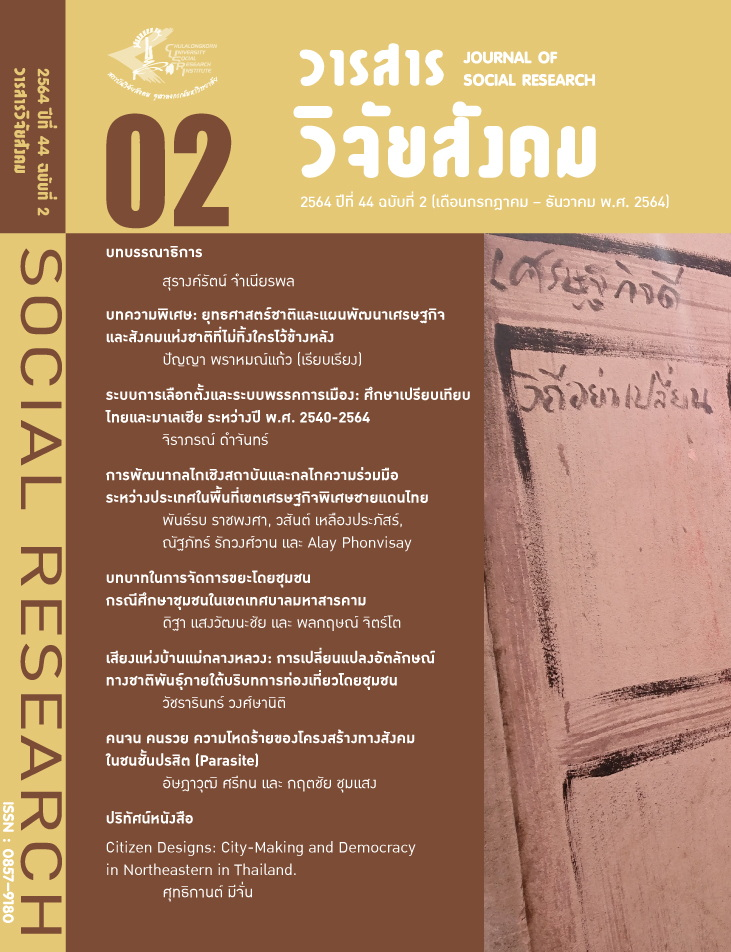
Main Article Content
Abstract
The study compares Thailand and Malaysia's electoral and political party systems from the year of A.D. 1997-2021. The objective is to investigate the electoral systems of both countries, compare their political party systems, and analyze the similarities and differences between the electoral system and the political party system as they pertain to their political stability. It employs qualitative research adopting the documentary and comparative methods of similarities and differences.
The findings reveal that the election system of Thailand and Malaysia are Plurality Systems or the first-past-the-post with the major political parties benefits and leads to a small number of the political party system. However, Thailand’s electoral system is often changed according to the constitutions, such as a Majoritarian system, single-member constituencies; a Majoritarian system, multi-member constituencies; and a Mixed system with constituency and apportionment systems which was the electoral system since 2001. These electoral systems often lead to a multi-party system that affects political stability, and there is still no consensus on the electoral system. On the other hand, Malaysia has always used a Majoritarian system and single-member constituencies which leads to the predominant one-party system, resulting in a better ability to maintain political stability. However, the past two elections have tended towards a multi-party system.
Article Details

This work is licensed under a Creative Commons Attribution-NonCommercial-NoDerivatives 4.0 International License.
- The copyright for this article belongs to the Social Research Institute at Chulalongkorn University. However, the views and content within are solely those of the authors.
- The views and opinions expressed in the articles published in the Journal of Social Research and Review, Social Research Institute, Chulalongkorn University, are the sole responsibility of the authors and do not reflect the views or responsibilities of the editorial board of the Journal of Social Research and Review, Social Research Institute, Chulalongkorn University. The editorial board does not reserve the rights to reproduction but requires proper citation for referencing.
