A STUDY OF OPERATING CONDITIONS AND PROBLEMS IN COMPONENT 5, CURRICULUM OF INSTRUCTION STUDENT ASSESSMENT ACCORDING TO THE INTERNAL EDUCATIONAL QUALITY ASSURANCE SYSTEM AT THE CURRICULUM LEVEL KHON KAEN UNIVERSITY
DOI:
https://doi.org/10.14456/nrru-rdi.2021.34Keywords:
Internal education quality assurance, Internal quality assurance system for curriculum level, Teaching management and student assessmentAbstract
The research aimed to 1) study the current state and operational problems of the internal education quality assurance curriculum level for element 5 curriculum, teaching management, and student assessment at the curriculum level at Khon Kaen University 2) to study the course implementation development method In component 5, curriculum Student assessment According to the internal educational quality assurance system at the curriculum level at Khon Kaen University by analyzing the gaps (Gap analysis) the current operation. The participants were selected with purposive sampling which included 328 curriculum, 40 teachers responsible for the curriculum, 30 curriculum level assessors, and 26 personnel responsible for quality assurance of the curriculum. The data were obtained from questionnaires, interviews, data records, gap analysis was successfully considered quality. The analysis was then performed by statistical data: percentage, mean standard deviation, and content analysis.
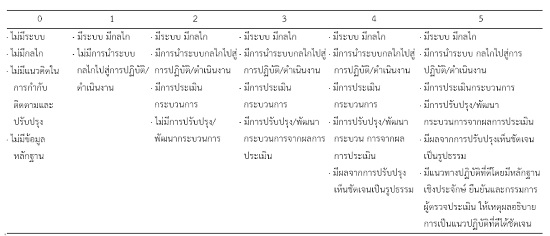
The results revealed that: 1) the condition and problems of curriculum implementation teaching students of the curriculum to have an average score of 3 points, which means is not clear concrete and was found that the teachers implemented the curriculum following the quality assurance cycle at a medium level. However, when considering the results of inquiries from curriculum level assessors, there was a medium level curriculum which completed the PDCA cycle, but rarely found that each curriculum has proceeded to improve operations (Action) 2) the guidelines can be added or redesigned by having the follow up (Check) the implementation of various steps in the PDCA cycle.
References
Chuaratanaphong, J. (1996). Curriculum development: principles and practices. Bangkok : Educational Administration, Publis her of Chulalongkorn University. (In Thai)
Office of the Higher Education Commission. (2015). Internal education quality assurance for Education 2014. Bangkok : Pappim. (In Thai)
Office of the Higher Education Commission. (2015). Thai Qualifications Framework for Higher Education. Retrieved February 27, 2019, from http://www.mua.go.th/users/tqf-hed/ news/FilesNews/FilesNews8/tqf-cycle.pdf (In Thai)
Srisa-ard, B. (2003). Curriculum development. Bangkok : Suriwiyasarn. (In Thai)
Srisa-ard, B. (2010). Introduction research (8th ed.). Bangkok : Suriwiyasarn. (In Thai)
Wongwanich, S. (2013). A research and development of the internal evaluation system of basic educational institutions. Journal of research methodology, 13(1), 67-89. (In Thai)