THE PRODUCT DEVELOPMENT OF OTOP ENTREPRENEURS TO SUPPORT KNOWLEDGE-BASED NETWORK IN SURIN PROVINCE
DOI:
https://doi.org/10.14456/nrru-rdi.2021.63Keywords:
Product development, Silk, Knowledge-networks, OTOP entrepreneursAbstract
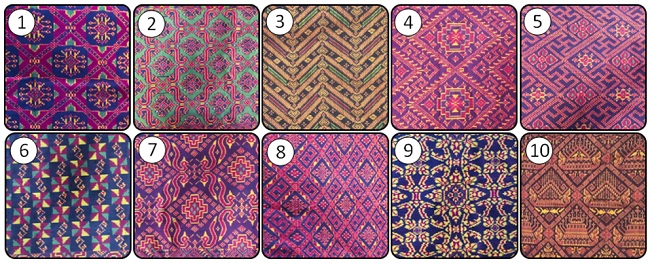
The research aimed to study problems and obstacles to regulate product development guidelines regarding Surin entrepreneurs’ silk products. The qualitative research was conducted with 3 groups of purposive key-informants including: 35 silk-entrepreneur groups, 11 silk-producing ability developers, and a group of product-demo developers. The semi-structured interview was conducted using questions with a correspondence index value of between 0.67-1.00. The in-depth interview was conducted with the first key-informants group. Then, the conducted focus group discussions regarding guidelines for silks producing developers with the second group and finally, used the final data to develop demo-products with the third group. The participatory action research was conducted and then the researcher organized product exhibitions. The triangulation data verification was conducted and then a content analysis was performed were presented descriptively and using visual aids. The results of the study demonstrated that most silk producing knowledge was passed down from generations and did not meet a commercial standard. The key problems and obstacles were non-standard silk-pigment, no unique pattern, high production cost, lack of online marketing expertise and no marketing plan. The production development, knowledge compilation from scholars, local wisdom and group members’ guidelines included: 1) Produce traditional “Pasompukpoom” pattern; 2) Design unique “Muenchai” pattern; 3) Use natural dyes; 4) Use handmade silk raw materials; 5) Use a traditional silk weaving process; 6) Using a traditional process to scent and lengthen silk fabric that is durable as a final production process; and 7) Design a marketing pattern to reach a national market.
References
Aksaeng, D., & Grisanaputi, W. (2009). The Knowledge Management Process for Local Wisdom about Organically-Dyed “Mudmee” Thai Silk. KKU Research Journal (Graduate Studies), 9(4), 135-147. (In Thai)
Audchariyasripong, S. (2019). OTOP KBO Contest 2019. Bangkok : Chatra (Big Ideas Come to Life). (In Thai)
Buasra, P., Turisut, T., & Sanposh, K. (2019). Strategies to Increase the Value Added of Local Woven Fabrics Nongbualamphu Province. Journal of MCU Nakhondhat, 6(10), 5259-5271. (In Thai)
Chemsripong, S., & Petmee, P. (2017). Creating Value Added Products from Local Wisdom : A Case Study of the Ancient Cloth. Journal of Community Development Research (Humanities and Social Sciences), 10(4), 62-85. (In Thai)
Chiarakul, T. (2014). The Problems and the Adaptation of OTOP to AEC. Executive Journal, 34(1), 177-191. (In Thai)
Chingchana, W., Mr. (2021, 10 March). Chief of Provincial Community Development Office of Surin. Interview.
Community Development Department. (2019). OTOP Action Plan2019-2022. Retrieved July 5, 2020, from https://cep.cdd.go.th/wp-content/uploads/sites/108/2020/06/OTOPActionPlan62.pdf (In Thai)
Community Development Department. (2019). OTOP KBO Contest 2019. Bangkok : Chatra (Big Ideas Come to Life). (In Thai)
Community Development Department. (2019). The Community Development Department Granted Countrywide Best in Provincial Knowledge-Based OTOP (KBO). Retrieved July 5, 2020, from http://www.cdd.go.th/content//พช-มอบรางวัลสุดยอดเครือ (In Thai)
Government Gazette. (2017). National Economic and Social Development Plan Issue 12. Retrieved July 10, 2020, from https://www.nstda.or.th/home/knowledge_post/ratchakitcha-soc-12/ (In Thai)
Grisanaputi, W. (2016). Management of Community Enterprise. KhonKaen : KKUprinting. (In Thai)
Kotler, P., & Keller, K. (2016). Marketing Management (13thed.). Harlow : Pearson.
Krisanti, K., & Camsri, R. (2016). Potential Development Guidelines of Sukhawadee Community Enterprise Priksub-district, Sadao District, Songkhla Province. The 7thHatyai National and International Conference (pp. 544-566). Songkla : Hatyai University. (In Thai)
Lorchirachoonkul, V., Atthirawong, W., & Leerojanaprapa, K. (2018). SWOT and TOWS Matrix Analysis for Strategic Development ti Increase Thai-Laos Silk Supply Chain Efficiency. WMS Journal of Management, 7(3), 15-26. (In Thai)
Namjaidee, S. (2021). Brand Communication : Identity Image of Hand-Woven Silk, Pak Thong Chai Didtrict, NaKhon Ratchasima. NRRU Community Research Journal, 15(1), 1-14. (In Thai)
Ongiem, A., & Vichitvejpaisal, P. (2018). Validation of the Teats. Thai J Anesthesiol, 44(1), 36-42. (In Thai)
Pastarote, C., Miss. (2020, 5 July). Director of Community Development Promotion Group Office of Surin. Interview.
Phattana, W., & Thipjumnong, A. (2020). Brand Equity Affects The Purchase Decision of Songkhla OTOP Product. Srinakharinwirot Research and Development (Journal of Humanities and Social Sciences), 12(23), 63-72. (In Thai)
Pocmontri, A., & Somjai, S. (2018). Value Added, Compettitive Development, Product developmeatand Philosophy of Sufficiency Economy for Sustainable Marketing of Permium OTOP Hyacinth. Academic Journal Bangkokthonri University, 7(2), 68-80. (In Thai)
Prachachat. (2020). COVID hammers OTOP sales to 20 billion Baht plummet, urgent need for supporting in online marketing. Retrieved July 10, 2020, from https://www.prachachat.net /local-economy/news-528160 (In Thai)
Rovinelli, R. J., & Hambleton, R. K. (1977). On the use of content specialists in the assessment of criterion-referenced test item validity. Journal of Educational Research, 49-60.
Saelim, P., & Jinda, N. (2018). Supplementing Thai Silk Properties with Thai herbs. Retrieved August 9, 2020, from https://www3.rdi.ku.ac.th/?p=41752 (In Thai)
Sanposh, K., & Suksan, B. (2019). Problems and needs for product value of community products in Nong Bua Lam Phu.Udon Thani Rajabhat University Academic Journal, 7(2),47-60. (In Thai)
Sasong, C., Wingwon, B., & Thechatakerng, P. (2016). Social Capital Integrated for Entrepreneurship Supportingand Participation Through Innovation as a Mediator for Business Growth of Ethnic OTOP. The Association of Researchers of Thailand, 21(3), 132-144. (In Thai)
Shoonhoven, C., Eisenhardt, K., & Lyman, K. (1990). Speeding products to market; waiting time to first product introduction in new firms. Administrative Science Quarterly, 35(1), 177-207.
Tripopsakul, S. (2021). Marketing Principles for Entrepreneurship. Bangkok : Chulalongkorn University Press. (In Thai)
Waentip, C., & Pilun, K. (2016). Factors Effecting the Success And Failure of OTOP Fabric and Clothing of Suwannaphum District, Roi-et Province. Journal of Politics and Governance, 6(1), 66-81. (In Thai)
Wiphawin, N. (2003). New product development skills. Bangkok : SE-EDUCATION. (In Thai)
Wirakul, W., Watakit, U., & KhemKhan, J. (2018). Effective Increase Value Added Creation of Mudmee Silk for Improve Brand Value of Community Enterprise in Chonnabot District KhonKaen. Dusit Thani College Journal, 12(3), 532-545. (In Thai)