
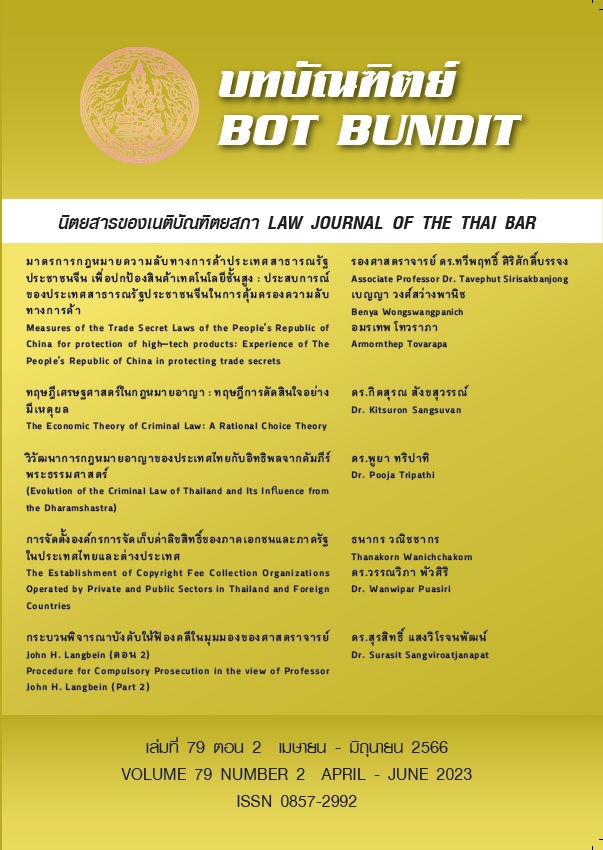
การจัดตั้งองค์กรการจัดเก็บค่าลิขสิทธิ์ของภาคเอกชนและภาครัฐในประเทศไทยและต่างประเทศ
Article Sidebar
Main Article Content
บทคัดย่อ
องค์กรจัดเก็บค่าลิขสิทธิ์หมายความถึงองค์กรที่มีอำนาจในการจัดเก็บค่าลิขสิทธิ์ซึ่งแต่ละประเทศก็มีการจัดเก็บค่าลิขสิทธิ์ในผลงานอันมีลิขสิทธิ์ที่มีความแตกต่างกันตามกฎหมาย ระเบียบ กฎหรือประเพณีที่สืบต่อกันมาซึ่งจะกำหนดอัตราค่าจัดเก็บผลงานอันมีลิขสิทธิ์ให้เป็นกลางก็คงจะทำมิได้ด้วยปัญหาดังกล่าวข้างต้น แต่ละประเทศจึงมีวิธีการจัดเก็บค่าลิขสิทธิ์ที่แตกต่างกันออกไป ซึ่งในประเทศไทยเองก็มิได้มีองค์กรจัดเก็บค่าลิขสิทธิ์ที่ถูกบัญญัติขึ้นตามกฎหมายของไทย แต่ใช้อำนาจตามประมวลกฎหมายแพ่งและพาณิชย์ในการจัดเก็บค่าลิขสิทธิ์ในเรื่องของบริษัท
เมื่อประเทศไทยไม่ได้มีกฎหมายบัญญัติให้องค์กรจัดเก็บค่าลิขสิทธิ์มีอำนาจหรือบัญญัติคำว่าองค์กรจัดเก็บค่าลิขสิทธิ์เป็นการเฉพาะ จึงเกิดปัญหาว่าแท้จริงแล้วประเทศไทยของเราควรมีบทบัญญัติในส่วนนี้เป็นการเฉพาะหรือไม่ หรือควรเพิ่มเติมในบทบัญญัติในเรื่องของการจัดเก็บค่าลิขสิทธิ์เพื่อมิให้สิ้นเปลืองงบประมาณ หรือหน่วยงานในการจัดตั้งองค์กรจัดเก็บค่าลิขสิทธิ์ขึ้นมาใหม่
โดยงานวิจัยนี้มีวัตถุประสงค์เพื่อศึกษาการบริหารการจัดเก็บค่าลิขสิทธิ์ที่ดำเนินการจัดเก็บค่าลิขสิทธิ์ โดยองค์กรบริหารการจัดเก็บค่าลิขสิทธิ์ โดยได้ศึกษาความเป็นมาเกี่ยวกับการบริหารการจัดเก็บค่าลิขสิทธิ์ ประเภทขององค์กรจัดเก็บค่าลิขสิทธิ์ และวิธีการดำเนินการทำงานขององค์กรจัดเก็บค่าลิขสิทธิ์ รวมไปถึงกฎหมายที่ใช้บังคับในการจัดเก็บค่าลิขสิทธิ์ เพื่อวิเคราะห์ถึงแนวทางในการบริหารจัดเก็บค่าลิขสิทธิ์โดยองค์กรจัดเก็บค่าลิขสิทธิ์ให้เป็นไปในทางที่เหมาะสม อีกทั้งประโยชน์ในการจัดตั้งองค์กรจัดเก็บค่าลิขสิทธิ์ของประเทศไทยไปตลอดจนการเสนอรูปแบบของกฎหมายหรือภาครัฐที่เข้ามาควบคุมกำกับดูแล เพื่อมิให้เกิดการผูกขาดของเอกชนไปในฝ่ายเดียว
จากการศึกษาพบว่า การจัดตั้งองค์กรจัดเก็บค่าลิขสิทธิ์ของประเทศไทย มีปัญหาในการจัดตั้งอยู่ เนื่องจากไม่มีบทบัญญัติกฎหมายที่รองรับในการจัดตั้งองค์กรจัดเก็บค่าลิขสิทธิ์เป็นการเฉพาะ เมื่อศึกษาจากกฎหมายการจัดเก็บค่าลิขสิทธิ์ของต่างประเทศนั้น พบว่า ประเทศญี่ปุ่นมีการบังคับใช้กฎหมายที่ใช้บังคับในการจัดเก็บค่าลิขสิทธิ์ ซึ่งกำกับดูแลการดำเนินงานขององค์กรจัดเก็บค่าลิขสิทธิ์และองค์กรจัดเก็บค่าลิขสิทธิ์เป็นการจัดตั้งขึ้นโดยมีกฎหมายให้อำนาจ ในสหราชอาณาจักร องค์กรจัดเก็บค่าลิขสิทธิ์จัดตั้งขึ้นโดยอาศัยบทบัญญัติที่นิยามคำว่า “องค์กร” และใช้อำนาจกฎหมายทั่วไปที่เกี่ยวข้องกับการบริหารการจัดเก็บค่าลิขสิทธิ์ในการควบคุมดำเนินงานขององค์กรจัดเก็บค่าลิขสิทธิ์ ต่อมาคือประเทศออสเตรเลีย แม้ประเทศออสเตรเลียมิได้มีบทบัญญัติกฎหมายเป็นการเฉพาะเหมือนประเทศญี่ปุ่น หรือบทนิยามที่บัญญัติคำว่าองค์กรไว้เช่นเดียวกับสหราชอาณาจักร แต่อย่างไรก็ตามก็มีภาครัฐที่เข้ามามีบทบาทกำกับดูแลในการจัดเก็บค่าลิขสิทธิ์
จากประเด็นปัญหาในข้างต้น ผู้วิจัยมีความคิดเห็นและข้อเสนอแนะว่า ควรจัดตั้งองค์กรจัดเก็บค่าลิขสิทธิ์ในรูปแบบที่เหมาะสม ให้สอดคล้องกับวัฒนธรรม เศรษฐกิจ สังคมในปัจจุบัน และมีการตรากฎหมายเฉพาะเพื่อใช้บังคับในการจัดเก็บค่าลิขสิทธิ์ ซึ่งประกอบไปด้วยโครงสร้างสำคัญในการตรากฎหมายขึ้นมาใหม่ หรือบัญญัตินิยามคำว่า องค์กรจัดเก็บ เป็นการเฉพาะเพื่อกำกับดูแลและกำหนดบทลงโทษ
อนึ่ง เมื่อพิจารณาจากประเด็นปัญหาในข้างต้นจะเห็นได้ว่าการจัดตั้งองค์กรจัดเก็บค่าลิขสิทธิ์นั้นมีประโยชน์ในเชิงปฏิบัติ เพราะเมื่อมีการจัดตั้งองค์กรจัดเก็บค่าลิขสิทธิ์ การจัดเก็บค่าลิขสิทธิ์ที่ซับซ้อนนั้นอาจลดน้อยลง เพราะผู้ปฏิบัติสามารถตรวจเช็คได้ว่าผู้มาเก็บค่าลิขสิทธิ์นั้นดำเนินการถูกต้องตามกฎหมายหรือไม่ และผู้ปฏิบัติหน้าที่ได้รับอำนาจมาจากองค์กรจัดเก็บค่าลิขสิทธิ์หรือไม่ อีกทั้งยังรวมไปถึงหากบุคคลใดต้องการใช้ผลงานอันมีลิขสิทธิ์ที่ถูกต้องตามกฎหมายก็สามารถตรวจเช็คกับองค์กรจัดเก็บค่าลิขสิทธิ์ได้ว่ามีผู้ใดเป็นผู้สร้างสรรค์ผลงานดังกล่าว ทำให้สามารถดำเนินการให้ถูกต้องตามกฎหมายไม่ผิดพระราชบัญญัติลิขสิทธิ์ในการใช้งานผลงานอันมีลิขสิทธิ์
Article Details

อนุญาตภายใต้เงื่อนไข Creative Commons Attribution-NonCommercial-NoDerivatives 4.0 International License.
เอกสารอ้างอิง
ภาษาไทย
กรมทรัพย์สินทางปัญญา, ‘กระบวนการยื่นคำขอจดแจ้งข้อมูลลิขสิทธิ์’ (DIP, 18 เมษายน 2560) <http://www.ipthailand.go.th/th/copyright-002-1.html/> สืบค้นเมื่อ 6 พฤศจิกายน 2565.
กรมทรัพย์สินทางปัญญา, ‘กฎหมายลิขสิทธิ์สหรัฐอเมริกา’ (DIP, 31 สิงหาคม 2559) <https://www.ipthailand.go.th/> สืบค้นเมื่อ 6 พฤศจิกายน 2565.
กฤตภาส ตั้งสมบูรณ์, ‘ผลกระทบของการคุ้มครองมาตรการทางเทคโนโลยีต่อการใช้งานอันมีลิขสิทธิ์โดยชอบธรรม’ (วิทยานิพนธ์ นิติศาสตรมหาบัณฑิต มหาวิทยาลัยกรุงเทพ 2553).
จักรกฤษณ์ ควรพจน์, กฎหมายระหว่างประเทศ ว่าด้วยลิขสิทธิ์ สิทธิบัตร และเครื่องหมายการค้า (พิมพ์ครั้งที่ 6, สำนักพิมพ์นิติธรรม 2559).
ชนกนาฐ วงศ์สิรสวัสดิ์, ‘รูปแบบและการดำเนินการขององค์กรบริหารจัดเก็บค่าลิขสิทธิ์การใช้สิทธิของนักแสดง’ (วิทยานิพนธ์ นิติศาสตรมหาบัณฑิต จุฬาลงกรณ์มหาวิทยาลัย 2545).
ไชยยศ เหมะรัชตะ, คำอธิบายกฎหมายลิขสิทธิ์ (พิมพ์ครั้งที่ 4, สำนักพิมพ์นิติธรรม 2549).
ทวียศ ศรีเกต, ‘งานลิขสิทธิ์ในยุคไร้ขอบเขต ใช้ข้อมูลอย่างปลอดภัย’ (บทความใช้เพื่อการนำออกอากาศทางสถานีวิทยุกระจายเสียงรัฐสภารายการเจตนารมณ์กฎหมาย สำนักงานเลขาธิการสภาผู้แทนราษฎร, 2561) <https://www.parliament.go.th/ewtadmin/ewt/elaw_parcy/ewt_dl_link.php?nid=1827&filename=index> สืบค้นเมื่อ 6 พฤศจิกายน 2565.
ธัชชัย ศุภผลศิริ, คำอธิบายกฎหมายลิขสิทธิ์ (สำนักพิมพ์นิติธรรม 2539).
นนทนา เผือกผ่อง, บรรณารักษ์ศาสตร์เบื้องต้น (โรงพิมพ์มหาวิทยาลัยรามคำแหง 2525).
นัยชน ตาทอง, ‘The WIPO Digital Agenda กับการคุ้มครองลิขสิทธิ์ในยุคดิจิทัลของประเทศไทย’ (วิทยานิพนธ์ นิติศาสตรมหาบัณฑิต มหาวิทยาลัยธรรมศาสตร์ 2552).
ปริญญา ดีผดุง, คำอธิบายกฎหมายทรัพย์สินทางปัญญา (เนติบัณฑิตยสภา 2546).
พงษ์ศักดิ์ กิติสมเกียรติ, ‘ความรู้ชุดกฎหมายลิขสิทธิ์’ (2525) 2 นิตยสารศิลปากร 1.
วรรษมน แซ่ลี้, ‘หลักสมดุลประโยชน์และการคุ้มครองงานภาพยนตร์ตามพระราชบัญญัติลิขสิทธิ์ พ.ศ. 2537 และพระราชบัญญัติภาพยนตร์และวีดิทัศน์ พ.ศ. 2551’ (วิทยานิพนธ์ นิติศาสตรมหาบัณฑิต มหาวิทยาลัยรามคำแหง 2556).
วันชัย รักษ์สิริวรกุล, ‘การบริหารการจัดเก็บค่าตอบแทนลิขสิทธิ์ในการทําซ้ำงานวรรณกรรม’ (วิทยานิพนธ์ นิติศาสตรมหาบัณฑิต จุฬาลงกรณ์มหาวิทยาลัย 2540).
สมภพ นันทโกวัฒน์, ‘ปัญหาและระบบการจัดเก็บค่าลิขสิทธิ์งานเพลงคาราโอเกะที่เหมาะสมสำหรับประเทศไทย’ (วิทยานิพนธ์ นิติศาสตรมหาบัณฑิต มหาวิทยาลัยเชียงใหม่ 2552).
สำนักเลขาธิการคณะรัฐมนตรี, บันทึกวิเคราะห์สรุปสาระสำคัญร่างพระราชบัญญัติลิขสิทธิ์ (2550).
อำนาจ เนตยสุภา และชาญชัย อารีวิทยาเลิศ, คำอธิบายกฎหมายลิขสิทธิ์ (พิมพ์ครั้งที่ 2, สำนักพิมพ์ วิญญูชน 2558).
ภาษาต่างประเทศ
——, ‘Entrepreneurship : ผู้ประกอบการ คืออะไร?’ (ceochannels, 29 ตุลาคม 2560) <https://www.ceochannels.com/what-is-entrepreneurship/> สืบค้นเมื่อ 6 พฤศจิกายน 2565.
Copyright Designs and Patents Act 1988.
Copyright Research and Information Center (CRIC), Copyright System in Japan 2016 10 <https://www.cric.or.jp/english/csj/doc/20161018_October,2016_Copyright_System_in_Japan.pdf> สืบค้นเมื่อ 6 พฤศจิกายน 2565.
Mihaly Ficsor, Collective Management of Copyright and Related Rights (WIPO 2002) 17 <https://www.wipo.int/edocs/pubdocs/en/copyright/855/wipo_pub_855.pdf> สืบค้นเมื่อ 6 พฤศจิกายน 2565.
Pual Edwad Geller and Melville B. Nimmer (eds), United Kingdom in International Copyright Law and Practice (Vol 1, Lslf edn, Matthew Bender 1997).
Tarja Koskinen-Olsson and Nicholas Lowe, General Aspects of collective Management (WIPO 2014) 45 <https://www.wipo.int/edocs/pubdocs/en/wipo_pub_emat_2014_1.pdf> สืบค้นเมื่อ 6 พฤศจิกายน 2565.
WIPO, Collective Management of Copyright and Related Rights (2000).
