
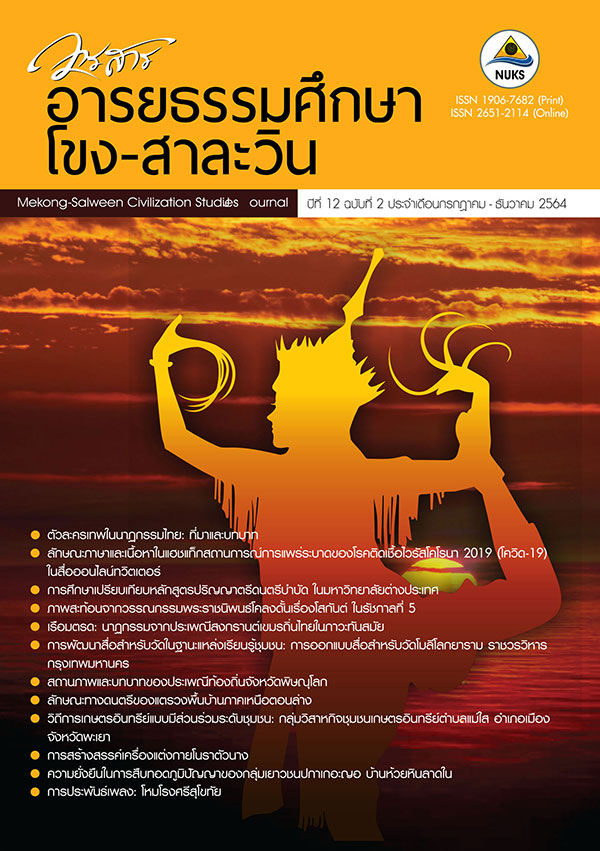
สถานภาพและบทบาทของประเพณีท้องถิ่นจังหวัดพิษณุโลก สถานภาพและบทบาทของประเพณีท้องถิ่นจังหวัดพิษณุโลก
Article Sidebar
Main Article Content
บทคัดย่อ
บทความนี้มีวัตถุประสงค์เพื่อศึกษาสถานภาพและบทบาทของประเพณีท้องถิ่นจังหวัดพิษณุโลก เพื่อให้เห็นภาพรวมของประเพณีท้องถิ่น โดยศึกษารวบรวมข้อมูลจากเอกสารหลักฐานที่เป็นลายลักษณ์อักษร ประเภทหนังสือและงานวิจัย
การวิจัยนี้เป็นการศึกษาเชิงพรรณนาวิเคราะห์โดยอาศัยแนวคิดเรื่องประเพณีและบทบาทหน้าที่ของคติชนของบาสคอม (Bascom, 1954) เป็นกรอบในการศึกษา ผลการศึกษาพบว่าประเพณีท้องถิ่นจังหวัดพิษณุโลกสามารถจำแนกได้ 6 ประเภท ได้แก่ 1) ประเพณีที่เกี่ยวกับเรื่องราวทางประวัติศาสตร์ (tradition about history) 2) ประเพณีที่เกี่ยวกับฝน (tradition about rain) 3) ประเพณีที่เกี่ยวกับการทำนา (tradition about rice farming) 4) ประเพณีที่เกี่ยวกับพระพุทธศาสนา (tradition about Buddhism) 5) ประเพณีที่เกี่ยวกับชีวิต (tradition about life) และ 6) ประเพณีตามสมัยนิยม (modish tradition) ส่วนบทบาทของประเพณีท้องถิ่นจังหวัดพิษณุโลกที่มีต่อชุมชนและสังคมมี 4 ด้านตามแนวคิดของบาสคอม (Bascom, 1954) ได้แก่ 1) การให้ความเพลิดเพลินและสนุกสนานแก่ผู้คนในสังคม 2) การยืนยันความสำคัญของพิธีกรรม เติมเต็มวัฒนธรรมและทำให้วัฒนธรรมสมบูรณ์ 3) การให้การศึกษาเป็นส่วนหนึ่งของกระบวนการกล่อมเกลาและขัดเกลา
ของสังคม และ 4) การรักษาปทัสถานของสังคม และจากการศึกษาในครั้งนี้ยังพบบทบาทของประเพณีท้องถิ่นจังหวัดพิษณุโลกที่มีต่อชุมชนและสังคมเพิ่มเติม 2 ด้าน ได้แก่ 1) ด้านสังคมและวัฒนธรรม ประกอบด้วย ประเพณีท้องถิ่นช่วยสร้างความสามัคคีของชาวบ้านในชุมชน ประเพณีท้องถิ่นเป็นที่พึ่งพิงยึดเหนี่ยวและช่วยกล่อมเกลาจิตใจของชาวบ้านในชุมชน และประเพณีท้องถิ่นช่วยสืบสานพระพุทธศาสนาและสร้างสรรค์ศิลปะท้องถิ่น และ 2) ด้านเศรษฐกิจ ได้แก่ ประเพณีท้องถิ่นช่วยสร้างรายได้ให้กับชาวบ้านในท้องถิ่น และประเพณีท้องถิ่นทำให้เกิดทุนทางวัฒนธรรม นอกจากนี้การศึกษาในครั้งนี้ยังสามารถต่อยอดองค์ความรู้ในด้านวัฒนธรรมศึกษาและประเพณีกับการท่องเที่ยวต่อไปได้ในอนาคต
Downloads
Article Details
เอกสารอ้างอิง
Bascom, W. R. (1954). Four functions of folklore. The Journal of American Folklore, 67(266), 333-349.
Boonyarak, S. (1979). Traditions and Beliefs of Nakorn Thai People. In The report of the 2nd Phitsanulok History Seminar. Phitsanulok: Pibulsongkram Teachers College.
Department of Cultural Promotion, Ministry of Culture. (2019). The festival, Performing Arts, Tradition in Thailand. Bangkok: Department of Cultural Promotion, Ministry of Culture.
Distapan, W. (2014). Phra Upakhut: Transmission and Reproduction of Belief, Myth and Ritual in Contemporary Thai Society (Master’s Thesis). Chulalongkorn University, Bangkok.
Jaruworn, P. (2013). Malai Sattha: The dynamics of chanting Phra Malai from different research fields. Bangkok: Faculty of Arts, Chulalongkorn University.
Muksong, C. (2000). Phitsanulok. Bangkok: Ton-or.
Na Thalang, S. (2016). Creative Folklore: Synthesis and Theory. Bangkok: Center for Anthropology Sirindhorn.
Nimmanahaeminda, P. (2004). Mong Phasa. Bangkok: Maekhamphang.
Nimmanahaeminda, P. (2017). The Twelve-Month Tradition: The Way of Life in the Year of the Tai People. In Thai folklore in rice culture (pp. 95-157). Bangkok: Institute of Thai Studies Chulalongkorn University.
Phakdeephasook, S. (2018). The Relationship between language and identity and guidelines for the study of Thai language. Bangkok: Faculty of Arts, Chulalongkorn University.
Sathiankoset. (1972). The Life of Thai people in the past and the study of Thai traditions. Phra Nakhon: Klang Witthaya.
Stapanawatana, J., Sirasoonthorn, P. and Suwanpratest, O. (2011). Phitsanulok: Province and Challenge Opportunities. Phitsanulok: Naresuan University.
Sujachaya, S. (2005). The Rituals, legends, tales, songs: the function of folklore and Thai society. Bangkok: Faculty of Arts, Chulalongkorn University.
The Local Wisdom of Phitsanulok. (2003). Phitsanulok: Social Development Program, Faculty of Social Sciences, Naresuan University.
The Royal Institute. (2013). Dictionary of the Royal Institute of 2011. (2nd edition). Bangkok: The Royal Institute.
Valipodom, S. and Prasongbandit, S. (2003). Twelve Month Traditions: Changing Rituals. Bangkok: Sirindhorn Anthropology Center.
