
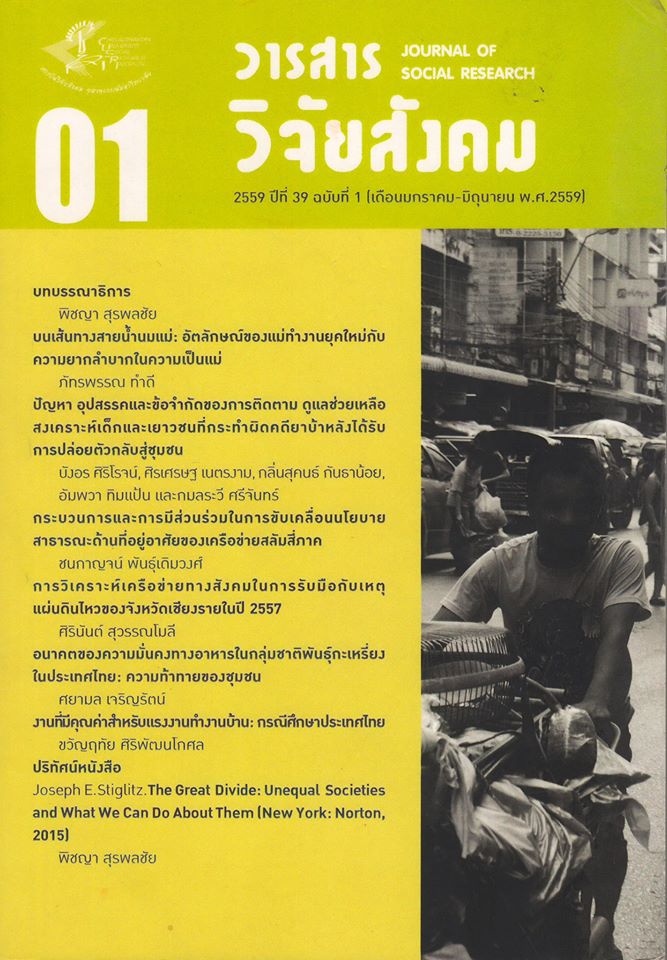
บนเส้นทางสายน้ำนมแม่: อัตลักษณ์ของแม่ทำงานยุคใหม่กับความยากลำบากในความเป็นแม่
Article Sidebar
Main Article Content
Abstract
บทความนี้มีวัตถุประสงค์เพื่อศึกษาเงื่อนไขและอุปสรรคในการเลี้ยงลูกด้วยนมแม่ของแม่ซึ่งต้องทำงาน โดยใช้วิธีการวิจัยเชิงคุณภาพ เก็บข้อมูลด้วยการสัมภาษณ์แบบเจาะลึกจากแม่ทำงานในกรุงเทพมหานคร และจังหวัดเชียงใหม่ซึ่งผ่านประสบการณ์การเลี้ยงลูกด้วยนมแม่ในขณะที่ต้องทำงานไปด้วยมาได้อย่างน้อย 6 เดือน ผลการศึกษา พบว่า แม่ทำงานต้องเผชิญกับอุปสรรคสำคัญ ได้แก่ การต่อสู้กับธรรมชาติของร่างกายตนเองและลูก ความเชื่อในการเลี้ยงดูเด็กของคนในครอบครัวที่แตกต่างกัน การลงทุนกับอุปกรณ์หรือเครื่องมือในการให้นม บริบทของการทำงานที่ไม่เอื้ออำนวย ความเหนื่อยล้าของร่างกาย ความสับสนกับข้อมูลที่หลากหลาย ความกดดันกับปริมาณน้ำนม ความเสี่ยงในการใช้ยาหรือสมุนไพรในการกระตุ้นน้ำนม และความเสี่ยงของการให้นมในที่สาธารณะ นอกจากนั้น ยังมีบริบทอื่นๆ ที่สร้างเงื่อนไขต่อการเลี้ยงลูกด้วยนมแม่ เช่น การปรับตัวภายในครอบครัวสามี การต้องแยกจากลูก การวางรากฐานการเลี้ยงลูกจากโรงพยาบาลที่คลอด และการขาดข้อมูลในเชิงประสบการณ์จากคนใกล้ชิด ดังนั้น หากต้องการส่งเสริมให้แม่ที่ต้องทำงานสามารถเลี้ยงลูกด้วยนมแม่อย่างเต็มที่โดยสามารถรักษาทั้งอัตลักษณ์ของความเป็นแม่และอัตลักษณ์ของผู้หญิงทำงานไว้ได้จึงจำเป็นต้องสร้างบริบทของงานที่เอื้อต่อความเป็นแม่ ไม่ว่าจะเป็นการยืดหยุ่นในเรื่องลักษณะและเวลาในการทำงาน การอำนวยความสะดวกในด้านสถานที่สำหรับแม่ที่ต้องให้นม และการสร้างความเข้าใจและทัศนคติที่ดีต่อการให้นมแม่ทั้งในครอบครัว ที่ทำงาน และสังคม
The Path of Breast Milk: Identity of Modern Working Mothers and Difficulties in Motherhood
This article aims to explore the conditions and obstacles in lactation of working mothers by using qualitative research method. In-depth interview with 60 working mothers in Bangkok and Chiang Mai who have experience in at least 6 months breastfeeding during their work was used in data collecting process. The research shows that these mothers have to face with many obstacles during breastfeeding including: struggling with the nature of their body and their baby, different beliefs about baby feeding in their family, expenses in breastfeeding equipment, extreme tiredness, confusion with a lot of different information, pressure with volume of their breast milk, risk in taking medicines or herbs for increasing breast milk, and risk in breastfeeding in public areas. Moreover, there are also other contexts about conditions of their breastfeeding such as adjusting within their husband’s family, separation from their baby, basic training and nursery care from delivery hospital, and lacking in practical experience from those who are close to them. By providing mother-friendly workplace such as having more flexibility in types of work and working hours for breastfeeing mothers, facilitating breastfeeding areas in the workplace. And by promoting good attitudes regarding breastfeeding in family, workplace and society level, working mothers will be encouraged to have long term breastfeeding and will be able to preserve their motherhood identity together with their work identity.
Article Details
- The copyright for this article belongs to the Social Research Institute at Chulalongkorn University. However, the views and content within are solely those of the authors.
- The views and opinions expressed in the articles published in the Journal of Social Research and Review, Social Research Institute, Chulalongkorn University, are the sole responsibility of the authors and do not reflect the views or responsibilities of the editorial board of the Journal of Social Research and Review, Social Research Institute, Chulalongkorn University. The editorial board does not reserve the rights to reproduction but requires proper citation for referencing.
