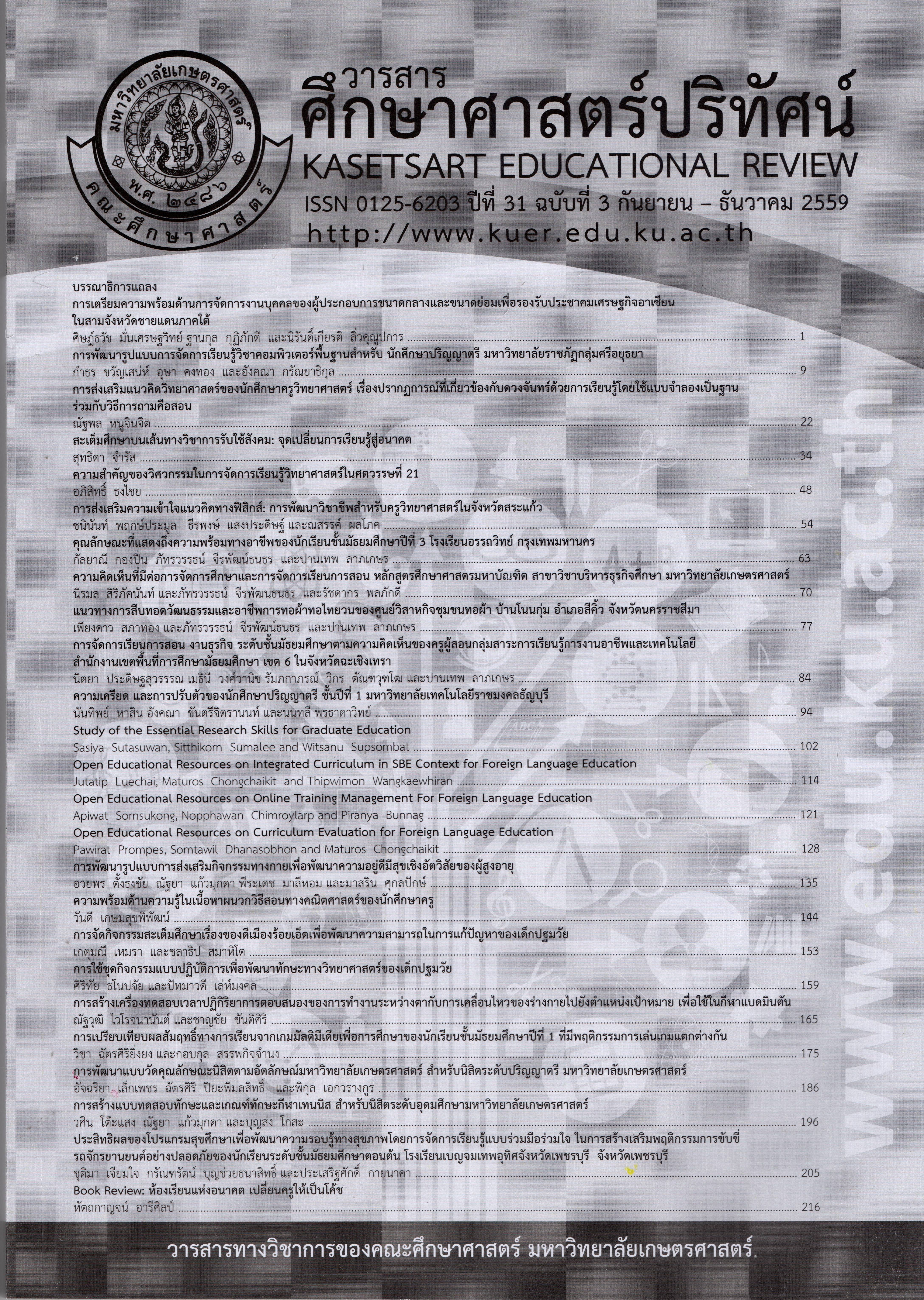
การพัฒนารูปแบบการส่งเสริมกิจกรรมทางกายเพื่อพัฒนาความอยู่ดีมีสุข เชิงอัตวิสัยของผู้สูงอายุ
คำสำคัญ:
สมรรถภาพทางกายผู้สูงอายุ, ความอยู่ดีมีสุขเชิงอัตวิสัย, กิจกรรมทางกายบทคัดย่อ
การวิจัยครั้งนี้มีวัตถุประสงค์เพื่อพัฒนารูปแบบการส่งเสริมกิจกรรมทางกายเพื่อพัฒนาความอยู่ดีมีสุขเชิงอัตวิสัยของผู้สูงอายุตามกระบวนการวิจัยและพัฒนา 3 ระยะ ได้แก่ ระยะที่ 1 การศึกษาข้อมูลพื้นฐานกลุ่มตัวอย่าง ได้แก่ ประธานชมรมผู้สูงอายุจำนวน 3 คน นักวิชาการสาธารณสุขและอาสาสมัครประจำโรงพยาบาลจำนวน 6 คน และผู้สูงอายุจำนวน 9 คน รวบรวมข้อมูลโดยใช้แบบสัมภาษณ์กึ่งมีโครงสร้าง ระยะที่ 2 เป็นการพัฒนาโครงร่างรูปแบบและเครื่องมือประกอบกิจกรรมในการส่งเสริมกิจกรรมทางกายเพื่อพัฒนาความอยู่ดีมีสุขเชิงอัตวิสัยของผู้สูงอายุ ทดสอบความเที่ยงตรงเฉพาะหน้า (Face Validity) จากผู้เชี่ยวชาญจำนวน 3 คน และระยะที่ 3 ทดสอบประสิทธิผลของการใช้รูปแบบกับกลุ่มตัวอย่างผู้สูงอายุจำนวน 95 คน จากชมรมผู้สูงอายุ 3 ชมรมของจังหวัดปทุมธานี เครื่องมือที่ใช้ในการวิจัย ได้แก่ 1) แบบบันทึกข้อมูลทั่วไป 2) แบบประเมินสมรรถภาพทางกายสำหรับผู้สูงอายุ (Senior Fitness Tests:-SFT) 3) แบบประเมินความอยู่ดีมีสุขเชิงอัตวิสัย (Subjective Well-Being) ซึ่งประกอบด้วยการประเมินความคิดเห็นเกี่ยวกับชีวิตของตนเอง (Satisfaction with Life Scale) และการประเมินความรู้สึกของตนเองทั้งด้านบวกและด้านลบ (Positive and Negative Affect) และ 4) แบบสัมภาษณ์เพื่อประเมินความพึงพอใจ วิเคราะห์ข้อมูลโดยใช้การหาค่าร้อยละค่าเฉลี่ยส่วนเบี่ยงเบนมาตรฐานและการทดสอบผลต่างของค่าเฉลี่ยแบบจับคู่ (Paired t-test)
ผลการวิจัยการทดสอบประสิทธิผลการทดลองใช้รูปแบบเป็นระยะเวลา 6 เดือน พบว่า ค่าเฉลี่ยของคะแนนสมรรถภาพทางกายทั้ง 4 รายการ คือ 1) ความแข็งแรงของร่างกายส่วนบน 2) ความแข็งแรงของร่างกายส่วนล่าง 3) ความคล่องแคล่วและการทรงตัวและ 4) ความอดทนของระบบหายใจของผู้สูงอายุเพิ่มขึ้นอย่างมีนัยสำคัญทางสถิติที่ระดับ .05 ยกเว้นด้านความอ่อนตัวและจากการเปรียบเทียบค่าเฉลี่ยของความคิดเห็นด้านความอยู่ดีมีสุขเชิงอัตวิสัยก่อนและหลังการทดลอง พบว่าผู้สูงอายุมีความคิดเห็นเกี่ยวกับชีวิตของตนเองเปลี่ยนไปในทางที่ดีขึ้นอย่างมีนัยสำคัญทางสถิติที่ระดับ.05 ส่วนการเปรียบเทียบค่าเฉลี่ยด้านการประเมินความรู้สึกของตนเองทั้งด้านบวกและด้านลบก่อนและหลังการทดลองไม่มีความแตกต่างกัน สำหรับการสัมภาษณ์เพื่อประเมินความพึงพอใจของผู้สูงอายุที่เข้าร่วมโครงการพบว่าผู้สูงอายุมีความพึงพอใจต่อรูปแบบการส่งเสริมกิจกรรมทางกายอยู่ในระดับมาก
ผลที่ได้จากการศึกษาในครั้งนี้ แสดงให้เห็นถึงความสำคัญของบทบาทของกิจกรรมทางกายในการส่งเสริมทางด้านสมรรถภาพทางกายที่จะส่งผลถึงสุขภาพโดยรวม ส่งเสริมทางด้านความอยู่ดีมีสุขเชิง อัตวิสัยของผู้สูงอายุ โดยเฉพาะอย่างยิ่งการส่งเสริมทางด้านความความพึงพอใจกับชีวิตของตนเองในผู้สูงอายุ ข้อเสนอแนะถึงการส่งเสริมการเข้าร่วมกิจกรรมทางกายควรพิจารณาถึงศักยภาพและแรงจูงใจของการเพิ่มความถี่ในการเข้าร่วมกิจกรรมทางกายในผู้สูงอายุด้วย
ดาวน์โหลด
ฉบับ
ประเภทบทความ
สัญญาอนุญาต
บทความทุกบทความเป็นลิขสิทธิ์ของวารสารคณะศึกษาศาสตร์ มหาวิทยาลัยเกษตรศาสตร์ วิทยาเขตบางเขน
วารสารศึกษาศาสตร์ปริทัศน์ (Kasetsart Educational Review)




