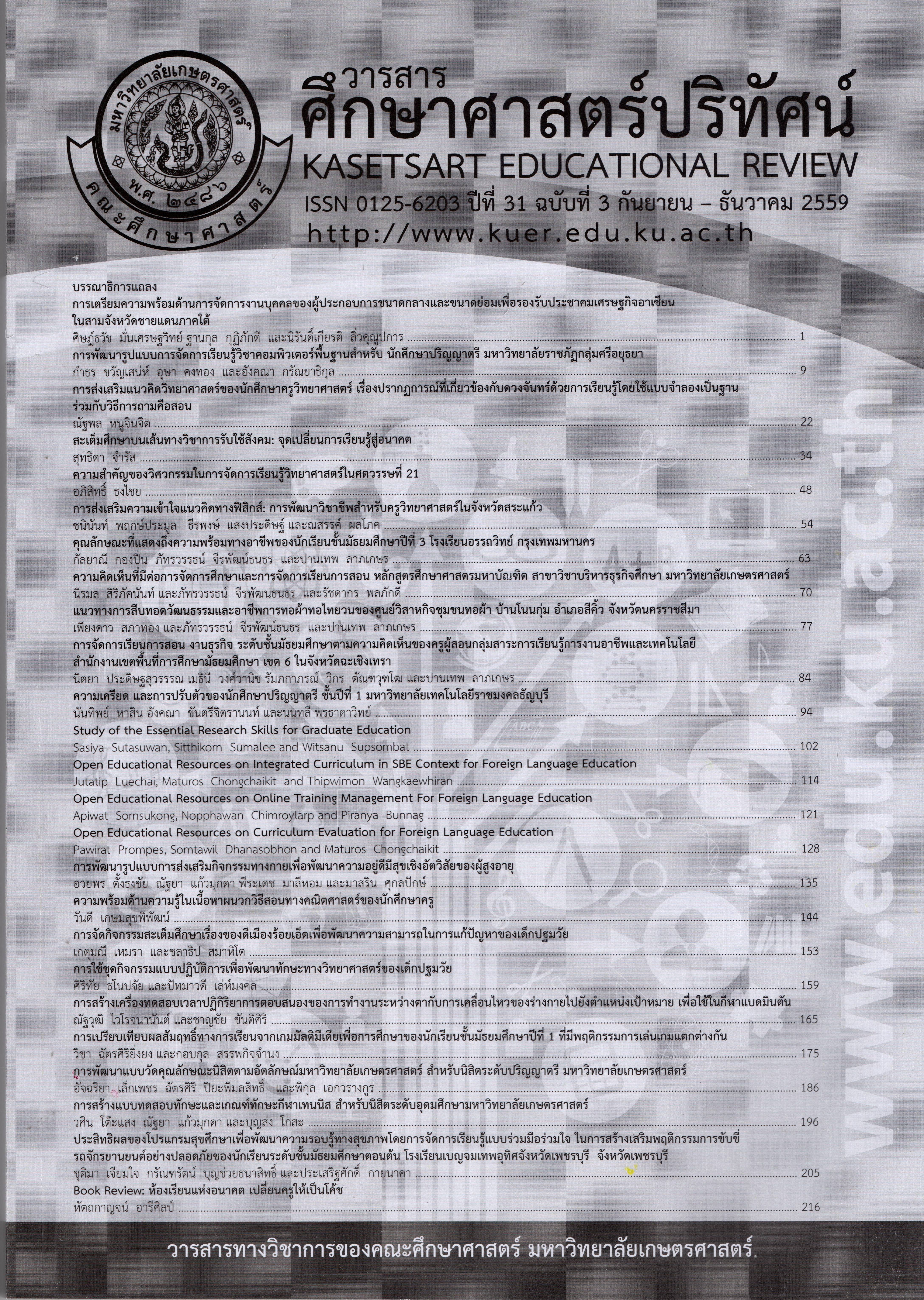
การส่งเสริมความเข้าใจแนวคิดทางฟิสิกส์: การพัฒนาวิชาชีพสำหรับครูวิทยาศาสตร์ ในจังหวัดสระแก้ว
คำสำคัญ:
ความเข้าใจของครู, แนวคิดทางฟิสิกส์, การพัฒนาวิชาชีพบทคัดย่อ
จังหวัดสระแก้วเป็นจังหวัดที่ตั้งอยู่ในเขตพื้นที่ชายแดนทางภาคตะวันออกของประเทศไทย เมื่อพิจารณาจากตำแหน่งที่ตั้งของจังหวัด ผู้วิจัยได้ทำการประชุมเพื่อสำรวจความต้องการการส่งเสริมความเข้าใจแนวคิดทางฟิสิกส์อย่างไม่เป็นทางการกับศึกษานิเทศและพบว่า จังหวัดสระแก้วมีอัตราการเคลื่อนย้ายพื้นที่ของครูวิทยาศาสตร์อยู่ในระดับสูง ปัญหานี้ส่งผลกระทบโดยตรงต่อความต่อเนื่องของการจัดการเรียนรู้ในทุกแนวคิดทางวิทยาศาสตร์โดยเฉพาะอย่างยิ่งแนวคิดทางฟิสิกส์ จากการประชุมได้สะท้อนให้เห็นว่าแนวคิดทางฟิสิกส์เป็นแนวคิดที่ค่อนข้างยากและเป็นนามธรรม ยิ่งไปกว่านั้นการขาดแคลนครูฟิสิกส์ถือเป็นสิ่งสำคัญที่ต้องคำนึงถึงในเขตพื้นที่นี้ จากปัญหาการขาดแคลนครูฟิสิกส์ดังกล่าว เกี่ยวข้องอย่างเห็นได้ชัดกับกลุ่มครูที่ไม่ได้จบการศึกษาทางฟิสิกส์โดยตรง ที่จำเป็นต้องสอนแนวคิดทางฟิสิกส์ระดับประถมและมัธยมศึกษา ครูกลุ่มนี้จำเป็นต้องเรียนรู้องค์ความรู้ทางฟิสิกส์เพิ่มเติม ดังนั้น การพัฒนาวิชาชีพครูวิทยาศาสตร์เพื่อส่งเสริมความเข้าใจแนวคิดทางฟิสิกส์จึงได้รับการพัฒนาขึ้นในรูปแบบของการอบรมเชิงปฎิบัติการเป็นเวลา 2 วัน และมีผู้เข้าร่วมในการอบรมเป็นครูผู้สอนวิทยาศาสตร์ในจังหวัดสระแก้ว จำนวน 44 คน เนื้อหาทางฟิสิกส์ที่ใช้ในการอบรมสอดคล้องกับตัวชี้วัดตามหลักสูตรแกนกลางการศึกษาขั้นพื้นฐาน พุทธศักราช 2551 รูปแบบในการอบรมเป็นลักษณะการบรรยาย และให้ทำกิจกรรมการเรียนรู้ทางฟิสิกส์ที่เกี่ยวข้องกับสถานการณ์ในชีวิตประจำวันที่เน้นแนวคิดทางฟิสิกส์เป็นสำคัญ เครื่องมือที่ใช้ในการวิจัย ได้แก่ แบบทดสอบความเข้าใจแนวคิดทางฟิสิกส์และแบบสอบถามความพึงพอใจและความคิดเห็นที่มีต่อการอบรมเชิงปฎิบัติการ วิเคราะห์ข้อมูลโดยใช้สถิติพื้นฐานและการทดสอบค่าทีแบบสองกลุ่มไม่เป็นอิสระจากกัน ผลการวิจัยพบว่า หลังจากการฝึกอบรมครูผู้เข้าร่วมมีคะแนนเฉลี่ยความเข้าใจแนวคิดทางฟิสิกส์สูงขึ้นอย่างมีนัยสำคัญทางสถิติที่ระดับ .05 โดยมีคะแนนเฉลี่ยอยู่ที่ 11.20 คะแนน จากคะแนนเต็ม 19 คะแนน ความพึงพอใจของครูที่มีต่อการอบรมเชิงปฏิบัติการอยู่ในระดับมากในทุกด้าน นอกจากนี้จากผลการสะท้อนของครูพบว่า ยังมีแนวคิดทางฟิสิกส์อีกหลายแนวคิดที่ครูยังมีความเข้าใจที่คลาดเคลื่อนและจำเป็นต้องเรียนรู้เพิ่มเติมต่อไปในอนาคต
ดาวน์โหลด
ฉบับ
ประเภทบทความ
สัญญาอนุญาต
บทความทุกบทความเป็นลิขสิทธิ์ของวารสารคณะศึกษาศาสตร์ มหาวิทยาลัยเกษตรศาสตร์ วิทยาเขตบางเขน
วารสารศึกษาศาสตร์ปริทัศน์ (Kasetsart Educational Review)




