
Bubbhist Teaching for Self-Development in Term of Public Administration
Keywords:
Self-development, BuddhadhammaAbstract
The development according to Buddhism is the development of body, speech and mind based on principles of not sinning all, keep up with the charity and mental putification The principles of Buddhadhamma for self-development consisted of the Four Noble Truths namely suffering, the origin of suffering , the cessation of suffering, and the path to the cessation of suffering. And the guidelines for development are the Noble Eighfold Path including the Right understanding, Right thought, Right speech, Right action Right livelihood, Right effort, Right effort, Right mindfulness and Right concentration.
References
คุณวัฒน์ ดวงมณี และ พระธงชัย ขนฺติธโร. (2560). การบริหารจัดการทรัพยากรมนุษย์เชิงพุทธ. สาขาวิชาการจัดการเชิงพุทธ มหาวิทยาลัยมหาจุฬาลงกรราชวิทยาลัย วิทยาลัยสงฆ์ศรีสะเกษ
ฌาน ตรรกวิจารณ์. (2560) แนวคิดการพัฒนาทรัพยากรเชิงพุทธ. {ออนไลน์}. ค้นเมื่อ 16 ตุลาคม 2561,จาก http://wwwsakchai.blogspot.com/2011/03/blog-post_12.html
บุษกร วัฒนบุตร. 2558. การพัฒนาทรัพยากรมนุษย์ด้วยพุทธบูรณาการ. วารสารสังคมศาสตร์และมนุษย์ศาสตร์,41 (1), 39-40.
ปกรณ์ ปรียากร. (2538) ทฤษฎีและแนวคิดเกี่ยวกับการพัฒนาในการบริหารการพัฒนา. กรุงเทพฯ: สามเจริญพานิช.
พระธรรมปิฎก (ป.อ. ปยุตฺโต), พุทธธรรม ฉบับปรับปรุงและขยายความ. กรุงเทพฯ: โรงพิมพ์มหาจุฬาลงกรณราชวิทยาลัย. (2538).
พระธรรมปิฎก(ป.อ. ปยุตฺโต). (2540). พุทธธรรมการพัฒนาชีวิต. กรุงเทพฯ : โรงพิมพ์ธรรมสภา. (2540).
พระเมธีธรรมาภรณ์ (ประยูร ธมฺมจิตโต). (2539). พระพุทธศาสนาไทยในยุคโลกาภิวัฒน์. พิมพ์ครั้งที่ 2.กรุงเทพฯ: มูลนิธิพุทธธรรม.
พุทธทาสภิกขุ. (2530). เคล็ดลับความสุขคือทำในใจให้ถูกต้อง. กรุงเทพฯ: ธรรมนูญ.
ยุวัฒน์ วุฒิเมธี. (2526). การพัฒนาชุมชน: จากทฤษฏีสู่การปฏิบัติ. กรุงเทพฯ: บางกอกบล็อก.
ราชบัณฑิตยสถาน. (2525). พจนานุกรมฉบับราชบัญฑิตยสถาน พ.ศ. 2525. กรุงเทพฯ: ราชบัณฑิตยสถาน.
ว.วชิรเมธี . (2552). มองลึกมองไกลใจกว้าง. พิมพ์ครั้งที่ 2. กรุงเทพฯ: บริษัทเอมี่ เอ็นเตอร์ไพรส์จำกัด.
ว.วชิรเมธี.(2550). ธรมมะงอกงาม พิมพ์ครั้งที่ 11. อัมรินทร์พริ้นติ้งแอนด์พับลิซซิ่ง. กรุงเทพฯ.สํ.นิ. 16/224-5/110-1
สนธยา พลศรี.(2547). ทฤษฎีและหลักการพัฒนาชุมชน. พิมพ์ครั้งที่ 5. กรุงเทพฯ: โอเดียนสโตร์.
ฌาน ตรรกวิจารณ์. (2560) แนวคิดการพัฒนาทรัพยากรเชิงพุทธ. {ออนไลน์}. ค้นเมื่อ 16 ตุลาคม 2561,จาก http://wwwsakchai.blogspot.com/2011/03/blog-post_12.html
บุษกร วัฒนบุตร. 2558. การพัฒนาทรัพยากรมนุษย์ด้วยพุทธบูรณาการ. วารสารสังคมศาสตร์และมนุษย์ศาสตร์,41 (1), 39-40.
ปกรณ์ ปรียากร. (2538) ทฤษฎีและแนวคิดเกี่ยวกับการพัฒนาในการบริหารการพัฒนา. กรุงเทพฯ: สามเจริญพานิช.
พระธรรมปิฎก (ป.อ. ปยุตฺโต), พุทธธรรม ฉบับปรับปรุงและขยายความ. กรุงเทพฯ: โรงพิมพ์มหาจุฬาลงกรณราชวิทยาลัย. (2538).
พระธรรมปิฎก(ป.อ. ปยุตฺโต). (2540). พุทธธรรมการพัฒนาชีวิต. กรุงเทพฯ : โรงพิมพ์ธรรมสภา. (2540).
พระเมธีธรรมาภรณ์ (ประยูร ธมฺมจิตโต). (2539). พระพุทธศาสนาไทยในยุคโลกาภิวัฒน์. พิมพ์ครั้งที่ 2.กรุงเทพฯ: มูลนิธิพุทธธรรม.
พุทธทาสภิกขุ. (2530). เคล็ดลับความสุขคือทำในใจให้ถูกต้อง. กรุงเทพฯ: ธรรมนูญ.
ยุวัฒน์ วุฒิเมธี. (2526). การพัฒนาชุมชน: จากทฤษฏีสู่การปฏิบัติ. กรุงเทพฯ: บางกอกบล็อก.
ราชบัณฑิตยสถาน. (2525). พจนานุกรมฉบับราชบัญฑิตยสถาน พ.ศ. 2525. กรุงเทพฯ: ราชบัณฑิตยสถาน.
ว.วชิรเมธี . (2552). มองลึกมองไกลใจกว้าง. พิมพ์ครั้งที่ 2. กรุงเทพฯ: บริษัทเอมี่ เอ็นเตอร์ไพรส์จำกัด.
ว.วชิรเมธี.(2550). ธรมมะงอกงาม พิมพ์ครั้งที่ 11. อัมรินทร์พริ้นติ้งแอนด์พับลิซซิ่ง. กรุงเทพฯ.สํ.นิ. 16/224-5/110-1
สนธยา พลศรี.(2547). ทฤษฎีและหลักการพัฒนาชุมชน. พิมพ์ครั้งที่ 5. กรุงเทพฯ: โอเดียนสโตร์.
Downloads
Published
2018-08-31
How to Cite
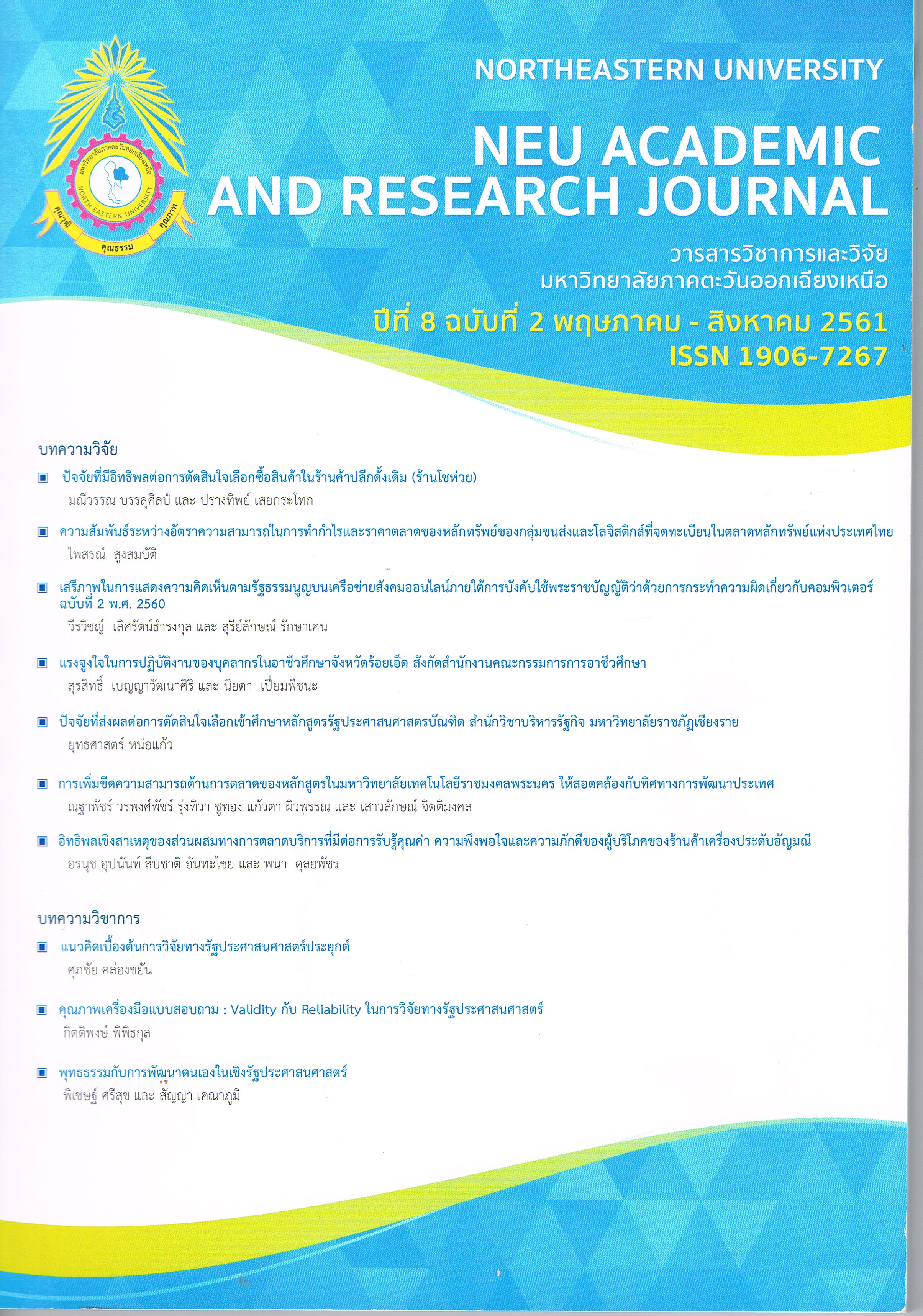
ศรีสุข พ., & เคณาภูมิ ส. (2018). Bubbhist Teaching for Self-Development in Term of Public Administration. NEU ACADEMIC AND RESEARCH JOURNAL, 8(2), 111–119. retrieved from https://so04.tci-thaijo.org/index.php/neuarj/article/view/201457
Issue
Section
Academic Article


