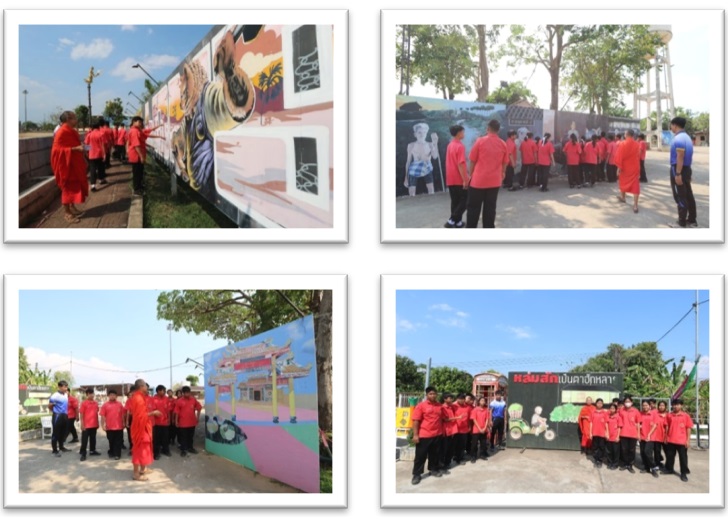
การพัฒนาถนนศิลปะเชิงสร้างสรรค์ของชาวไทหล่มในจังหวัดเพชรบูรณ์
DOI:
https://doi.org/10.14456/rc-sdj.2025.05คำสำคัญ:
ถนนศิลปะเชิงสร้างสรรค์, ศิลปะพื้นที่สาธารณะ, จุดหมายปลายทางท่องเที่ยววัฒนธรรมสร้างสรรค์บทคัดย่อ
ที่มา(ภูมิหลัง): การส่งเสริมอัตลักษณ์ภูมิปัญญาท้องถิ่นและเสริมสร้างพื้นที่สร้างสรรค์ให้หลากหลาย เป็นประเด็นหนึ่งที่มีความสำคัญในการต่อยอดผลงานเชิงสังคมพหุลักษณ์ ซึ่งเกี่ยวข้องกับการวิจัยครั้งนี้ที่มีวัตถุประสงค์เพื่อศึกษาประวัติศาสตร์ วัฒนธรรม ภูมิปัญญาและศิลปะ การพัฒนาแหล่งเรียนรู้ศิลปวัฒนธรรมและภูมิปัญญา และการพัฒนาถนนศิลปะเชิงสร้างสรรค์ของชาวไทหล่มในจังหวัดเพชรบูรณ์
วิธีการ: ระเบียบวิธีวิจัยที่เลือกใช้ คือ การวิจัยเชิงคุณภาพร่วมกับการวิจัยเชิงปฏิบัติการ กลุ่มผู้ให้ข้อมูลสำคัญทำการเลือกแบบเฉพาะเจาะจงกลุ่มวัดที่เป็นแหล่งท่องเที่ยว กลุ่มศิลปินชุมชนไทหล่ม กลุ่มเครือข่ายที่เกี่ยวข้องกับการวิจัย และกลุ่มผู้ประกอบการที่เชื่อมโยงกับการท่องเที่ยว รวมทั้งสิ้น 56 คน โดยใช้แบบสัมภาษณ์กึ่งโครงสร้างเป็นเครื่องมือในการลงพื้นที่ภาคสนามเพื่อเก็บรวบรวมข้อมูลด้วยการสัมภาษณ์เชิงลึก การสนทนากลุ่ม และการถ่ายภาพ สำหรับคำตอบที่ได้ใช้วิธีการวิเคราะห์เนื้อหา
เชิงตีความ และแสดงผลลัพธ์การวิจัยด้วยวิธีบรรยายพรรณา
ผลลัพธ์: การศึกษาบริบทในพื้นที่ด้านประวัติศาสตร์ พบว่า มีความเกี่ยวข้องกับเหตุการณ์สำคัญในอดีตมาอย่างยาวนาน ด้านวัฒนธรรม พบว่า มีหลักฐานแสดงความเชื่อมโยงระหว่างศาสนากับการปกครอง ด้านภูมิปัญญา พบว่า มีการเปลี่ยนชื่อวัดที่สะท้อนความเป็นสิริมงคลและเอกลักษณ์ของท้องถิ่นเพื่อทำหน้าที่เป็นศูนย์รวมทางวัฒนธรรมและเป็นสถานที่ประกอบพิธีกรรมของชุมชน ด้านศิลปะ พบว่า มีพุทธศิลปะที่ผสมผสานระหว่างศิลปะราชสำนักกับศิลปะพื้นถิ่นภาคเหนือตอนล่างและภาคกลางตอนบนในสมัยรัตนโกสินทร์ตอนต้นที่คงความเป็นเอกลักษณ์ (โบสถ์ วิหาร เจดี และพระเจ้าไม้) นอกจากนี้ ด้านส่งเสริมการเรียนรู้ พบว่า วัดศรีมงคลถูกพัฒนาให้เป็นแหล่งเรียนรู้ทางวัฒนธรรม ศิลปะ และศาสนา ด้านการพัฒนาวิธีคิดสร้างสรรค์ พบว่า มีการออกแบบเสนาสนะตามแนวคิดพุทธศิลปกรรมล้านช้างและหลักธรรมพระพุทธศาสนา ด้านการพัฒนาเชิงสร้างสรรค์ พบว่า ได้บูรณาการศิลปะ พุทธศิลป์ และการท่องเที่ยวเข้าด้วยกัน ทำให้วัดกลายเป็นพื้นที่วัฒนธรรมร่วมสมัยและเป็นจุดขายเชิงวัฒนธรรม และด้านองค์ความรู้ศิลปะเชิงสร้างสรรค์ พบว่า ศิลปะของวัดศรีมงคลสื่อถึงความเชื่อ ความศรัทธา และภูมิปัญญาท้องถิ่นอย่างกลมกลืนและชัดเจน สำหรับการพัฒนาแหล่งเรียนรู้ศิลปวัฒนธรรมและภูมิปัญญา พบว่า ได้ฟื้นฟูและพัฒนาเส้นทางวัฒนธรรมระหว่างวัดศรีมงคลและวัดไพรสณฑ์ศักดาราม ระยะทาง 350 เมตร ให้เป็น “ถนนศิลปะเชิงสร้างสรรค์” และการพัฒนาถนนศิลปะเชิงสร้างสรรค์ พบว่า เกิดการบริหารจัดการร่วมกัน 7 ด้าน ได้แก่ ร่วมมือ พัฒนา ใช้พื้นที่สาธารณะ บทบาท ส่วนร่วม เตรียมพร้อมและขับเคลื่อน และดูแลรักษา
บทสรุป: ข้อค้นพบที่ได้ คือ อัตลักษณ์ทางวัฒนธรรมที่เข้มแข็ง ผลกระทบเชิงปฏิบัติ คือ พื้นที่ถนนศิลปะกลายเป็น “จุดหมายปลายทางท่องเที่ยววัฒนธรรมสร้างสรรค์” และผลกระทบต่อการวิจัยในอนาคต คือ เกิดเป็นกรณีศึกษาสำคัญเกี่ยวกับมีอัตลักษณ์ทางวัฒนธรรมเพื่อประยุกต์ใช้กับชุมชนผ่านงานศิลปะแบบมีส่วนร่วมและศักยภาพของศิลปะพื้นที่สาธารณะในฐานะเครื่องมือเชิงวิจัยแบบสหวิทยาการ
เอกสารอ้างอิง
Beel, D., & Wallace, C. (2020). Gathering together: social capital, cultural capital and the value of cultural heritage in a digital age. Social & Cultural Geography, 21(5), 697-717. https://doi.org/10.1080/14649365.2018.1500632
Bell, D., & Jayne, M. (2010). The creative countryside: Policy and practice in the UK rural cultural economy. Journal of rural studies, 26(3), 209-218. https://doi.org/10.1016/j.jrurstud.2010.01.001
Chandratita, C. (2007). Creating a process for creative art research. Faculty of Fine Arts, Chiang Mai University. National Science and Technology Development Agency (NSTDA).
Chen, T. (2025). Arts of the Qing Dynasty. In Illustrated History of Chinese Art (pp. 405-459). Springer Nature Singapore.
Costa, P. (2007). Creativity, Innovation and Territorial Agglomeration in Cultural Activities: The Roots of the Creative City. In P. Cooke & L. Lazzeretti (Eds.), Creative cities, cultural clusters and local economic development (pp. 183-210). Edward Elgar.
Creswell, J. W., & Poth, C. N. (2016). Qualitative Inquiry & Research Design: Choosing among Five Approaches. Sage.
Curry, N., & Owen, S. (2009). Rural planning in England: A critique of current policy. Town Planning Review, 80(6), 575-596. https://doi.org/10.3828/tpr.2009.13
D’Alvia, D. (2020). Financial Markets as Financial Systems: A Philosophical Dialogue between Offshore Tax Haven Islands and Systemic Failures. Pólemos, 14(2), 297-318. https://doi.org/10.1515/pol-2020-2019
Denzin, N. K. (1978). The Research Act: An Introduction to Sociological Methods. McGraw-Hill.
Document and Archives Committee. (1999). Culture, historical development, identity, and wisdom of Phetchabun Province. Ladprao Teachers Council Printing House. https://www.phetchabun.go.th/fileupload/data/1291115464_6bnj67jk.pdf
Dolkeles, G. (2024). Impact of contemporary technology on art and design. IGI Global.
Dovey, K., & Sandercock, L. (2002). Hype and hope. City, 6(1), 83-101. https://doi.org/10.1080/13604810220142853
Duxbury, N. (2021). Cultural and creative work in rural and remote areas: An emerging international conversation. International Journal of Cultural Policy, 27(6), 753-767. https://doi.org/10.1080/10286632.2020.1837788
Gkartzios, M., Gallent, N., & Scott, M. (2022). A capital framework for the rural global countryside. Habitat International, 127, 102625. https://doi.org/10.1016/j.habitatint.2022.102625
Gülümser, A. A., Baycan-Levent, T., & Nijkamp, P. (2010). Measuring regional creative capacity: A literature review for rural-specific approaches. European Planning Studies, 18(4), 545-563. https://doi.org/10.1080/09654311003593614
Herslund, L. (2012). The rural creative class: counterurbanisation and entrepreneurship in the Danish countryside. Sociologia ruralis, 52(2), 235-255. https://doi.org/10.1111/j.1467-9523.2011.00560.x
Jiwbang, T. (1994). Artistic Creativity. Odeon Store.
Jumde, A., & Kumar, N. (2021). Protection of traditional art forms under geographical indications law: a case study of Madhubani and Sujini art forms of Bihar, India. Journal of Intellectual Property Law & Practice, 16(7), 647-665. https://doi.org/10.1093/jiplp/jpaa161
Laursen, B. K., Gonnerman, C., & Crowley, S. J. (2021). Improving philosophical dialogue interventions to better resolve problematic value pluralism in collaborative environmental science. Studies in History and Philosophy of Science Part A, 87, 54-71. https://doi.org/10.1016/j.shpsa.2021.02.004
Lek-Prapai Viriyaphan Foundation. (2016, January 28). Sociocultural pluralism. https://lek-prapai.org/home/view.php?id=444
Ma, T., Wang, Y., Zhang, L., Hong, W., & Yang, X. (2025). Creative assets, people, and places: Rural art action practices of US nonprofit organizations. Journal of Rural Studies, 113, 103476. https://doi.org/10.1016/j.jrurstud.2024.103476
MacDowell, J. (2017). The metamodern, the quirky, and film criticism. In R. van den Akker, A. Gibbons, & T. Vermeulen (Eds.), Metamodernism: Historicity, affect, and depth after postmodernism (Radical Cultural Studies) (pp. 25–40). Rowman & Littlefield.
Manioudis, M., & Angelakis, A. (2023). Creative economy and sustainable regional growth: Lessons from the implementation of the entrepreneurial discovery process at the regional level. Sustainability, 15(9), 7681. https://doi.org/10.3390/su15097681
Mironova, T. (2025). The Impact of Innovative Technologies on Contemporary Media Arts Evolution. Metallurgical and Materials Engineering, 31(3), 284-291. https://doi.org/10.63278/1366
Miwa, N., Bhatt, A., & Kato, H. (2022). High-speed rail development and regional inequalities: Evidence from Japan. Transportation research record, 2676(7), 363-378. https://doi.org/10.1177/0361198122107856
Natarajan, L. (2019). Planning for rural communities and major renewable energy infrastructure. In The Routledge Companion to rural planning (pp. 548-556). Routledge.
Nimsamoe, C. (1988). Elements of Art. Thai Wattana Panich.
Panmanee, A. (2014). Train yourself to think, think creatively. Chulalongkorn University Press.
Phetchabun Provincial Statistical Office. (2024). Phetchabun Provincial Statistical Report: 2023. Phetchabun Provincial Statistical Office.
Rastogi, S. (2025). Cultural Identity in Contemporary Street Art: A Global Perspective on Urban Visual Expression. Shodh Sagar Journal of Language, Arts, Culture and Film, 2(1), 1-6. https://doi.org/10.36676/jlacf.v2.i1.24
Remoaldo, P., Matos, O., Freitas, I., Gôja, R., Araújo Alves, J., Ribeiro, V., Pereira, M., & Xavier, C. (2022). An international overview of certified practices in creative tourism in rural and urban territories. Journal of Hospitality & Tourism Research, 46(8), 1545-1573. https://doi.org/10.1177/10963480209507
Rodrigues-Ferreira, A., Afonso, H., Mello, J. A., & Amaral, R. (2023). Creative economy and the quintuple helix innovation model: A critical factors study in the context of regional development. Creativity Studies, 16(1), 158-177. https://doi.org/10.3846/cs.2023.15709
Tangprasert, T. (2015). Art Elements 1 (10th ed.). Fueangfa Printing.
Tarlo, H., & Tucker, J. (2019). Poetry, painting, and change on the edge of England. Sociologia ruralis, 59(4), 636-660. https://doi.org/10.1111/soru.12232
Teesuk, D. (2023). The Study of Thai Lom Identity for Redesigning Wat Pho Thong Nam Krung Local Museum, the Antique and Cultural Tourist Attraction of Phetchabun Province. Built Environment Inquiry Journal (BEI): Faculty of Architecture, Khon Kaen University, 22(1), 35-53. https://doi.go.th/10.14456/bei.2023.3
Tonts, M. (2020). Developmentalism, path dependence and multifunctionality: Reflections on Australian rural planning cultures. Planning Theory & Practice, 21(5), 776-782.
UNCTAD. (2013). Creative Economy Report 2013 Special Edition: widening local development pathways. UNESCO and UNDP. https://unesdoc.unesco.org/ark:/48223/pf0000224698
Waitt, G., & Gibson, C. (2009). Creative small cities: Rethinking the creative economy in place. Urban studies, 46(5-6), 1223-1246. https://doi.org/10.1177/0042098009103862
Wang, C. (2021). Comparison between computer art design and traditional art design based on big data analysis. Journal of Physics: Conference Series, 1915(3), 032043. https://doi.org/10.1088/1742-6596/1915/3/032043.
Wang, Z. (2025, March). Pathways to Fostering Cultural Identity and Social. In Proceedings of the 2024 4th International Conference on Public Art and Human Development (ICPAHD 2024) (Vol. 910, p. 222). Springer Nature.
White, P. (2010). Creative industries in a rural region: Creative West: The creative sector in the Western Region of Ireland. Creative Industries Journal, 3(1), 79-88. https://doi.org/10.1386/cij.3.1.79_1