A การศึกษาผลการจัดการเรียนรู้โดยใช้รูปแบบบูรณาการเนื้อหาและภาษา (CLIL) เพื่อส่งเสริมทักษะการอ่านสะกดคำภาษาอังกฤษของนักเรียน EAL ชั้นประถมศึกษาปีที่ 2 โรงเรียนนานาชาติอุดรธานี
DOI:
https://doi.org/10.14456/rc-sdj.2026.7คำสำคัญ:
การเรียนรู้แบบบูรณาการเนื้อหาและภาษา (CLIL), ทักษะการสะกดคำภาษาอังกฤษ, นักเรียน EAL, การเรียนรู้ภาษาบทคัดย่อ
ที่มาและวัตถุประสงค์การวิจัย: ภาษาอังกฤษมีบทบาทสำคัญในฐานะภาษาสื่อกลางของการเรียนในโรงเรียนนานาชาติ โดยเฉพาะนักเรียนที่เรียนภาษาอังกฤษในฐานะภาษาเพิ่มเติม (EAL)
ซึ่งจำเป็นต้องพัฒนาทักษะทางภาษาเพื่อใช้ในการเรียนรู้เนื้อหาวิชา การวิจัยครั้งนี้มีวัตถุประสงค์
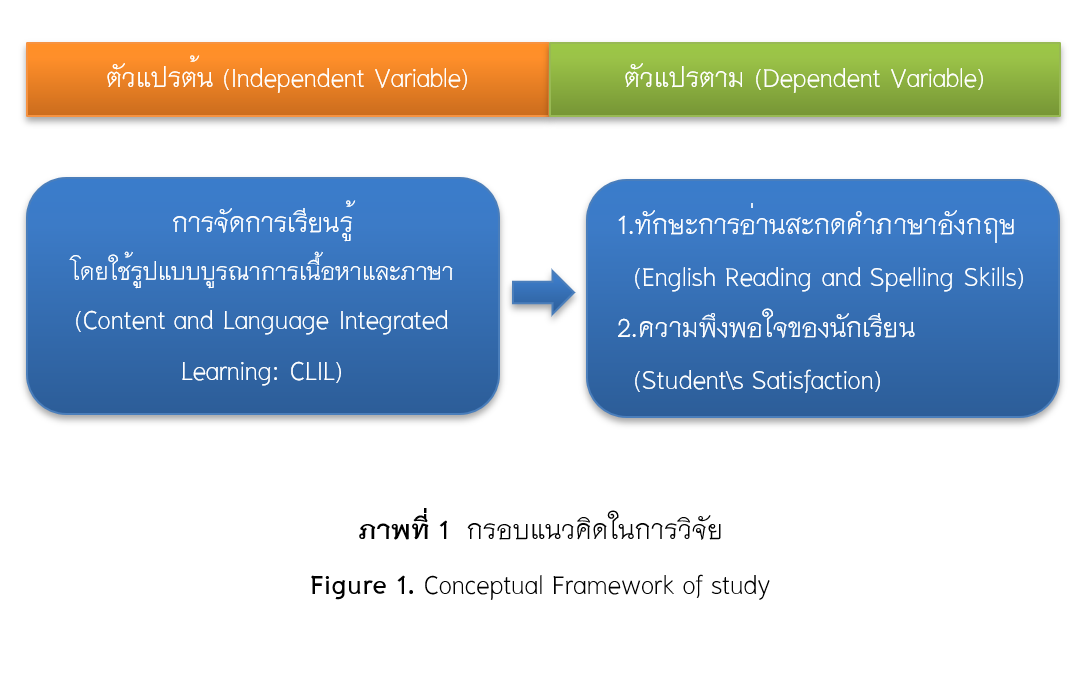
เพื่อศึกษา (1) ผลของการจัดการเรียนรู้โดยใช้รูปแบบบูรณาการเนื้อหาและภาษาต่อทักษะการอ่านสะกดคำภาษาอังกฤษของนักเรียน EAL ระดับชั้นประถมศึกษาปีที่ 2 โรงเรียนนานาชาติอุดรธานี
โดยเปรียบเทียบคะแนนหลังเรียนกับก่อนเรียน และ (2) ศึกษาความพึงพอใจของนักเรียนที่มีต่อการจัดการเรียนรู้
ระเบียบวิธีวิจัย: กลุ่มตัวอย่างประกอบด้วยนักเรียน EAL ระดับชั้นประถมศึกษาปีที่ 2 จำนวน 8 คน คัดเลือกโดยวิธีการเลือกแบบเจาะจง เครื่องมือที่ใช้ในการวิจัย ได้แก่ แผนการจัดการเรียนรู้
โดยใช้รูปแบบบูรณาการเนื้อหาและภาษา (CLIL) จำนวน 8 แผน และแบบทดสอบเพื่อวัดผลด้านการอ่านสะกดคำภาษาอังกฤษ โดยดำเนินการทดลองเป็นระยะเวลา 4 สัปดาห์ รวม 8 ชั่วโมง วิเคราะห์ข้อมูลโดยใช้ค่าเฉลี่ย ส่วนเบี่ยงเบนมาตรฐาน และการทดสอบค่าที เพื่อเปรียบเทียบคะแนนหลังเรียนและก่อนเรียน และใช้สถิติเชิงพรรณนาในการวิเคราะห์ระดับความพึงพอใจของนักเรียน
ผลการวิจัย: คะแนนทักษะการอ่านสะกดคำภาษาอังกฤษของนักเรียน EAL ระดับชั้นประถมศึกษาปีที่ 2 หลังการจัดการเรียนรู้โดยใช้รูปแบบบูรณาการเนื้อหาและภาษา (CLIL) สูงกว่า
ก่อนเรียนอย่างมีนัยสำคัญทางสถิติ นอกจากนี้ นักเรียนยังมีความพึงพอใจต่อเนื้อหาการเรียนรู้ กิจกรรมการเรียนการสอน และการสนับสนุนจากผู้สอนอยู่ในระดับสูง
อภิปรายผลและข้อเสนอแนะ: การจัดการเรียนรู้โดยใช้รูปแบบบูรณาการเนื้อหาและภาษา (CLIL) เป็นแนวทางการสอนที่ช่วยพัฒนาทักษะการอ่านสะกดคำภาษาอังกฤษของนักเรียนระดับเริ่มต้น ดังนั้นการจัดการเรียนรู้โดยใช้รูปแบบบูรณาการเนื้อหาและภาษา (CLIL) ในระดับประถมศึกษา
จึงเหมาะสม แต่ควรมีการวิจัยเพิ่มเติมโดยใช้กลุ่มตัวอย่างที่ใหญ่ขึ้น ระยะเวลาทดลองที่นานขึ้น
เพื่อเพิ่มความน่าเชื่อถือและความสามารถในการอ้างอิงผลการวิจัย
เอกสารอ้างอิง
Boonsunee, P., Kewara, P., & Nam-fah, N. (2025). Implementing content and language integrated learning (CLIL) in a secondary English classroom in Thailand: An investigation of communication and cognitive skills. BRU ELT Journal, 3(3), 345–360. https://so14.tci-thaijo.org/index.php/bru_elt_journal/article/view/2423
Campbell, D. T., & Stanley, J. C. (1963). Experimental and quasi-experimental designs for research. Houghton Mifflin.
Carlins, C. M., Jr., & Siripol, P. (2024). CLIL or EMI? A case study of non-English in-service teachers teaching reflection in an international school. Community and Social Development Journal, 25(1), 91–102. https://doi.org/10.57260/rcmrj.2024.265323
Castellano-Risco, I. (2024). Conclusion. In Lexical demands in CLIL primary-school textbooks (Chapter 7). Springer. https://doi.org/10.1007/978-3-031-75160-8_7
Cenoz, J., & Gorter, D. (2021). Pedagogical translanguaging. Cambridge University Press. https://doi.org/10.1017/9781009029384
Creswell, J. W., & Creswell, J. D. (2023). Research design: Qualitative, quantitative, and mixed methods approaches (6th ed.). SAGE Publications.
Daffern, T. (2025). Developing spelling skills. In N. M. Mackenzie & J. Scull (Eds.), Understanding and supporting young writers from birth to 8 (2nd ed., pp. 97–123). Routledge.
Ehri, L. C. (2020). The science of learning to read words: A case for systematic phonics instruction. Reading Research Quarterly, 55(S1), S45–S60. https://doi.org/10.1002/rrq.334
International Baccalaureate Organization. (2020). Making the PYP happen: A curriculum framework for international primary education. International Baccalaureate Organization.
Kaewkamnerd, K., Dibyamandala, J., & Mangkhang, C. (2023). Content and language integrated learning management to promote English reading comprehension skills in pop culture context of secondary students. Panyapiwat Journal, 15(1), 371–386. (In Thai)
Koç, Ö., Yüksel, G., & Altun, E. (2021). Technology acceptance and usage behavior of content and language integrated learning teachers in Turkey. English Language Teaching Educational Journal, 4(2), 113–124.
Llinares, A., & Nikula, T. (2024). CLIL students’ production of cognitive discourse functions: Comparing Finnish and Spanish contexts. Language and Education, 38(3), 381–400. https://doi.org/10.1080/09500782.2023.2211049
Luo, W.-H. (2024). Promoting content and English learning in a bilingual curriculum at the elementary school level. Education 3–13, 52(3), 391–403. https://doi.org/10.1080/03004279.2022.2099925
Maipokaa, S., & Soontornwipast, K. (2021). Effects of intensive and extensive reading instruction on Thai Primary Students’ English Reading Ability. LEARN Journal: Language Education and Acquisition Research Network, 14(1), 146-175.
Nkurunziza, S. (2024). The role of phonological awareness in early reading development. European Journal of Linguistics, 3(3), 15–26. https://doi.org/10.47941/ejl.2051
Petersen‐Brown, S., & Kromminga, K. R. (2024). Systematic review and meta‐analysis of the implementation and effectiveness of spelling instruction and intervention. Psychology in the Schools, 61(8), 3315–3338. https://doi.org/10.1002/pits.23223
Pérez-Cañado, M. L. (2021). Inclusion and diversity in bilingual education: A European comparative study. International Journal of Bilingual Education and Bilingualism, 26(9), 1129–1145. https://doi.org/10.1080/13670050.2021.2013770
Pittas, E., & Tompkins, L. (2024). A systematic review of student learning outcomes in CLIL in LOTE. Frontiers in Education, 9, Article 1447270. https://doi.org/10.3389/feduc.2024.1447270
Rahman, M. M. (2023). Vocabulary acquisition through content and language integrated learning. International Journal of Emerging Technologies in Learning, 18(12), 45–60
.
Ruiz de Zarobe, Y., & Querol-Julián, M. (2025). Multilingualism and multimodality in the CLIL/EMI classroom. Journal of Multilingual and Multicultural Development, 46(5), 1397–1415. https://doi.org/10.1080/01434632.2025.2482734
Sangploy, P., & Prasansaph, S. (2023). The effects of the instruction based on content and language integrated learning (CLIL) approach for developing reading comprehension in English language for grade 5 students. Journal of Education, Silpakorn University, 21(2), 243–260. (In Thai)
San Isidro, X., & Lasagabaster, D. (2022). Students’ and families’ attitudes and motivation towards CLIL. Language Learning Journal, 50(3), 356–371. https://doi.org/10.1080/09571736.2020.1724185
Sari, T. T., & Khoiriyah. (2025). Content and language integrated learning activities and vocabulary learning for young learners. European Journal of English Language Studies, 5(4), 229-241. https://doi.org/10.12973/ejels.5.4.229
Scull, J., & Lyons, D. (2024). Teaching phonics in context—Stories of teachers’ practice and students’ outcomes. The Australian Journal of Language and Literacy, 47, 181–201. https://doi.org/10.1007/s44020-024-00058-6
WIDA Consortium. (2020). WIDA Screener: Administration, scoring and interpretation guide. University of Wisconsin–Madison.
Zeng, Y., Kuo, L.-J., Chen, L., Lin, J.-A., & Shen, H. (2025). Vocabulary instruction for English learners: A systematic review connecting theories, research, and practices. Education Sciences, 15(3), 262. https://doi.org/10.3390/educsci15030262