วารสารวิทยาศาสตร์และวิทยาศาสตร์ศึกษา (Journal of Science and Science Education: JSSE) หมายเลข ISSN 2586-9256 (Print) และ 2697-410X (Online) เป็นวารสารที่จัดทำโดยคณะวิทยาศาสตร์ มหาวิทยาลัยอุบลราชธานี มีวัตถุประสงค์เพื่อเป็นแหล่งเผยแพร่บทความวิจัย (Research articles) หรือบทความวิชาการ (Review articles) ทั้งด้านวิทยาศาสตร์ศึกษา (ซึ่งหมายรวมถึงเทคโนโลยีและคอมพิวเตอร์ศึกษา และคณิตศาสตร์ศึกษา) และด้านวิทยาศาสตร์ (โดยเน้นเป็นวิทยาศาสตร์กายภาพ ได้แก่ เคมี ฟิสิกส์ คณิตศาสตร์ คอมพิวเตอร์และเทคโนโลยี) ทั้งบทความภาษาไทยและบทความภาษาอังกฤษ โดยลักษณะของบทความที่จะนำเสนอเพื่อขอลงตีพิมพ์ในวารสารจะต้องมีสาระที่น่าสนใจ เป็นงานที่เป็นองค์ความรู้ใหม่ที่ทันสมัย และต้องเป็นงานที่ไม่เคยถูกนำไปตีพิมพ์เผยแพร่ในวารสารใดมาก่อน (original article) ทั้งนี้ ทุกบทความจะต้องผ่านกระบวนการตรวจสอบความถูกต้องทางวิชาการจากคณะผู้เชี่ยวชาญที่เกี่ยวข้องในแต่ละสาขาวิชา (Peer Review) จากหลากหลายสถาบัน อย่างน้อย 3 ท่าน ตั้งแต่วารสารปีที่ 4 ฉบับที่ 2 เป็นต้นมา ผลงานที่ได้รับการพิจารณาลงพิมพ์ในวารสารจะต้องมีสาระน่าสนใจ เป็นงานที่เป็นองค์ความรู้ใหม่ที่ทันสมัย และต้องเป็นงานที่ไม่เคยถูกนำไปตีพิมพ์เผยแพร่ในวารสารใดมาก่อน
อนึ่ง วารสาร JSSE จัดอยู่ในกลุ่มสาขาวิชาสังคมศึกษา (Main subject categories: Social Sciences) สาขาวิชาสังคมศึกษา (Subject areas: Social Sciences) และอยู่ในสาขาวิชาย่อยด้านการศึกษา (Sub-subject: Education) นอกจากนี้ ยังมีสาขาวิชาย่อยเพิ่มเติมอีก 4 สาขาวิชาย่อยในกลุ่มสาขาวิทยาศาสตร์กายภาพ (Main subject categories: Physical Sciences) ได้แก่ (1) เคมีทั่วไป (2) คอมพิวเตอร์ทั่วไป (3) คณิตศาสตร์ทั่วไป และ (4) ฟิสิกส์และดาราศาสตร์ทั่วไป
ทั้งนี้ วารสารวิทยาศาสตร์และวิทยาศาสตร์ศึกษามีกำหนดเผยแพร่บทความปีละ 2 ฉบับหรือเล่ม โดยเล่มที่ 1 เป็นเผยแพร่บทความระหว่างเดือนมกราคม – มิถุนายน และเล่มที่ 2 เผยแพร่บทความระหว่าง กรกฎาคม – ธันวาคม
ค่าธรรมเนียมการตีพิมพ์ (Publication Charge)
วารสารได้ประกาศอัตราค่าธรรมเนียมการพิจารณาบทความ (Article Processing Charge) บทความละ 1,500 บาท โดยบรรณาธิการวารสารจะพิจารณาบทความต้นฉบับในเบื้องต้น จากนั้นจะแจ้งให้ชำระค่าธรรมเนียมดังกล่าว (ยังไม่ต้องชำระมาพร้อมกับการ submission) ก่อนที่จะส่งบทความให้ผู้ทรงคุณวุฒิพิจารณา โดยไม่มีค่าใช้จ่ายใดๆ เพิ่มเติมจากค่าธรรมเนียมดังกล่าว ทั้งนี้ มีการเรียกเก็บค่าธรรมเนียมการดำเนินการบทความตั้งแต่ วารสารปีที่ 6 พ.ศ. 2566 เป็นต้นไป
ทั้งนี้ การชำระค่าธรรมเนียมการพิจารณาบทความ ไม่ได้เป็นการยืนยันว่าบทความดังกล่าวจะได้รับการเผยแพร่ใน JSSE แต่อย่างใด ดังนั้น บทความที่จะได้รับการเผยแพร่ใน JSSE จะต้องผ่านกระบวนการประเมินจากผู้ทรงคุณวุฒิตามปกติ
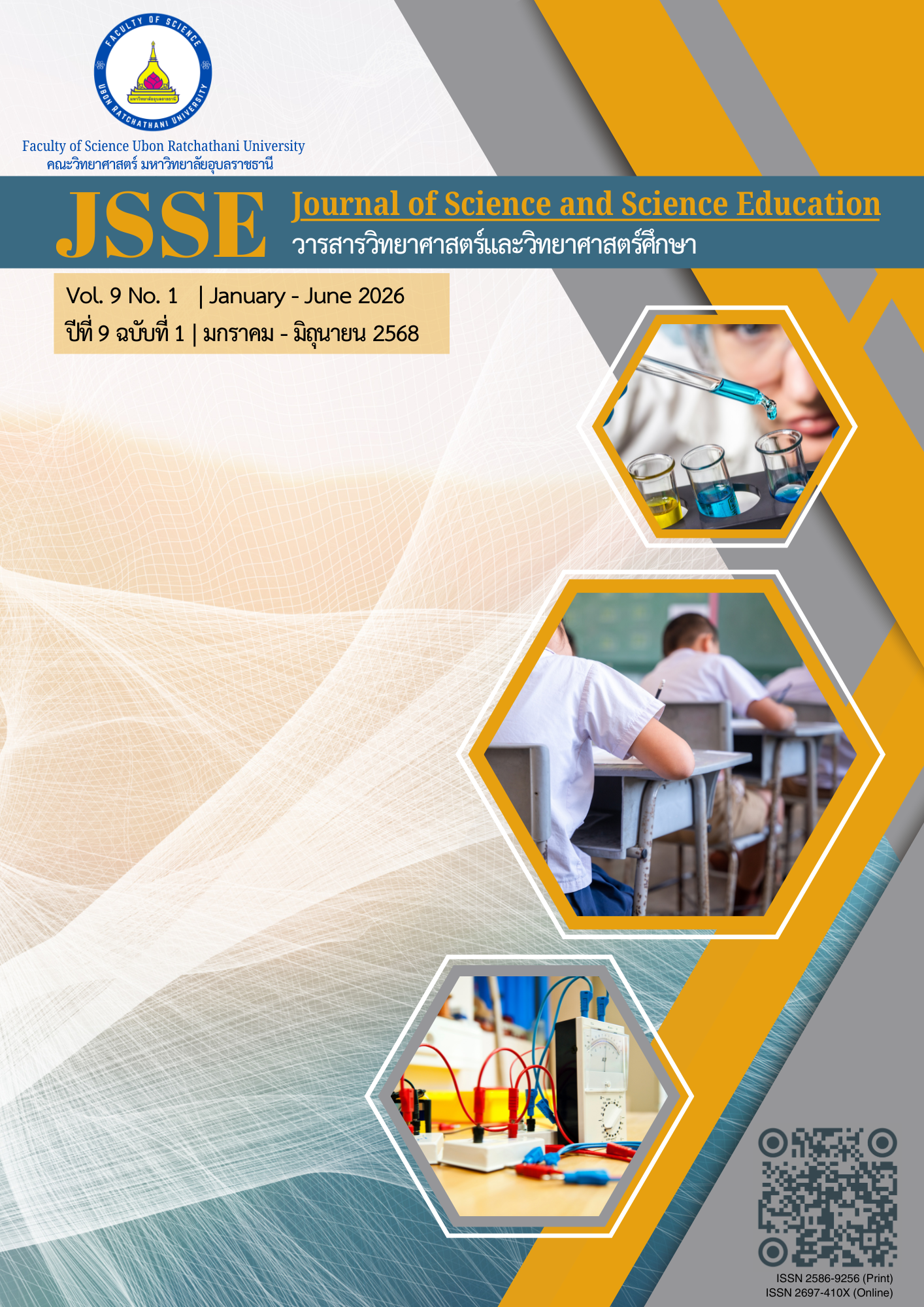
ปีที่ 9 ฉบับที่ 1 (2026): วารสารวิทยาศาสตร์และวิทยาศาสตร์ศึกษา (JSSE) ปีที่ 9 ฉบับที่ 1 (มกราคม - มิถุนายน 2569)
วารสารวิทยาศาสตร์และวิทยาศาสตร์ศึกษา (JSSE) ปีที่ 9 ฉบับที่ 1 (มกราคม - มิถุนายน 2569)
เผยแพร่แล้ว:
02/23/2026
ดูทุกฉบับ
ISSN 2586-9256 (Print)
ISSN 2697-410X (Online)